When it comes to "terrifying creatures" in the Amazon River, the **candiru catfish** often tops the list. Also known as the "toothpick fish, " this small freshwater fish is infamous for its parasitic behavior, attracting global attention. But how much of the rumor surrounding it is true? Let's delve into the candiru catfish, from its behavior and habitat to its controversial interactions with humans.
Table of contents
What is a catfish?
Habitat and living environment: Where do catfish live?
How do catfish survive?
Lifespan, Reproduction, and Predators of Toothpick Fish
Rumor Debunked: Can catfish really swim into the human urethra?
Are catfish dangerous to humans?
How to avoid encountering catfish that suck blood?
Scientific research on catfish
Cultural Influence and Urban Legends
Frequently Asked Questions about Catfish
What is a catfish?
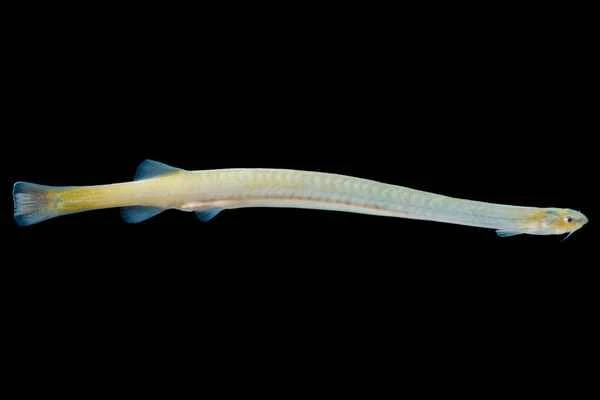
The bloodsucking catfish (Candiru) , scientifically known as Vandellia cirrhosa , is a small freshwater fish that lives in the Amazon River basin. As a type of catfish, it differs greatly from its relatives and is known for its parasitic habits .
This fish is very small, usually only 2 to 5 centimeters long, with a slender and almost transparent body. Because it feeds on the blood of other fish, it is sometimes called the **"vampire fish"**.
Habitat and living environment: Where do catfish live?
The catfish's home is the Amazon River and its many tributaries, a highly biodiverse ecosystem. They live in warm, fast-flowing freshwater and are extremely adaptable.
Thanks to their slender bodies, catfish can squeeze into narrow crevices, such as between rocks or inside their gills, to find suitable habitats. This environment provides them with abundant hosts and resources for survival.
How do catfish survive?
The catfish's most distinctive feature is its feeding method . Unlike other predators, the catfish is a parasitic forager. Here are its survival strategies:
It locates target fish by detecting chemical signals in the water, such as ammonia released from the host's gills.
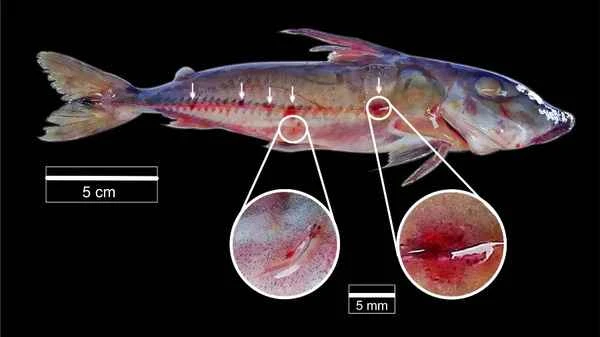
Once it finds a host, it uses the spiny structures on its head to attach itself to the host's gills.
It feeds on the host's blood or mucus to survive.
This behavior is crucial for the survival of catfish vampires, but usually causes less harm to their normal hosts.
Lifespan, Reproduction, and Predators of Catfish
Candiru , also known as the "vampire catfish," is a notorious species of fish found in the Amazon River. Besides its infamous characteristics, its biology is also quite fascinating. Below is a detailed analysis of the candiru's lifespan , reproductive behavior , and its predators in the wild.
Lifespan of catfish
Catfish have a relatively short lifespan, typically 2 to 3 years in the wild. Factors affecting their lifespan include:
Environmental conditions : The health of the water quality in the habitat is crucial. Both water pollution and habitat destruction can shorten their lifespan.
Host availability : Catfish rely on parasitic life, so the availability of suitable host fish is an important factor in determining their survival.
Predation threat : Due to their small size and poor defense, they face a constant risk of predation.
Despite facing numerous challenges, the catfish 's unique adaptability allows it to survive in the highly competitive ecosystem of the Amazon River.
Reproduction: How do catfish (toothpick fish) reproduce?
Compared to other fish, there are fewer records of the reproductive behavior of catfish , but some known information is as follows:
Breeding season : Catfish typically breed during the rainy season, when the water level of the Amazon River rises, providing a safer and more abundant environment for spawning and the survival of fry.
Spawning method : The female fish lays her eggs in the fine mud or sand or among plants on the riverbed .
External fertilization : Like many freshwater fish, catfish fertilize eggs externally by releasing sperm onto them.
The growth of juvenile fish : In the early stages of their lives, juvenile fish are highly vulnerable to predation by other aquatic animals. As they grow, they gradually develop parasitic behaviors unique to adult fish.
The breeding cycle of the catfish is closely related to the environmental rhythms of the Amazon River, and this regularity helps ensure that its population can continue to reproduce even when its numbers are low in some areas.
Natural enemies: Who are the predators of the catfish ?
Despite its notorious ferocious parasitic behavior, the catfish is actually low on the food chain. Due to its small size and near-transparent appearance, it is highly vulnerable to a variety of predators. Here are some common predators:
large fish
Predators such as peacock bass and piranhas prey on catfish . Their keen eyesight and aggressive hunting strategies make them major natural enemies of catfish .
birds
Waterbirds such as herons and kingfishers often hunt in the shallow waters where bloodsucking catfish inhabit, capturing them with precision.
aquatic mammals
Amazonian freshwater dolphins (such as the pink pufferfish) sometimes include toothpick fish in their diet.
Environmental threats
Indirect predators include invasive species and human activities (such as overfishing or water pollution), which have significantly reduced the population of catfish .
The catfish 's survival strategy relies primarily on evading predators. Its nearly transparent body and agile swimming ability help it escape threats. However, due to its small size and lack of significant defense mechanisms, it remains prey for a variety of predators.
Despite their small size, the catfish plays a vital role in the complex ecosystem of the Amazon River. With a relatively short lifespan , typically two to three years, they employ specific reproductive strategies to ensure the survival and continuation of their population despite challenges. Although known for their parasitic behavior, the catfish faces various predatory threats, highlighting the delicate balance in nature. Understanding the catfish 's life cycle helps to demystify this often-misunderstood fish and underscores its crucial role in the aquatic food chain.

Rumor Debunked: Can catfish really swim into the human urethra?
The most infamous claim is that catfish, known for their vampire-sucking ability, can swim into a human urethra and cause immense pain. But is this true?
The following are the relevant facts:
Source of the rumor : This story may have originated from a warning from local residents to alert people to the potential dangers of the Amazon River.
Scientific evidence : To date, there are no conclusive cases to prove that this has ever happened. Most scientists believe the possibility is extremely low because the natural behavior of catfish does not support this claim.
While the story is chilling, it is more of a horror rumor than a fact.
Are catfish dangerous to humans?
Generally, catfish pose no danger to humans . Their parasitic behavior is primarily directed at fish, not humans. However, in rare cases, catfish may burrow into wounds or human orifices, but these reports are usually exaggerated or misunderstood.
In its natural habitat, the catfish is more of a nuisance than a real threat. It also plays an important role in maintaining ecological balance.
How to avoid encountering catfish that suck blood?
If you're planning a trip to the Amazon, here are some simple steps to avoid close encounters with this infamous fish:
Wear protective clothing : Wear a tight-fitting swimsuit or waterproof pants when swimming.
Avoid urinating in the water : Some believe that bloodsucking catfish are attracted by ammonia in urine, but this claim is still controversial.
Stay in shallow waters : Catfish usually prefer deeper waters because it is easier to find a host there.
Scientific research on catfish
Catfish have been the subject of scientific research for decades, with scientists conducting in-depth studies on their behavior, anatomical features, and legends. Research indicates that:
Catfish use chemical signals , such as ammonia, to locate their hosts.
Its head has a spiny structure that is designed to attach to fish gills rather than to invade unnatural environments such as the human urethra.
Although it is a parasitic fish, it usually does not cause serious harm to its normal host.
Through research, we can better understand the catfish and dispel many misconceptions about it.
Cultural Influence and Urban Legends
The notoriety of catfish as vampires extends far beyond the scope of scientific research, and has become:
Horror stories : These stories are often exaggerated and used to warn swimmers of the dangers of the Amazon River.
A darling of popular culture : From documentaries to books, the catfish is often depicted as a "monster fish".
Urban legend material : Stories about catfish attacks are widespread, but there is little conclusive evidence to support them.
While these stories are eye-catching, they often obscure the true ecological role of the catfish.
Frequently Asked Questions about Catfish
Q: Do catfish really swim into the urethra?
A: Extremely unlikely. There is no conclusive evidence to support this claim.
Q: What do catfish eat?
A: They feed on the blood and mucus of fish.
Q: Are catfish dangerous to humans?
A: Generally, there is no danger. Although its parasitic behavior is unique, it rarely poses a threat to humans.
Q: How big is a catfish?
A: Most catfish are between 2 and 5 centimeters in length.
Q: Where do catfish live?
A: They are distributed in the Amazon River basin of South America.
Real catfish
Catfish may have a bad reputation, but these are mostly based on misconceptions and rumors. In reality, this small fish is a unique and fascinating part of the Amazon ecosystem. While caution is advised when swimming in the Amazon River, there's no need to be afraid of catfish. Instead of fearing them, appreciate how they adapt to survive in nature—a truly remarkable part of the natural world.