If you're interested in snakes, then the Blue Coral Snake is one you absolutely cannot miss. With its stunning blue body and vibrant red head and tail, it looks like a work of art. But don't be fooled by its appearance; this snake possesses one of the most potent venoms in nature. Next, we'll delve into everything about the Blue Coral Snake, from its appearance and habitat to its venom and fascinating behavior.
What is a blue coral snake?
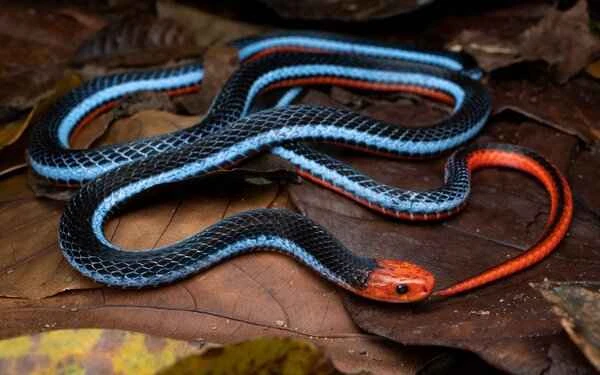
The blue coral snake, scientifically known as *Calliophis bivirgatus*, belongs to the coral snake family. It is also called the "Malaysian blue coral snake" because it is primarily found in Southeast Asia. This snake is famous for its electric blue scales and bright red markings, making it one of the most striking snakes in the wild.
Size: It can grow to 1.2–1.8 meters, making it one of the larger species of coral snakes.
Color characteristics: The body is a deep metallic blue, with a bright red head and tail. Some people describe it as a living work of art.
Behavior: It is shy, prefers to live alone, and is mostly active at night.
Where do blue coral snakes live?
Blue coral snakes live in the tropical rainforests of Southeast Asia, including Malaysia, Thailand, Indonesia, and Singapore. They prefer dense, humid environments and typically hide under piles of leaves or near streams.
Habitat: They are usually found in lowland forests, but sometimes they also venture into high-altitude areas.
Distribution range: You are most likely to find them in the following countries:
Malaysia
Thailand
Indonesia
Singapore
With the rapid deforestation of rainforests, the habitat of the blue coral snake is facing serious threats.
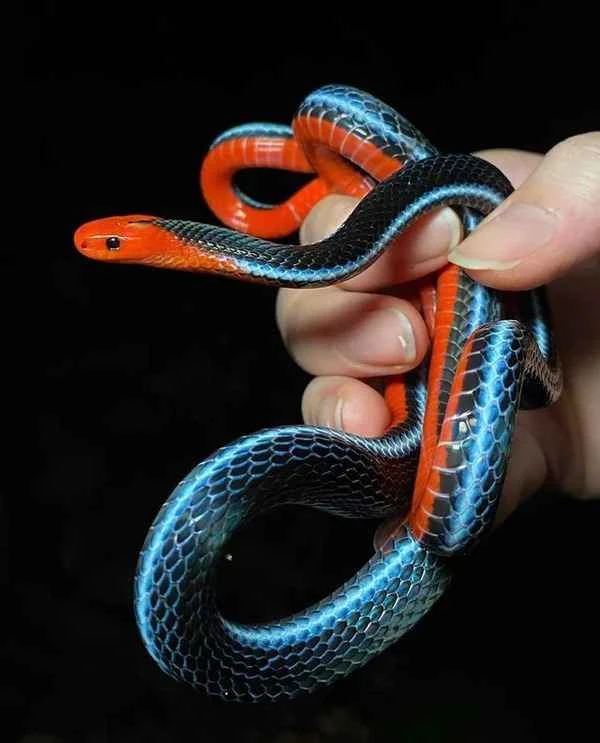
How dangerous are blue coral snakes?
Let's talk about the question everyone's most concerned about—the venom of the blue coral snake. This snake's venom is extremely potent, and a bite can have serious effects on the nervous system.
Neurotoxic venom: Its venom works by overstimulating nerve cells, causing them to constantly send signals.
Unique venom: Scientists have discovered that its venom contains compounds that act rapidly, having an immediate effect on the prey's nervous system. This makes it one of the snakes with the fastest-acting venom.
Medical research: Interestingly, researchers are studying this venom in hopes of developing painkillers and neurotherapies.
What do blue coral snakes eat?
Despite its stunning appearance and potent venom, the blue coral snake has a very simple diet.
Diet: It primarily preys on other snakes, including smaller venomous snakes. Therefore, it is known as the "snake eater."
Hunting method: It can quickly subdue its prey with its fast-acting venom, making it an extremely efficient predator.
How do blue coral snakes protect themselves?
Blue coral snakes are not aggressive towards humans unless threatened. Their bright colors are a classic warning coloration used to alert predators that they are dangerous.
Defensive behavior: When threatened, it may flatten its body to more conspicuously display its bright colors.
Natural enemies: Although large animals such as birds of prey or monitor lizards may prey on it, its venom deters most potential predators.
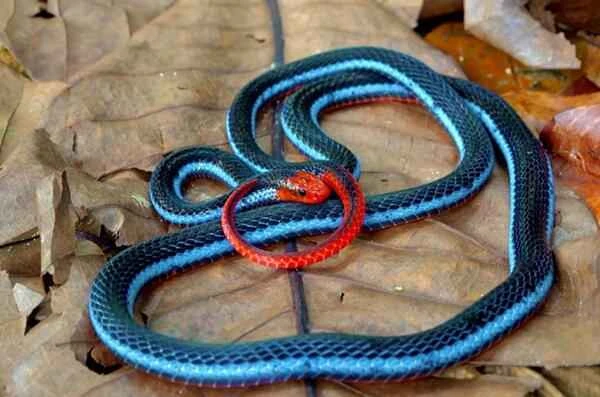
How to identify a blue coral snake?
Seeing a blue coral snake in the wild is extremely rare, but if you are lucky enough to encounter one, you need to know these characteristics:
Body color: A striking blue body.
Head and tail colors: bright red, very eye-catching.
Body type: Tall and slender, it can grow to nearly 2 meters in length.
Remember, if you see it, be sure to keep your distance!
Protection and Threats of Blue Coral Snakes
The beauty and habitat of the blue coral snake make it vulnerable to human activity.
Endangered status: Although not currently officially listed as endangered, its numbers are declining due to habitat destruction.
Deforestation: The rainforests where it lives are being rapidly cleared for agriculture and development, posing a serious threat to its survival.
Protecting the blue coral snake means protecting the rich rainforest ecosystem of Southeast Asia.
Fun facts about blue coral snakes
It is a snake eater: the blue coral snake primarily preys on other snakes and is one of the top predators in the ecosystem.
Its venom works quickly: its venom is so unique that scientists are studying its medical potential.
Like a rainbow: With its vibrant colors, the blue coral snake is considered one of the most beautiful snakes in the world.
Extremely rare: This snake is elusive and the chances of seeing it in the wild are extremely low.
Frequently Asked Questions about Blue Coral Snakes
Q: Are blue coral snakes dangerous to humans?
A: Yes, its venom is extremely deadly, but because it avoids contact with humans, cases of being bitten are rare.
Q: Where are blue coral snakes found?
A: They are native to the rainforests of Southeast Asia, especially Malaysia, Thailand and Indonesia.
Q: Can I keep a blue coral snake as a pet?
A: Absolutely not. This is a highly venomous snake, and keeping it as a pet is extremely difficult and risky.
The blue coral snake is a stunning yet deadly natural wonder. Whether you're a reptile enthusiast or simply interested in wildlife, the blue coral snake is worth learning more about. Its vibrant appearance, unique behavior, and potent venom make it one of the most unusual snakes in the world. But remember, this beautiful creature is best observed from a distance!