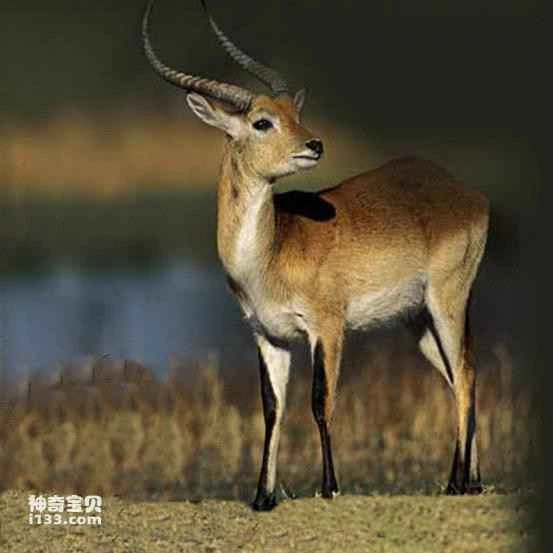
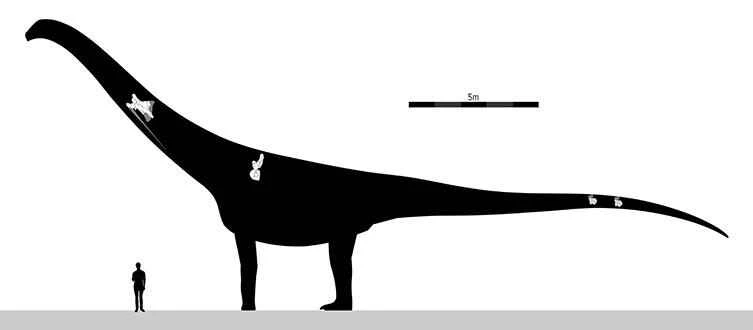
When it comes to the largest and heaviest animal currently existing on Earth, everyone surely knows it's the blue whale. It typically measures 22-33 meters in length and weighs 150-180 tons. So, are there any animals larger and heavier than the blue whale? Yes, at least some have existed on Earth.
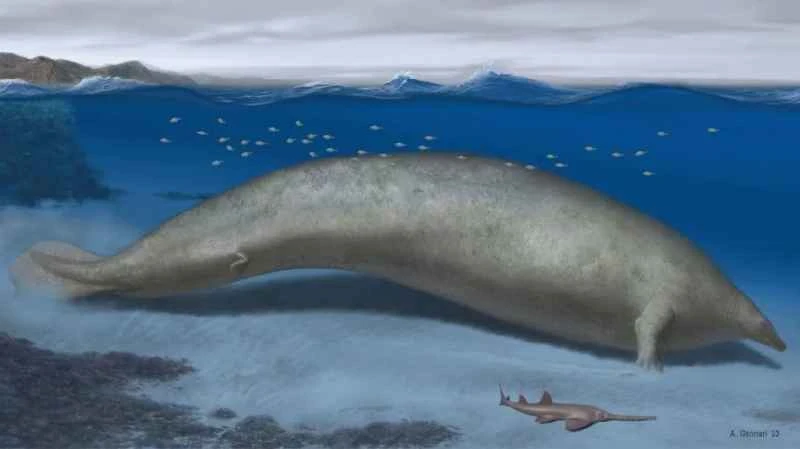
Figure 1. Schematic diagram of an ancient whale.
The image above is a schematic diagram of the ancient whale (Perucetus colossus), which may have surpassed the weight of the blue whale to become the heaviest known animal on Earth to date, possibly weighing up to 340 tons.
To gain a basic understanding of the large animals that exist on Earth today, those that existed in the past, and those that are now extinct, and to deepen our understanding of the extinct ancient whale mentioned above, let's first compare existing and past large animals on Earth, including mammals, reptiles, fish, and so on.
First, let's introduce large mammals.
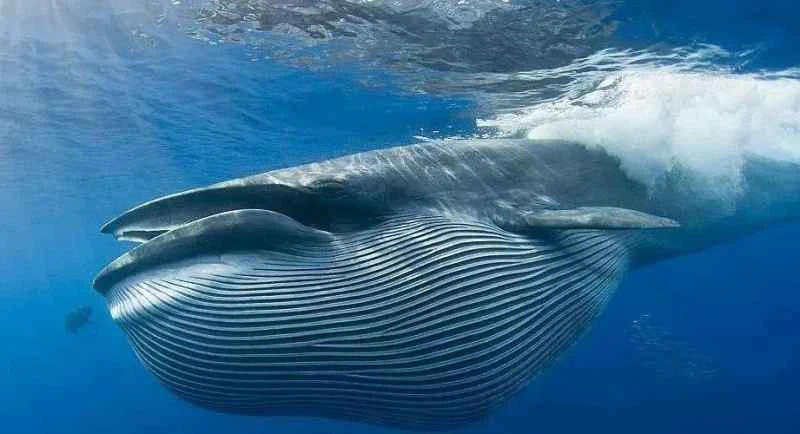
1. The blue whale is the largest living animal, reaching up to 33 meters in length and weighing up to 181 tons, which goes without saying.
2. The giant rhinoceros is the largest land mammal.
They could reach a length of 8.23 meters, a shoulder height of 5.28 meters, a total height of 3 to 9 meters, and a weight of 3 to 20 tons. They lived during the Oligocene to Early Miocene epochs.
I've already introduced the giant rhinoceros in my article "Those Former Masters of Earth," which you can click to read if you're interested.
3. Mammoths were one of the largest land mammals.
It stood about 4.5 meters tall, had incisors 2.5 meters long, and could weigh up to 15 tons. It lived between 1.8 million and 10,000 years ago.
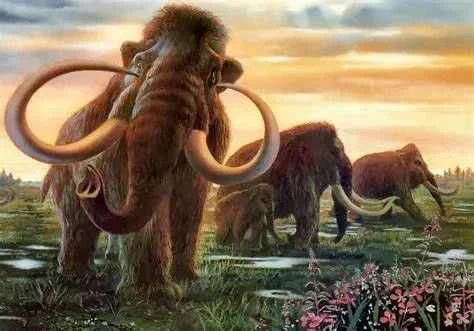
Figure 3 Mammoth
4. The saber-toothed elephant is one of the largest land mammals.
An ancestor of the mammoth. Reaching up to 9 meters in length, 4-5 meters in height, and weighing 10 tons. Lived 12 million to 1 million years ago.
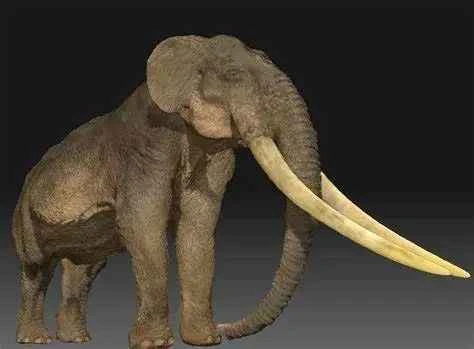
Figure 4. Stegodon
5. Steller's sea cow
They were about 8 to 10 meters long and weighed 4 to 6 tons. They became extinct in 1768 due to excessive hunting by humans.
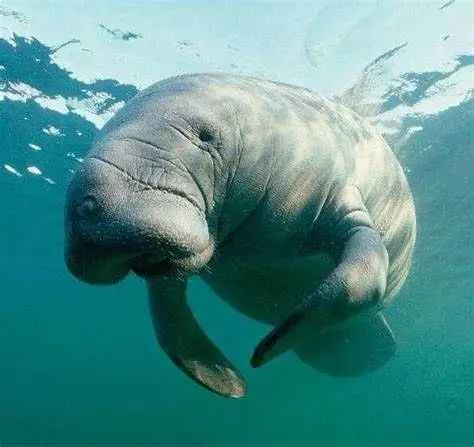
Figure 5 Manatee
Next, let's look at large reptiles, which are also prehistoric animals that we pay more attention to.
The New Zealand ichthyosaur , possibly the largest animal ever, was a marine reptile. It measured 24.5 to 38.6 meters in length and weighed 311 tons. It lived during the Late Triassic period (230 million to 200 million years ago).
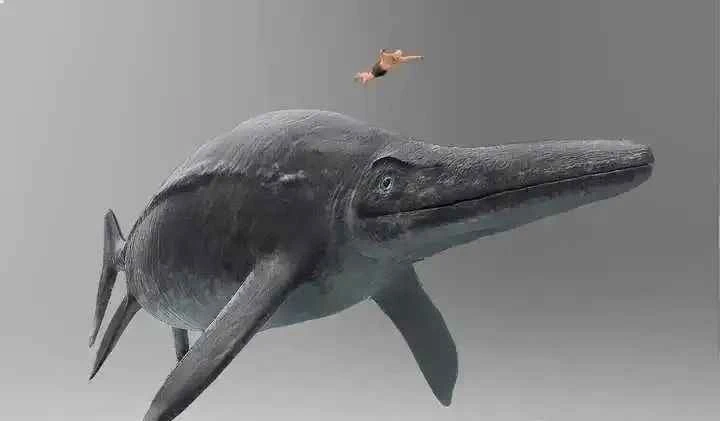
Figure 6. New Zealand Giant Ichthyosaur
2. Tyrannosaurus Rex was the largest carnivorous dinosaur, measuring 11.5–14.7 meters in length, 4.2–5.2 meters in hip height, and weighing 8–14.85 tons. It lived during the Late Cretaceous period (68–65 million years ago).
3. Spinosaurus was the longest carnivorous dinosaur, measuring 11-15 meters in length and weighing 4-10 tons. It lived during the Cretaceous period (112 million to 93 million years ago).
4. Argentinosaurus was one of the largest land dinosaurs, standing 12 meters tall, measuring approximately 35 to 43 meters in length, and weighing between 60 and 124 tons. It lived during the Cretaceous period (100 million to 93 million years ago).
5. The giant Ruyangosaurus is one of the largest dinosaurs, with a body length of 38.1 meters, a body width of 3.3 meters, a neck length of 17 meters, and a weight of up to 130 tons.
6. Amphicoelias fragillimus , possibly the longest and heaviest dinosaur in history, could reach 60-80 meters in length, 10 meters in hip height, 14-15 meters in head height, and weigh up to 220 tons.
7. Hoffmanosaurus , the largest apex predator in the Mesozoic oceans, measured 10–17.3 meters in length and weighed 16 tons. It lived during the Middle to Late Cretaceous period (98 million to 66 million years ago).
For large fish, we'll introduce the whale shark, the largest fish in the world, measuring 9-20 meters in length and weighing up to 12.5 tons. Due to overhunting, its numbers have drastically decreased.
From the above introduction to large animals, we can see that, to date, among mammals, whether extant or extinct, the largest land animal is the giant rhinoceros, the largest marine animal is the blue whale, the largest reptile is the New Zealand ichthyosaur, and the largest fish is the whale shark.
These animals weigh in the ton range, but note that Jian Ge keeps saying "so far," meaning there may be new discoveries in the future that will break the current record.
And so, a new record has been set. Let's return to the ancient whale fossil mentioned at the beginning of this article. A recent discovery has broken the previous record. Researchers reported in the journal *Nature* in February 2023 that, based on the vertebrae and ribs of a newly discovered ancient whale, they estimated that this whale may have weighed more than a modern blue whale. If so, this extinct whale would be the heaviest known animal to have ever existed on Earth.
This enormous creature, named Perucetus colossus, is approximately 390,000 years old and is a type of cetacean. Its bones are enormous; researchers estimate that its skeleton alone could weigh 5 to 7 tons, which is 2 to 3 times the size of a modern 25-meter-long blue whale skeleton.
These fossils were discovered in southern Peru. A total of 100 vertebrae were unearthed, each weighing more than 100 kilograms, heavier than a small elephant.
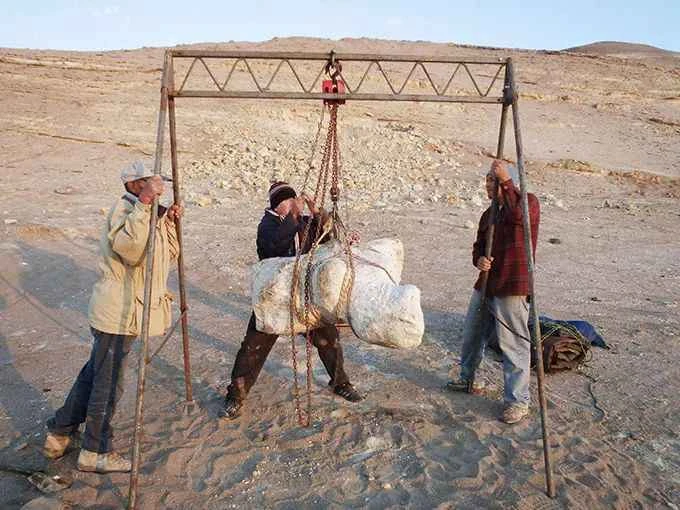
Figure 7. Researchers lift up a fossilized vertebra of an ancient whale.
A single vertebra of Perucetus colossus requires multiple people to transport it from its place of origin in Ica province in southern Peru.
Overall, *P. colossus* likely weighed between 85 and 340 tons, while blue whales weigh 150-180 tons. Taking the average weight, *P. colossus* is at least comparable to a typical blue whale; taking its maximum weight, it far exceeds that of a blue whale—equivalent to eight medium-sized passenger planes. However, determining an animal's true weight solely from fossils is difficult, as it also depends on the distribution and density of the organism's soft tissues.
Because the fossil specimens found so far are incomplete, some scientists doubt whether this behemoth could have reached the upper limit of that weight range. Paleontologist Nicholas Pyenson said that without skull fossils, it's difficult to know what it ate to maintain such a massive size. He hopes the team can find a more complete whale specimen to better understand how it maintained its heavyweight status.