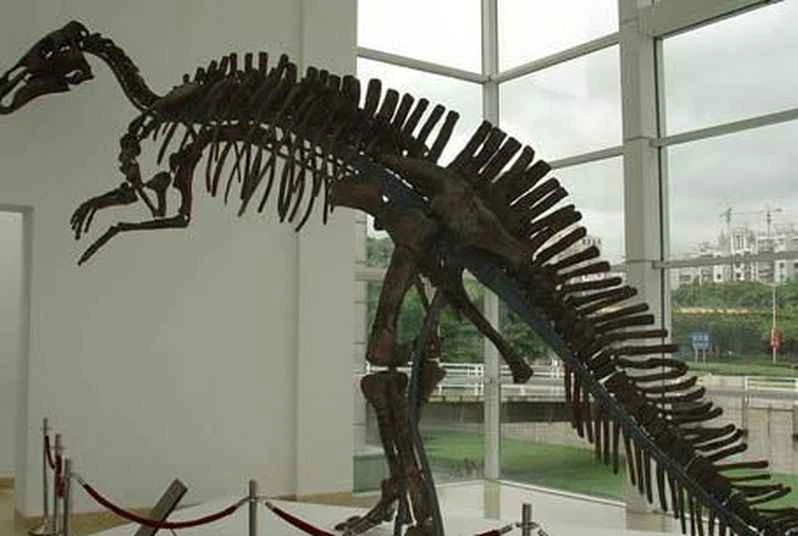
They're all armored, with huge mouths, looking like they came from prehistoric times. But alligators and crocodiles diverged early in the Crocodilian family tree, adapting to different waters, prey, and lifestyles. Master a few key points, and you'll not only be able to instantly identify them, but also know which is stronger and where the danger lies.
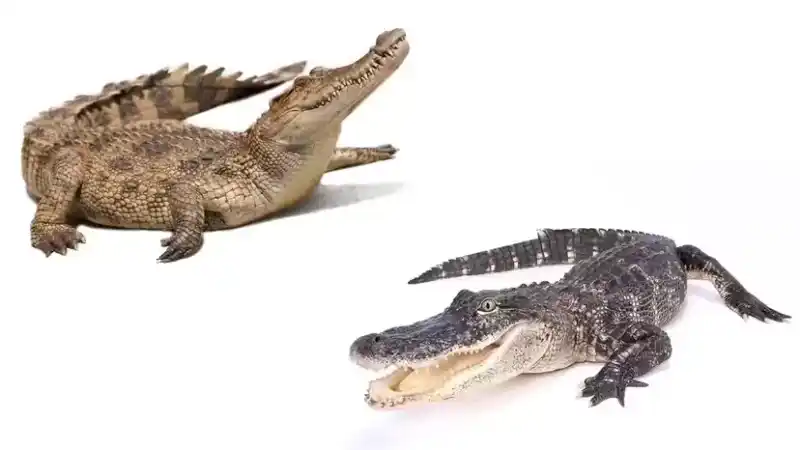
Identify at a glance: snout, teeth, body size, habitat
snout shape
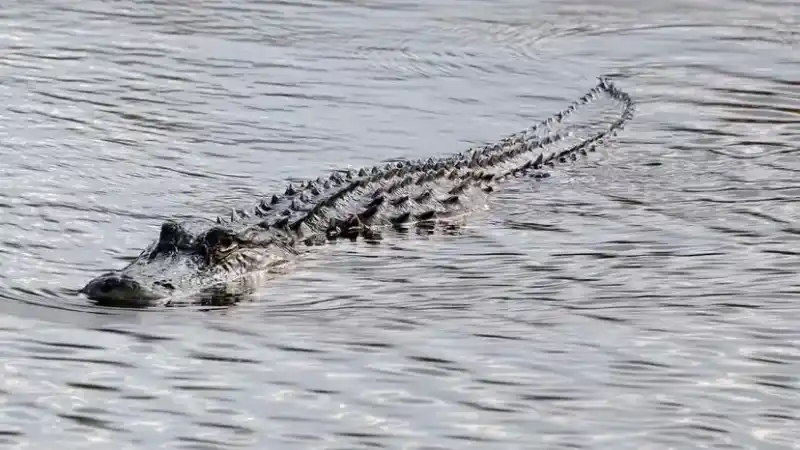
Alligators have a wider, rounder (U-shaped) snout, making them naturally adept at crushing hard-shelled prey such as turtles. When their mouths are closed, their upper jaw covers most of their lower teeth , and their prominent fourth lower incisor gets stuck in the groove of their upper jaw.
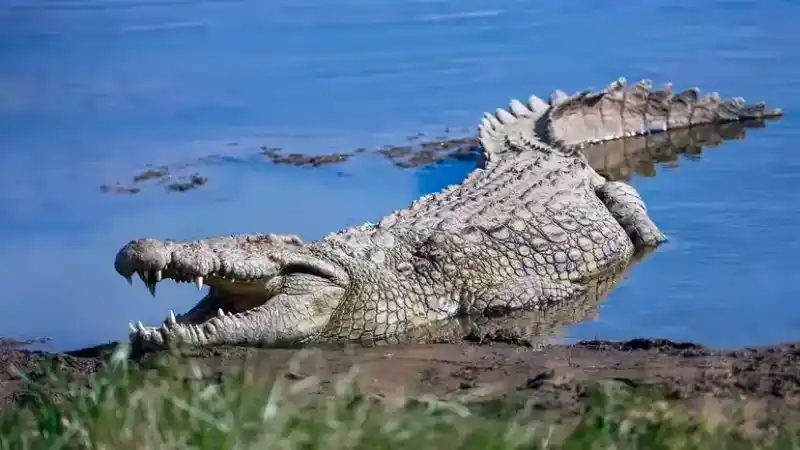
The crocodile 's snout is narrower and longer (V-shaped) , and its upper and lower teeth are visible when its mouth is closed, especially the prominent fourth lower incisor.
Average size and strength
American alligators typically reach adult males lengths of 3.3–4.0 meters , with very few reaching around 4.5 meters .
Large true crocodiles (such as saltwater crocodiles and Nile crocodiles ) can reach over 5.5–6 meters in length . Their weight and bite force generally surpass those of alligators, and they hold the record for the highest bite force among living animals.
Water area preference
Alligators live almost exclusively in freshwater (wetlands, swamps, slow-flowing rivers).
Crocodiles can survive freely in brackish/seawater thanks to salt-excreting glands under their tongues. They are often found in estuaries, mangroves, and coastlines, and can also enter freshwater to forage.
Feet and "tassels"
Alligators have more developed webbing between their hind toes , which is suitable for freshwater propulsion.
The crocodile's toes are more clearly separated, and serrated skin edges are commonly seen on the hind limbs and the base of the tail, giving it a sharper appearance.
Distribution and Current Status: Where do they live, and which species are rarer?
Alligator (Alligatoridae)
American alligator (Alligator mississippiensis) : Primarily found in the wetlands and cypress swamps of the southeastern United States (Louisiana, Florida, Georgia, Carolina, eastern Texas, etc.). Its population had drastically declined due to poaching and habitat loss, but conservation efforts have now recovered in many areas.
Chinese alligator (Alligator sinensis) : Originally distributed in the middle and lower reaches of the Yangtze River and surrounding water systems, now critically endangered ; smaller in size, with a slightly upturned snout and thicker dorsal skull plates.
Crocodylidae
Distributed throughout Africa, Asia, Oceania, and the Americas . Representative species include:
Saltwater crocodile (Crocodylus porosus) : The largest living reptile in the Indo-Pacific region and estuaries.
Nile crocodile (C. niloticus) : Top predator in freshwater systems of sub-Saharan Africa.
American alligator (C. acutus) : Found in southern Florida, the Caribbean, and northern Central America, it prefers brackish water environments.
In addition, there are Cuban crocodiles, Moss crocodiles, Orinoco crocodiles, Siamese crocodiles, Philippine crocodiles, West African crocodiles, slender-snouted crocodiles, pygmy crocodiles, New Guinea crocodiles, Indian swamp crocodiles, and Australian freshwater crocodiles, among others.
Behavior and "Death Roll"
Both alligators and crocodiles possess skin pressure receptors , enabling them to detect minute disturbances in the water and ambush prey near the water's edge. They can also launch short bursts of speed. On average, crocodiles are more aggressive around large animals and humans; their attack pattern often involves a powerful bite followed by a "death roll" to tear limbs apart . Alligators also roll, but the most notorious are the large crocodiles.
Head-to-head confrontation: Who is more capable?
In a head-to-head battle without the advantage of terrain, crocodiles have a higher win rate . This is due to their size cap, weight, jaw structure, habitat width , and stronger bite force/aggressive tendency . Largest saltwater crocodiles or Nile crocodiles generally have a significant advantage in size and fighting ability over the largest alligator.
Risks to humans: depends on region and species
The risks depend on the species and the scenario of human-crocodile contact .
In the United States , alligators and crocodiles mostly avoid humans , and most accidents are related to human feeding or pets being near water.
In parts of Africa and Asia/Oceania , Nile crocodiles and saltwater crocodiles account for the majority of fatal attacks by crocodilians worldwide.
Wherever you are, please stay away from water , never feed your pets, and keep them on a leash . Treat a sunbathing animal as a predator that can approach at any moment .
What is a caiman? Who is responsible for its management?
Caimans belong to the family Alligatoridae and are distributed in the river and lake wetlands of Central and South America . On average, they are smaller than alligators and crocodiles. Common species include the spectacled caiman, Yacarei caiman, broad-snouted caiman, black caiman (the largest), and two species of pygmy caiman . They typically have a wide, short snout and primarily feed on fish and small vertebrates.
Quick reference cheat sheet for field use (no need to get close)
A wide, rounded U-shaped snout, most of the lower teeth not visible when the mouth is closed, and a freshwater environment—it's more likely an alligator .
A narrow, V-shaped snout, interlocking upper and lower teeth still visible even when the mouth is closed, and brackish water in an estuary/coast —it's more likely a crocodile .
Why is this difference important?
The differences are not just about "looking alike." Aquatic preferences determine the risk zones for human activities, salt excretion capacity affects dispersal and invasion potential, and body size and behavior relate to conservation management strategies (warning, buffer zones, rescue, and relocation). Recognizing who is who can help us coexist more safely near their waters and better understand the ecological niche and value of these "living fossils."