The emu (Dromaius novaehollandiae) is an iconic species of Australia and the second tallest bird in the world, after the ostrich. Despite their slender and somewhat clumsy appearance, they are incredibly fast long-distance runners, remarkably resilient in both heat and drought, and are also known as devoted fathers. This practical guide will help you understand the emu from its appearance and ecology to essential care tips.
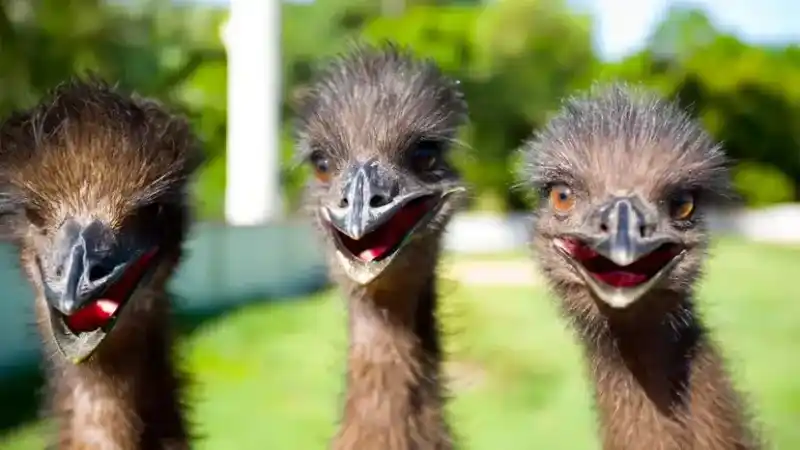
Emu vs. Ostrich: Both are rat-breasted birds, but their differences are quite obvious.
Both are ratites and lack the keel necessary for flight, so they cannot fly; they also both have long necks and long legs. However, upon closer inspection, there are quite a few differences.
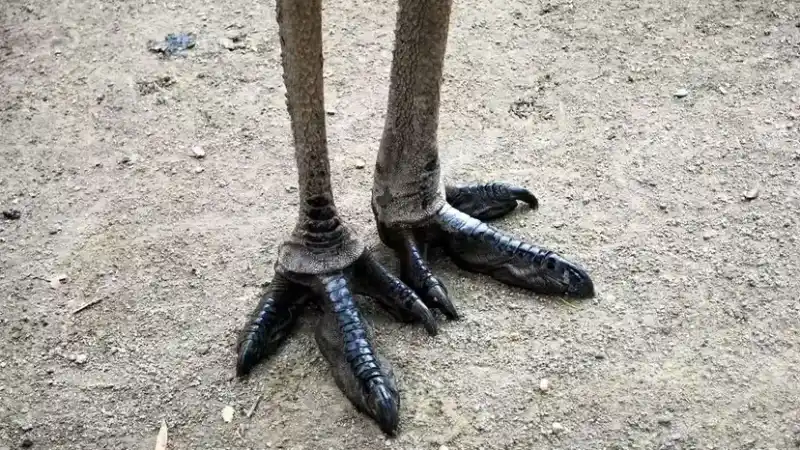
The number of toes and the ground feel when running. Emus have three toes , which provides stable grip and makes them suitable for long-distance running in bushes and sand; ostriches are the only birds that have only two toes , and their extreme speed makes them more suitable for high-speed sprints on open grasslands.
Uses of wings. Ostriches have relatively long wings, which act like a "rudder" to help them turn sharply when running and can also be spread out for display during courtship; Emus have very small wings (about 5–10 cm) that hardly participate in turning, and they rely more on their body's center of gravity and strong hind limbs to change direction.
Background of predation pressure. Ostriches have "co-evolved" with large predators in Africa, emphasizing instantaneous turning and sprinting; the main predators of emus in Australia are **dingoes** and birds of prey, and adult emus can usually escape pursuit by speed and endurance.
Size, speed, and "emu style"
Height and weight. Adults are generally 1.6–1.9 m tall, males weigh 50–55 kg , and females are usually slightly heavier.
Feathers and Insulation. Emus have unique double-shaft down feathers that provide both insulation and heat dissipation, helping them cope with the temperature fluctuations between day and night in Australia. Newly hatched emus are camouflaged with black/brown/cream-colored stripes , making them easier to hide in grassy areas.
Running ability. It can reach about 50 km/h (31 mph) in open terrain. With a long stride and low energy consumption, it is a true endurance "long-distance running king".
Distribution and Migration: Found only in the wild in Australia, yet it loves to "travel" around.
Native range. Wild emus are found only on the Australian mainland (the historical Tasmanian and King Island subspecies are extinct), ranging from eucalyptus forests and Mali scrubland to arid shrublands and sandy plains.
Nomadic habits. Emus are opportunistic migratory birds : they disperse when it rains and move in groups to wetter areas during droughts, forming loose "mobs ." This nomadic nature has clashed with agriculture—most notably in the " Emu Wars " of 1932, when government attempts to eradicate emus that were grazing on crops failed, leading to the adoption of long-distance fencing as the primary means of mitigation.
What to eat, how to digest, and how to save water.
Omnivorous strategy. Emus are omnivorous : they feed on seeds, buds, fruits, and flowers depending on the season, and also prey on insects and small vertebrates .
Gizzard grinding. To digest fiber, it is often swallowed as gastroliths , which are then ground by the gizzard's mechanical system.
Water management. Emus are adept at coping with drought by using low metabolism and water-rich food , enabling them to travel long distances between water sources.
"Super Teammate" Dad: He Handles Everything from Incubating Eggs to Raising Chicks
Breeding season. The main breeding season in Australia is during the winter (June–August), when both males and females emit deep, drum-like calls and low, hoarse calls. After mating, the female lays her eggs in a simple ground nest (lined with leaves, grass, or bark).
The incubation period is a long one. The male bird takes over the entire process at this stage : for about 56 days, the bird hardly eats, drinks, or defecates , relying on its fat reserves to survive, and enters a state of extremely low activity.
Single parent raising. The chicks can walk and peck at food 24–48 hours after hatching. The emu father leads the chicks to forage, guides them to drink water, and shelters them from the wind and rain, taking care of the chicks alone for about 4 months until they separate into groups.
Emu Eggs and Meat: Traditional Uses and Modern Farming
Nutritional value. Emus have been used by Australian Aboriginal people since ancient times, and in modern times they are also farmed for their meat, oil, leather, and feathers . The meat is red, low in fat , and has a mild flavor.
Emerald Egg. Emu eggs are deep emerald green and weigh approximately 450–650 g (1–1.5 lb) , roughly equivalent to 10 chicken eggs . The eggshells exhibit distinct color variations and are often used for carving and crafts .
Can it be kept as a pet?
It depends on both people and birds. Emus are often curious and friendly to people , but they are large, strong, and have three toes with claws, making them potentially dangerous when startled or cornered.
Key points for raising poultry. Sufficient space for movement , a sturdy enclosure at least 1.5–1.8 m (5–6 ft) high , shelter from wind and rain, a balanced diet (such as pelleted feed for flat-chested animals plus roughage ), and regular health care by an experienced veterinarian (such as West Nile virus vaccines, as recommended locally). Local regulations and permits must also be strictly followed.
Individual differences. Birds vary greatly in temperament: some are friendly, some are aloof; some come for food, some simply to "join in the fun." Good management should provide both environmental enrichment and safe distancing .
Safe coexistence and welfare recommendations
For crowds and tourists: Give emus ample space ; avoid approaching or feeding them during breeding and chick-rearing periods; never hand-feed wild individuals to prevent dangerous "begging" behavior. Slow down your movements, avoid cornering them, and keep a close watch on your dogs .
For land operators: It is recommended to use well-maintained fencing and wildlife-friendly pathways around agricultural areas and facilities, reinforce barriers rather than "locking" at key locations, and reduce conflict through habitat buffers and alternative water sources .
Fast Facts
Scientific name : Dromaius novaehollandiae
Conservation status : Mainland populations are generally common/least endangered (some historical subspecies on islands are extinct).
Height and weight : approximately 1.6–1.9 m ; adults typically weigh 50–60 kg.
Running speed : Approximately 50 km/h (31 mph)
Incubation and raising : Large emerald green eggs; incubation period approximately 56 days , with the male bird incubating and raising the chicks throughout the entire process.
Lifespan : 10–20 years in captivity (depending on management), but varies considerably in the wild.
Call : Deep, drum-like sounds and gurgling (resonance aided by airbags)
Foot : The three big toes + strong tendons enable high efficiency for long-distance walking.
—
In short: Emus may seem "cute and silly," but they are actually highly efficient organisms born for Australia—heat-resistant, drought-resistant, and able to run; fathers can take care of their babies on their own; and they have written "the art of survival" with their wisdom and physical strength on the ever-changing arid continent.