Key Point 1: "Ugly" is just a subjective label; these seemingly strange forms almost all correspond to efficient survival functions.
Key Point Two: From the bald head of the California condor to the star-shaped tentacles of the star-nosed mole, every "abnormality" is solving a real ecological problem.
Key Point 3: Many of these species are facing threats or endangerment, and understanding their unique biology can help to provide more precise conservation.
California Condor
This largest gliding raptor on North American land, with its menacing bald head and wrinkled skin up close, possesses a wingspan of nearly 2.7 meters, allowing it to soar for extended periods in updrafts. The baldness isn't unsightly; it's a scavenging tactic—reducing head feathers significantly lowers the risk of pathogen contamination for this scavenger that feeds on large carcasses. In the 1980s, lead poisoning from bullet residue caused its wild population to plummet to double digits, only gradually recovering through captive breeding and release. Despite its rugged appearance, its flight is exquisitely elegant.

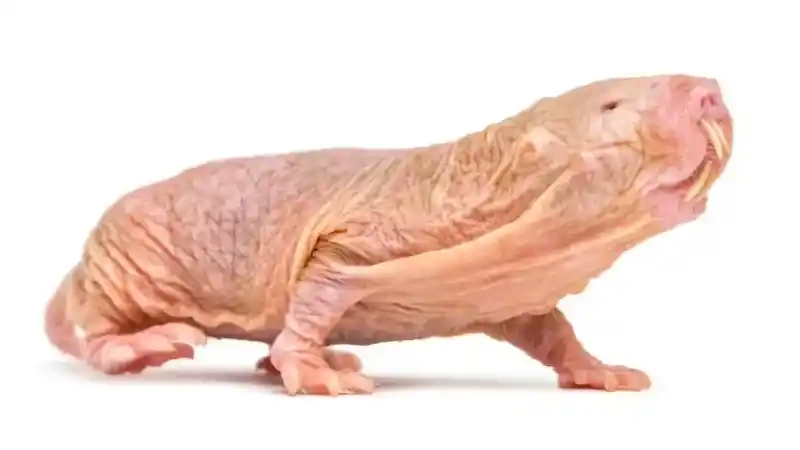
Naked Mole Rat
Pink, wrinkled skin, almost hairless, with exposed incisors and extremely poor eyesight, yet they are the perfect model for underground social life. Like termites, they practice eusocial behavior, with a "queen" and individual engineers with clearly defined roles; their incisors, protruding from their lips, act as shovels for digging, preventing mud and sand from entering their mouths. The naked mole-rat's "extraordinary tolerance" to hypoxia and pain, along with its extremely low tumor incidence, makes it a star in aging and anti-cancer research. Unattractive, yet a "top star" in life sciences.

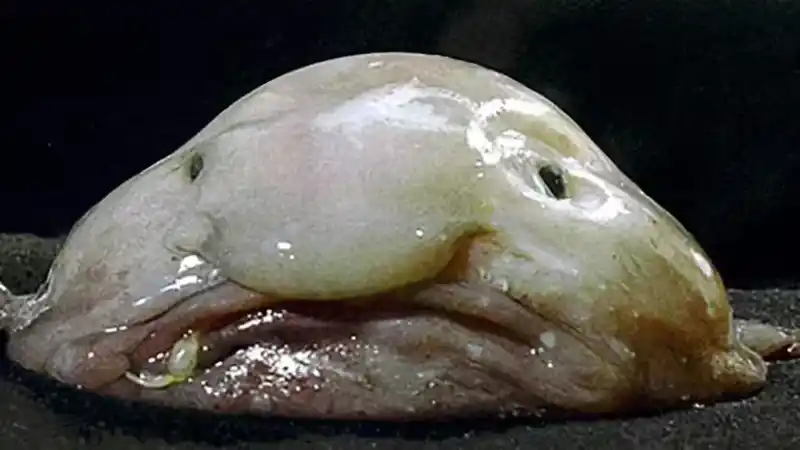
Blobfish
In the high-pressure environment of the ocean floor thousands of meters below the surface, it doesn't actually "collapse." Its gelatinous structure has a density close to that of the surrounding seawater, allowing it to "float" on the seabed without consuming energy. It only becomes the infamous "collapsed-faced group" after being brought to the surface by human trawling nets and experiencing a sudden drop in pressure. Sometimes, "ugliness" is just an illusion caused by being out of place.
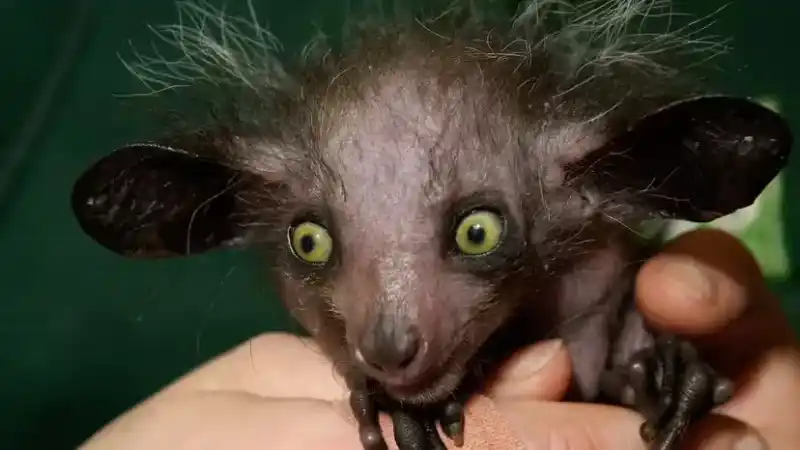
Aye-aye
This nocturnal primate, unique to Madagascar, exudes an eerie aura with its large eyes, long teeth, and bony, needle-like middle finger. Yet, this "bone finger" is its foraging radar: it taps tree trunks with its finger, using the echo to locate insect trails and then hooking out the larvae—like a "woodpecker that plays percussion." Once hunted for superstition, its main threat now comes from habitat fragmentation. Bizarre in appearance, ingenious in method.
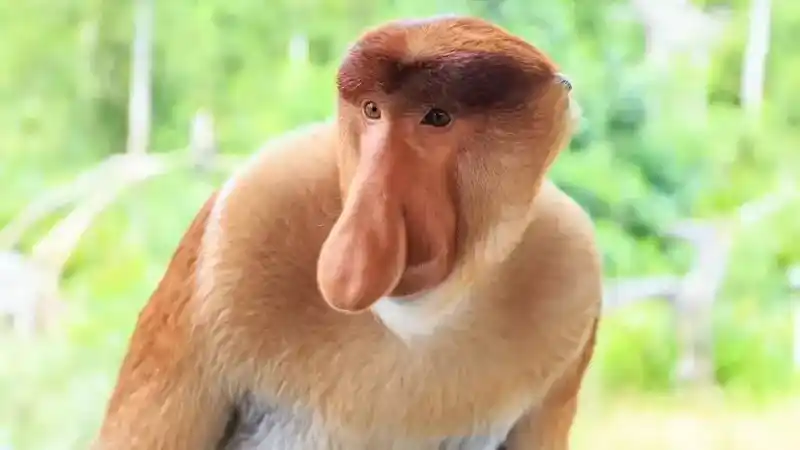
Proboscis Monkey
The male's "drooping nose" acts like a megaphone, amplifying its calls and enhancing its competitiveness in courtship; the larger the nose, the louder the chorus. They are also adept swimmers, often leaping from trees into rivers with a splash. Behind their "comical" faces lies the acoustic adaptation for communication and mate selection in the tropical rainforest.
Goblin Shark
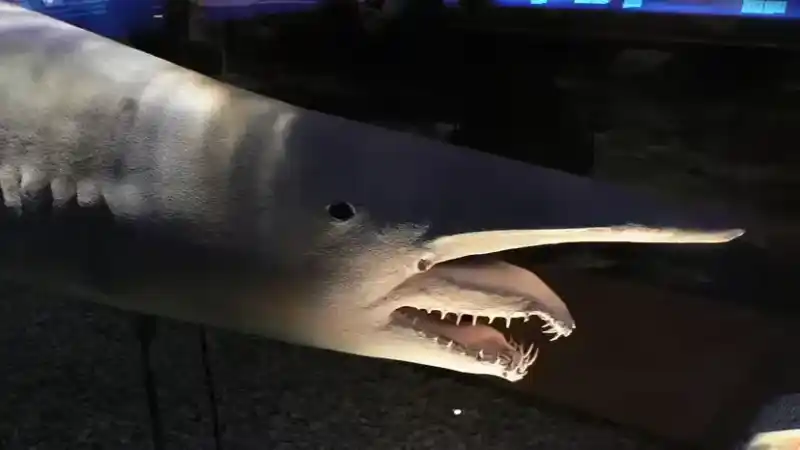
Beneath its long, flat, blade-like nose lies a spring-loaded jaw that can spring forward instantly, allowing it to "pop, suck in, and retract" as prey approaches. The combination of its rose-colored skin and protruding teeth seems unusual, but in the low-light, low-speed ecological niche of the deep sea, this hunting mechanism is efficient and quiet.
Chinese Giant Salamander
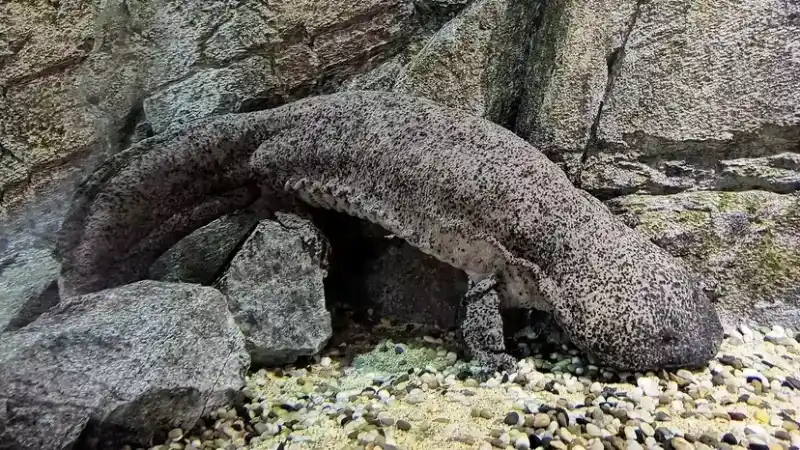
With its warty skin, small, eyeless eyes, and enormous body, it is the world's largest amphibian. Its seemingly "rough and ugly" skin folds actually increase the surface area for gas exchange, enabling efficient "skin respiration" in the cold, swift-flowing mountain streams. Overfishing and habitat degradation have plunged it into crisis; its "strange appearance" is, in fact, a respiratory engineering system for high-altitude streams.
Hammer-headed Fruit Bat
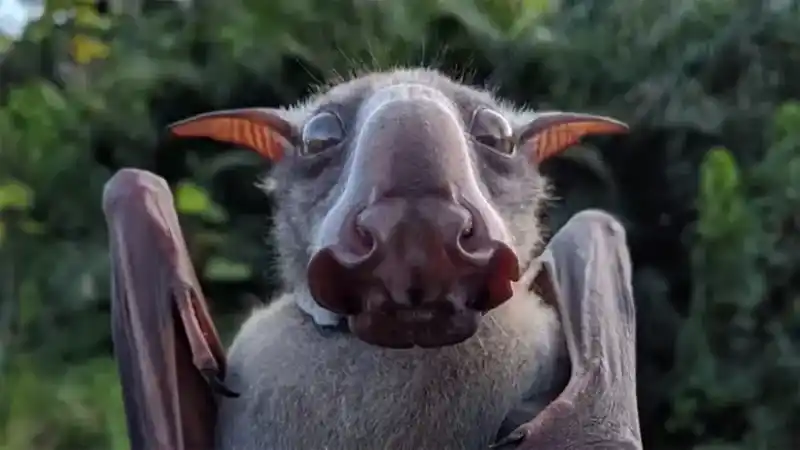
The scientific name "monstrosus" is quite telling: the male's skull, nasal cavity, and throat are highly expanded, solely for emitting low-frequency "broadcasts" of vibrations during nighttime courtship; the female, on the other hand, has a fox-like face and delicate features. Its appearance is "outrageous," and its acoustics are "outrageously strong."
Star-nosed Mole
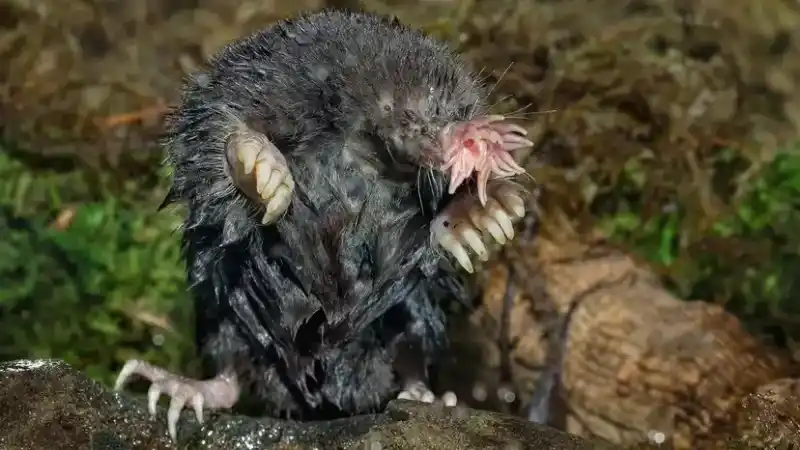
The "flower" at the tip of its nose is composed of 22 tentacles, forming an "Aim organ" densely packed with approximately 25,000 tactile receptors. In murky, muddy water, it can scan and locate invertebrate prey with millisecond-level "tactile radar," and is considered the record holder for "fastest feeding decision-making" among mammals. A strange nose, a champion of neural engineering.
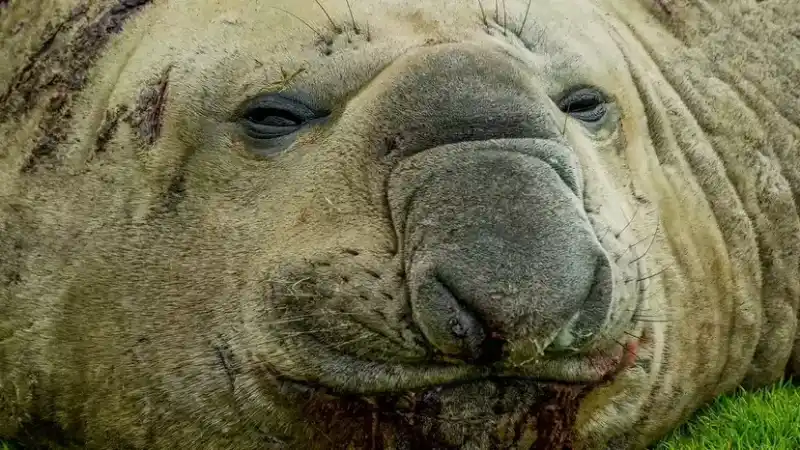
Southern Elephant Seal
The male's "air sac nose" acts as a natural megaphone, used during mating season to "amplify and control the field" over long distances; the same "clumsy" body can also routinely dive to depths of thousands of meters to chase squid and schools of fish. Big nose, large lung capacity, a long-distance diver in the ocean.
In short: what appears "ugly" to humans is often "clever" within an ecological niche. These "abnormal" structures solve real problems such as cold, darkness, decay, lack of oxygen, communication, and mate selection. If they catch your eye, perhaps turn your curiosity into understanding and protection.