Chipmunks and ground squirrels are both small rodents that often confuse people due to their similar appearance and behavior. However, they belong to different genera and have distinct characteristics. This article will comprehensively explore the differences between chipmunks and ground squirrels and provide a practical comparison table.
What is a chipmunk?
Chipmunk Overview
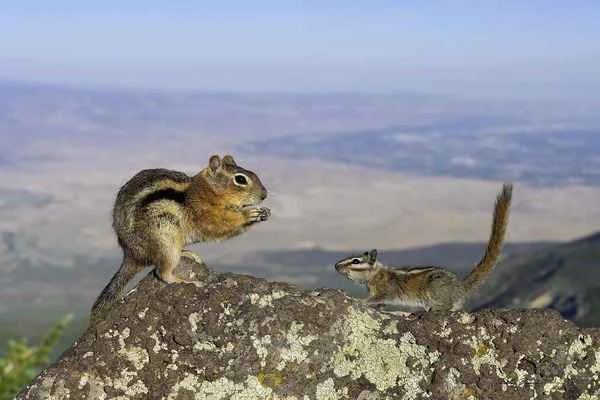
Chipmunks are small, striped rodents belonging to the family Sciuridae. They are primarily found in North America, but some species also inhabit Asia. Known for their lively appearance and playful behavior, chipmunks are a common sight in gardens, parks, and forests.
Physical characteristics
Size: Chipmunks are relatively small, typically about 8 to 10 inches long (including the tail) and weighing between 2 and 5 ounces.
Color: They have prominent stripes on their backs, usually with brown or gray as the base color. These stripes help them blend into their surroundings.
Facial features: Chipmunks have large, bright eyes and prominent cheek pouches for storing food.
Habitat
Chipmunks can survive in a variety of environments, including:
Forests: They prefer areas with abundant cover, such as bushes and fallen trees.
Gardens and parks: Chipmunks are common in urban suburbs, where food and habitat are readily available.
Caves: They excavate extensive cave systems as shelters, food storage, and nesting sites.
diet
Chipmunks are omnivorous, primarily feeding on the following foods:
Nuts and seeds: Acorns, sunflower seeds, and various tree seeds are its main food.
Fruits: They prefer seasonal fruits such as berries and apples.
Insects and worms: Occasionally, they also eat insects or small invertebrates to obtain protein.
Behavior
Foraging: Chipmunks are known for their habit of storing food in their cheek pouches, which makes it easier to transport it back to their burrows.
Social structure: Generally, they are solitary, and may exhibit territoriality, especially during the breeding season.
Hibernation: Although chipmunks do not completely hibernate, they may enter a dormant state in extremely cold weather, reducing their activity and metabolism.
Reproduction
Breeding season: Chipmunks typically breed in the spring, although some species may breed later in the summer.
Gestation period: The gestation period is about 30 days, after which the female can give birth to 2 to 8 offspring.
Development: The cubs are born with their eyes closed and helpless, but they grow rapidly and can become independent within a few months.
Protect
Although chipmunks are widely distributed, some species may face threats of habitat loss and fragmentation, primarily due to the impacts of urbanization and agriculture. However, most chipmunk populations remain stable.
Chipmunks are fascinating creatures with unique survival adaptations. Their lively behavior and vital role in ecosystems make them a popular part of many outdoor environments. Understanding their habits and characteristics can enhance our appreciation of these fascinating rodents.
What is a ground squirrel?
Ground squirrel overview
Ground squirrels are a group of small to medium-sized rodents belonging to the family Sciuridae. Unlike arboreal squirrels, which mainly live in trees, ground squirrels are primarily terrestrial, typically inhabiting open habitats such as grasslands, deserts, and forests. They are known for their burrowing behavior and social structures.
Physical characteristics
Size: The size of ground squirrels varies depending on the species, usually between 5 and 12 inches in length, and some species can weigh up to 2 pounds.
Color: Their fur is typically a mixture of brown, gray, and tan, with a lighter underside. Many species have distinctive patterns or markings that help them blend into their environment.
Tail: Compared to tree squirrels, ground squirrels have relatively short tails, which helps with their burrowing lifestyle.
Habitat
Ground squirrels inhabit a variety of environments, including:
Grasslands: They are common in grasslands and savannas, where extensive cave systems can be dug.
Desert: Some species adapt to arid environments and dig burrows to escape high temperatures.
Forests: In forested areas, they typically inhabit open areas in order to find food.
diet
Ground squirrels are primarily herbivores, and their diet includes:
Grasses and herbaceous plants: They eat a variety of plants, including grasses, alfalfa, and wildflowers.
Seeds and nuts: Ground squirrels collect and store seeds in the fall.
Fruits and vegetables: In some areas, they may also consume fruits and crops from gardens or farmland.
Behavior
Burrowing: Ground squirrels are known for their complex burrow systems, which provide shelter, food storage, and protection from predators. Burrow systems can be quite large, often with multiple entrances and rooms.
Social structure: Many ground squirrel species are social animals and live in groups. They communicate through sound and body language, often using alarm calls to warn other squirrels of the presence of predators.
Hibernation: Some species hibernate during the winter, while others remain active year-round depending on their habitat and climate.
Reproduction
Breeding season: Ground squirrels typically breed after hibernation in the spring.
Gestation period: Gestation period varies by species, but is usually about 30 days. Females give birth to 3 to 10 offspring.
Development: The cubs are born with their eyes closed and helpless, but they grow rapidly and can be weaned within a few weeks.
Protect
Although many ground squirrel species are widespread, some face threats from habitat loss, agricultural activities, and predation. Conservation measures may include habitat protection and management.
Ground squirrels are fascinating creatures with complex social structures and behaviors. Their burrowing habits and ability to adapt to diverse environments make them an important part of many ecosystems. Understanding their role and characteristics can enhance our appreciation of these unique rodents.
Comparison table of chipmunks and ground squirrels
| feature | chipmunk | ground squirrel |
|---|---|---|
| Science | Squirrel family | Squirrel family |
| genus | Tamias | Spermophilus |
| body shape | 9 to 10 inches | 10 to 12 inches |
| weight | 2 to 5 ounces | 6 to 12 ounces |
| Habitat | Woodlands, Gardens | Open fields and grasslands |
| social structure | Usually living alone | Highly social, living in groups |
| digging holes | Rarely dig holes | It has an extensive cave system |
| diet | Nuts, seeds, fruits, insects | Grass, seeds, fruit |
| stripe | There are obvious stripes on its back. | The stripes are not obvious and are usually quite faint. |
| Tail | Long and bushy tail | Short and not too bushy tail |
Behavioral differences
Social Interaction: Ground squirrels are generally more social and are commonly found in groups or colonies. They communicate through various sounds. Chipmunks, on the other hand, are more independent and have a strong sense of territory.
Foraging behavior: Chipmunks forage alone and are known for their food storage habits, often carrying food back to their nests in their cheek pouches. Ground squirrels may forage together and are known for their more aggressive foraging techniques.
While chipmunks and ground squirrels share some similarities as small rodents, they differ significantly in size, habitat, behavior, and social structure. Understanding these differences can help you identify these fascinating creatures in the wild. Whether you're a nature enthusiast or simply curious, learning more about chipmunks and ground squirrels can enhance your appreciation of wildlife.
Can chipmunks and squirrels get along?
Chipmunks and squirrels are both members of the family Sciuridae, but their interactions vary depending on the species, environment, and individual behavior.
social structure
Chipmunks: They are usually solitary. They are territorial and often prefer to forage alone, especially during the breeding season.
Squirrels: Squirrels, especially tree squirrels, are quite social and may live in groups, although they may also have territories.
resource competition
Chipmunks and squirrels compete for similar food sources, such as nuts, seeds, and fruits. This competition can lead to conflict, especially in areas where food is scarce. Chipmunks are generally more cautious and may retreat to their burrows if they feel threatened by a squirrel.
Potential conflict
Aggression: In some situations, squirrels may exhibit aggression towards chipmunks, especially when they perceive chipmunks as a threat to their food supply or territory.
Coexistence: Despite potential conflicts, many chipmunks and squirrels can coexist peacefully in the same habitat without major problems. They may adapt to each other's presence, typically foraging at different times or in different areas.
In summary, the relationship between chipmunks and squirrels is complex. While they may compete for resources and exhibit territorial behavior, they can also coexist peacefully in shared environments. Their interactions depend primarily on individual circumstances, such as food availability and habitat.
Who will win: the squirrel or the chipmunk?
When comparing whether a squirrel or a chipmunk would "win" in a fight, several factors need to be considered, including size, strength, behavior, and specific circumstances. Here is a detailed analysis of the key elements:
Size and strength
Squirrels: Generally larger and stronger than chipmunks. Most squirrels, such as gray squirrels, weigh between 1 and 2 pounds and are about 18 to 24 inches long (including the tail). Their size gives them an advantage in strength and reach.
Chipmunks: They are small in size, typically weighing 2 to 5 ounces and measuring about 8 to 10 inches in length. Their size limits their ability in physical competition.
Behavior and social structure
Squirrels: Known for being more aggressive and social. They may exhibit territorial behavior and are more likely to fight off other animals when protecting food sources or nests. Squirrels often use their size to intimidate smaller animals.
Chipmunks are typically more solitary and cautious. They rely on speed and agility to escape threats rather than engage in direct confrontation. Chipmunks are unlikely to participate in direct conflict and will usually retreat to their burrows when faced with danger.
Specific details of the confrontation
Foraging competition: If the two are competing for food, the larger and more aggressive squirrel may dominate the chipmunk, especially when the squirrel feels threatened.
Defensive scenario: If a chipmunk is cornered, it may try to defend itself using speed and agility, but it is unlikely to win against a determined squirrel.
Natural predation: Squirrels may see chipmunks as competitors or prey, especially larger squirrels. In such cases, the squirrel will have the upper hand.
In direct confrontation, squirrels, due to their size, strength, and more aggressive nature, might win. However, chipmunks have evolved to rely on agility and caution to avoid conflict, enabling them to escape danger in many situations. Ultimately, the outcome in nature often depends on the specific circumstances, including the environment and the individual animals involved.