The lyrebird, a "mimicry genius" in nature, has attracted the attention of bird lovers and scientists worldwide with its outstanding ability to imitate sounds and its captivating appearance. They can not only mimic the calls of other birds but also replicate a variety of natural and even man-made sounds, including human speech, machine noises, and sirens. The lyrebird's behavior, ecology, and courtship methods are full of fascinating stories, making it an important subject of study in avian behavior, phonology, and ecology.
Scientific classification
Kingdom: Animalia
Phylum: Chordata
Class: Aves
Order: Passeriformes
Family: Menuridae
Genus: Menura (lyrebird)
Species: Lyrebird (Menura novaehollandiae)
Latin name (Menuridae)
Foreign name (Lyrebirds)
The lyrebird family is a relatively small and unique family of birds, specifically adapted to forest and bush habitats. It includes several species of lyrebirds, the two most representative being the Black Lyrebird (Menura novaehollandiae) and the Southern Lyrebird (Menura alberti).
1. History of Species
The discovery and naming of the lyrebird dates back to the late 18th century. At that time, British explorer James Cook first recorded the existence of the lyrebird in his logbook, describing its peculiar calls and appearance. The lyrebird's name comes from the distinctive shape of the male's tail feathers, which are curved and resemble the shape of an ancient Greek lyre, making them quite impressive.
In the 19th century, as more explorers ventured into Australia, the lyrebird gradually came to the attention of the scientific community, becoming a classic case study in the study of birds' mimicry abilities. Initial research focused on the lyrebird's calls, vocal imitation, and courtship behavior. As research deepened, scientists discovered that the lyrebird's calls were not merely imitations; their behavior was closely related to social interaction and reproductive strategies.
2. Morphological characteristics
Appearance
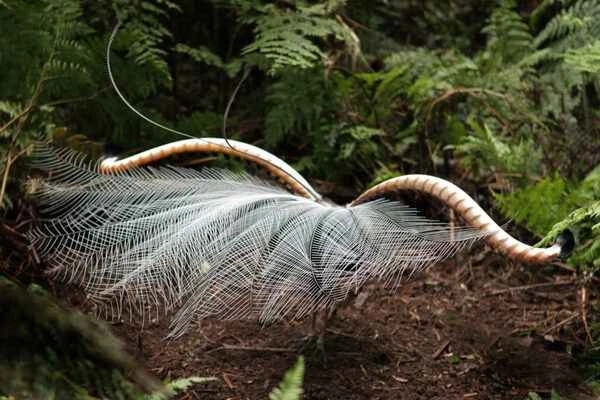
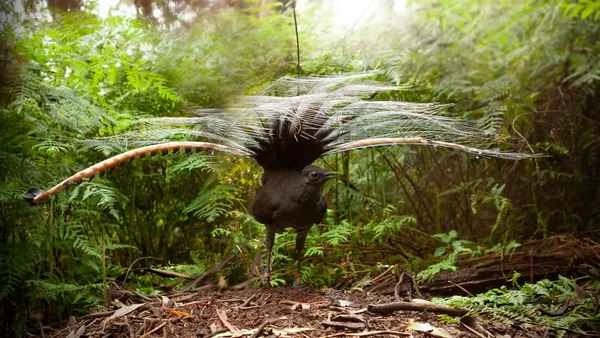
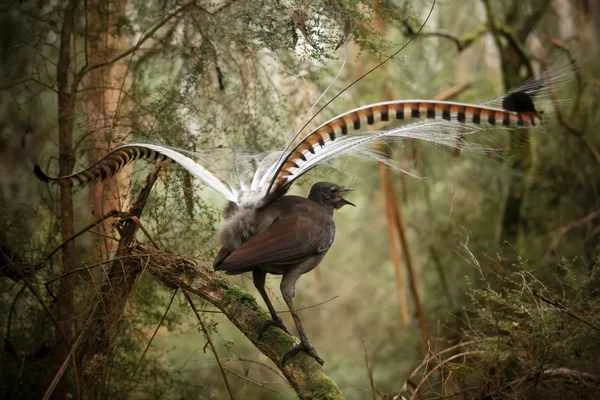
The lyrebird is a striking bird. Its tail feathers are particularly distinctive, especially the male's. The male's tail feathers are curved and can be up to twice its body length, resembling the strings of a harp, hence its name. The length and shape of these tail feathers make them especially noticeable during the breeding season, and are one of the main ways the male attracts females. During courtship, the male raises its tail feathers high, displaying their beautiful "harp string" shape.
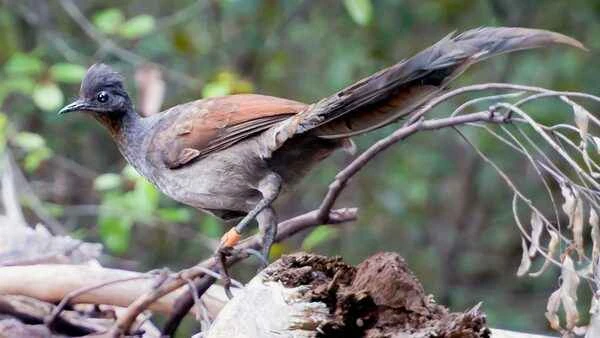
The lyrebird is typically grey or brown, with darker feathers on its back and wings, and lighter feathers on its belly. It has large, bright eyes and a strong beak, well-suited for catching insects and small plants. Overall, the lyrebird gives an impression of elegance and agility.
Size and weight
Lyrebirds are relatively large, typically measuring between 40 and 50 centimeters in length, with males slightly larger than females. Male lyrebirds have longer tail feathers than females, and the "string" shape of their tail feathers is more pronounced. Lyrebirds weigh approximately 700 grams and have a slender body, well-suited for long-distance flight and foraging.
life
Lyrebirds typically live 10 to 15 years in the wild. In their natural habitat, lyrebirds are able to survive for extended periods due to their strong adaptability and mimicry skills. However, habitat loss and changes in the food chain can impact their lifespan. As research progresses, scientists have discovered a close correlation between lyrebirds' health and their courtship abilities and reproductive success.
3. Habitat
Lyrebirds primarily inhabit the forests, rainforests, and bushlands of eastern Australia, particularly warm and humid environments. They have specific habitat requirements, typically choosing areas with abundant vegetation and plentiful food resources. They prefer densely vegetated areas with minimal human activity, allowing them to effectively conceal themselves and find sufficient food.
Lyrebirds typically inhabit tall trees, especially in rainforests and tropical forests, relying on the towering trees and dense vegetation for protection. They prefer to live on forest edges or in thickets, where they can find abundant insect resources and avoid predators.
4. Lifestyle Habits
Chirping and Imitation
The lyrebird's ability to sing is one of its most striking features. Male lyrebirds are particularly adept at mimicking the calls of other birds, including the resounding calls of cranes, oak tits, and even machine noises and car horns. Scientists have discovered that lyrebirds can imitate almost any sound in their environment, and can even replicate captured high-frequency sounds.
This mimicry ability of lyrebirds is not only part of their survival but also closely related to their reproduction and courtship. During the breeding season, male lyrebirds attract females by mimicking the calls of other birds. The more successful the mimicry and the more diverse the vocalizations of the male lyrebird, the more favored he tends to be by females.
Courtship dance
The courtship behavior of the lyrebird is also quite unique. During the breeding season, male lyrebirds attract females through a series of complex courtship dances and calls. The male raises its bright tail feathers high and begins a series of exaggerated display movements while emitting loud, imitative sounds. This process not only demonstrates the male's physical strength and intelligence but also proves its ability to survive and reproduce in complex environments.
Foraging behavior
Lyrebirds primarily feed on insects, especially small insects, beetles, and locusts found in grasslands and forests. Their diet also includes small fruits and plants. Lyrebirds are very adept at using their sharp beaks to peck at food, especially insects that inhabit tree bark and soil.
5. Distribution range
The lyrebird's main distribution area is located in eastern Australia and Tasmania. Its habitat includes New South Wales, Queensland, Victoria, and Tasmania. They prefer humid tropical and subtropical forests, especially forest edges, bushlands, and rainforests. The lyrebird's distribution range is relatively limited, mainly concentrated in these ecological environments.
The lyrebird's habitat has also been affected by human activities, particularly deforestation, habitat loss, and climate change, which have impacted its distribution range. In some areas, lyrebird populations are declining, leading to a gradual shrinking of their habitat.
6. Reproduction methods
The lyrebird's breeding season typically occurs in autumn and winter, with males primarily responsible for attracting females for mating. Male lyrebirds attract females through a series of sounds and dances, displaying their robust physique and mimicry abilities. Once a male successfully attracts a female, they mate and work together to provide food and protection for their offspring.
Lyrebirds typically build their nests on the ground or in tree branches, laying two to three eggs inside. The female incubates the eggs, while the male forages for food. Incubation usually lasts three weeks, and the chicks require care and feeding from both parents until they are able to survive independently.
7. Species Classification
The lyrebird family comprises two main species: the black lyrebird and the southern lyrebird. Below is a detailed classification table of lyrebird species:
| Species name | Main distribution area | Feature Description |
|---|---|---|
| Black Lyrebird (Menura novaehollandiae) | Eastern Australia | Large birds, the males have curved tail feathers and are extremely good at mimicking. |
| Southern Lyrebird (Menura alberti) | Southern Australia | Slightly smaller in size, with tail feathers similar in shape to the Black Lyrebird, it also possesses an excellent ability to mimic. |
8. Protection Level
The lyrebird is a relatively rare species in the wild. Although it is not listed in the international protected species list, its population is gradually declining due to habitat destruction and ecological changes. Globally, the lyrebird population is declining, especially in areas where its habitat has been disturbed by human activities. To protect the lyrebird, various nature conservation organizations and government agencies are strengthening the protection of its habitat and taking measures to reduce habitat destruction.
In Australia, lyrebird habitats are strictly protected, especially within nature reserves. Research institutions also continuously monitor lyrebird populations to ensure their survival and breeding environments are effectively protected.
By gaining a deeper understanding of lyrebirds, we can not only appreciate their unique biological characteristics but also realize their important role in the ecosystem. Protecting lyrebirds is not just about protecting a beautiful bird species, but also about protecting our future of harmonious coexistence with nature.