my country is one of the world's largest cattle-producing countries, and also a major producer and consumer of beef. Cattle farming plays a vital role in the development of animal husbandry. So, which region in China produces the most mutton? This article will compile a list of provinces with significant beef production, including Inner Mongolia, Shandong, Hebei, Xinjiang, Yunnan, Jilin, Sichuan, Henan, Liaoning, and Gansu. Let's learn more about these major cattle-producing provinces in my country!
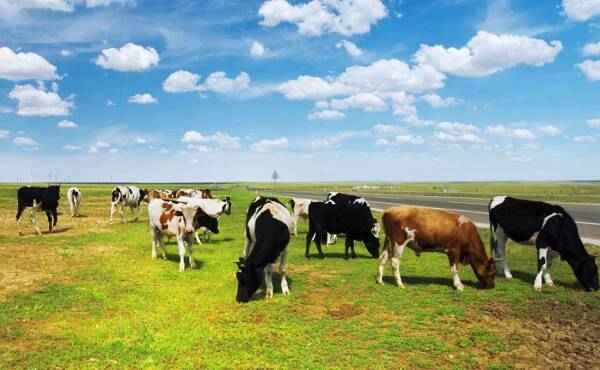
1. Inner Mongolia (687,100 tons)
Inner Mongolia Autonomous Region boasts a unique geographical location and abundant natural resources, making it an important beef cattle production base and a major beef-producing province in my country. Statistics show that in 2021, Inner Mongolia's beef production reached 687,100 tons, ranking first in my country. Cattle breeding bases are mainly distributed in Bayannur, Chifeng, Ulanqab, Hohhot, Wuhai, Baotou, Hinggan League, Tongliao, Alxa League, and Xilingol League, with Chifeng and Bayannur having the largest number of cattle breeding bases. The main cattle breeds raised in Inner Mongolia include Sanhe cattle, Horqin cattle, Grassland Red cattle, and Holstein cattle.
2. Shandong Province (613,000 tons)
Shandong Province is a major livestock province in my country, with cattle farming playing a particularly important role. According to 2021 statistics, Shandong's beef production reached 613,000 tons, ranking second in the country. Eastern Shandong mainly develops Simmental crossbred beef cattle, while western Shandong focuses on improving breeds like the Luxi Yellow Cattle and Limousin. In addition, Shandong also has breeds such as the Bohai Black Cattle and Mengshan Cattle, which enjoy considerable national recognition. To improve the efficiency of cattle farming, Shandong's cattle breeding methods are gradually shifting towards small-scale, cooperative, and centralized farming. With the increasing commercialization of cattle farming, beef production has also increased. Shandong Province has made significant efforts in optimizing the structure of its cattle farming industry and improving breeding techniques, laying a solid foundation for the development of its cattle industry.
3. Hebei Province (558,500 tons)
Hebei is a major cattle-raising and dairy-producing province in my country, boasting a long history of development and rich breeding experience. Hebei has a large number of beef cattle, with beef production reaching 558,500 tons in 2021, ranking third in the country. It is understood that Hebei's beef production is mainly concentrated in Chengde, Shijiazhuang, Tangshan, Hengshui, and Handan. This beef primarily consists of imported breeds such as Simmental, Angus, Charolais, Limousin, and Piedmontese, as well as local breeds like Luxi and Nanyang yellow cattle. Interestingly, over 50% of the cattle originate from other provinces, indicating that the breeds of beef cattle in Hebei's large-scale fattening farms are highly mixed, with crossbred cattle being the primary focus of breeding.
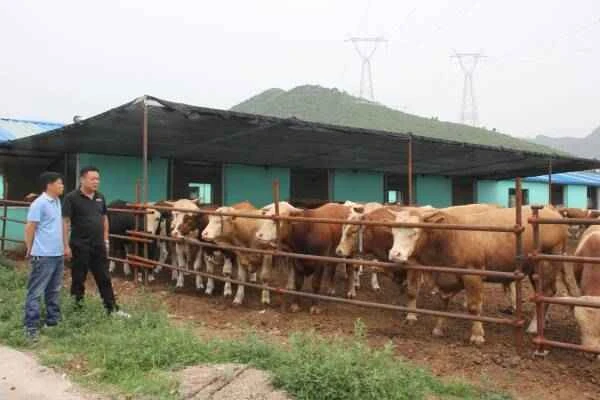
4. Xinjiang (485,000 tons)
Xinjiang is one of my country's five major pastoral areas, boasting vast natural grasslands and a highly developed agricultural sector. This provides extremely favorable conditions for the development of beef cattle farming. By 2021, Xinjiang's beef cattle production reached 485,000 tons. Among these, the Yecheng County cattle farm in Kashgar Prefecture, southern Xinjiang, is the largest cattle breeding base in the region. It is said that there are over 10,000 cattle there, leisurely strolling or quietly resting within an 8-kilometer radius—a truly breathtaking scene.
5. Yunnan Province (420,100 tons)
Yunnan is one of my country's major beef cattle producing provinces, with beef production reaching 420,100 tons in 2021, according to statistics. Yunnan boasts abundant water and heat resources, high vegetation coverage, and a strong capacity for ecological restoration. These superior natural conditions provide a solid foundation for the development of herbivorous livestock farming. Notably, beef cattle farming in Yunnan is mainly concentrated in Qujing, Dali, Wenshan, Honghe, Chuxiong, Baoshan, and Kunming. Among them, Qujing City holds a significant position in Yunnan's beef cattle market. For a long time, Qujing City has consistently ranked among the top in the province in terms of beef cattle inventory and beef production, fully demonstrating its leading position in beef cattle farming. Furthermore, the Wenshan Yellow Cattle from Wenshan Prefecture is also an excellent local beef cattle breed in Yunnan Province. This breed has a large population in southern China and has preserved its complete genetic makeup; its unique breed characteristics have earned it widespread recognition.
6. Jilin Province (408,500 tons)
Jilin Province is one of my country's major beef cattle producing areas, ranking among the top in the country in terms of beef cattle numbers. In 2021, Jilin's beef production reached 408,500 tons. Located in the eastern mountainous region, central plains, and western grasslands, and also a major corn-producing area, Jilin provides abundant feed resources for beef cattle farming. Today, Jilin Province boasts a rich variety of beef cattle breeds, including Yanbian Yellow Cattle, Chinese Grassland Red Cattle, Chinese Simmental, Yanhuang Cattle, Simmental, Limousin, and Angus. Particularly noteworthy are the Grassland Red Cattle, Yanbian Cattle, and Yanhuang Cattle, which are locally bred breeds, forming a beef cattle industry pattern of "Eastern Yellow, Western Red, and Central Improved."

7. Sichuan Province (368,600 tons)
Located in Southwest China, Sichuan boasts a unique natural environment and has become one of the most important provinces for agriculture and animal husbandry in the region. According to 2021 data, Sichuan's beef production reached 368,600 tons, highlighting the significant potential of its beef industry. Sichuan's cattle are mainly distributed in Aba, Ganzi, and Liangshan prefectures. However, Aba Prefecture's cattle industry is not only proud of its large quantity but also achieves success through its pursuit of quality. For example, the "Maiwa yak," a signature breed, enjoys a high reputation.
8. Henan Province (355,300 tons)
Henan has become a major province for herbivorous livestock farming in China, situated in prime locations suitable for cattle and sheep breeding and a core grain-producing area. Furthermore, Henan possesses abundant straw feed resources, and its cattle and sheep population has consistently ranked among the top in the country for many years. In 2021 alone, Henan's beef production reached 355,300 tons, ranking eighth. Currently, Henan has formed ten major beef cattle breeding areas, represented by Nanyang Keerqin, Zhumadian Hengdu, and Jiaozuo Yisai; ten major dairy cattle breeding areas, represented by Jiaozuo Mengniu, Jiyuan Yili, and Zhengzhou Huahuaniu; and ten major sheep breeding areas, represented by Hebi Zhonghe, Puyang Huiyuan, and Zhengzhou Sanmu. This makes Henan a core area of the Central Plains beef cattle industry belt and a leading emerging dairy province in China.
9. Liaoning Province (315,000 tons)
Liaoning is one of my country's major beef-producing provinces, with a beef output of 315,000 tons as of 2021. Located in the southern part of Northeast China, Liaoning's terrain is predominantly mountainous, with one part water and three parts farmland. Its climate is a temperate monsoon climate. This region experiences simultaneous rainfall and heat, abundant sunshine, high accumulated temperature, relatively long winters and relatively warm summers, and relatively short spring and autumn seasons, making it ideal for raising beef cattle.
It is understood that several main breeding models have been established in Liaoning's cattle farms. First, there's the self-breeding, self-raising, and self-fattening model, where farms handle the breeding, feeding, and fattening of their cattle, achieving complete self-sufficiency. Second, there's the short-term intensive fattening model, where farms provide intensive feeding to cattle for short periods to achieve higher slaughter weight and quality. Third, there's the foundation breeding cow model, which focuses on raising breeding cows to provide better breeds and quality for the beef cattle industry through selection and reproduction. Finally, there's the feeder cattle model, a more advanced model that utilizes modern feeding techniques and equipment, improving breeding efficiency and yield through precise feeding and management.

10. Gansu Province (270,200 tons)
Gansu is one of China's six major pastoral areas. Thanks to its unique natural conditions, agriculture is highly developed, especially cattle farming. Gansu is one of the provinces with the largest number of beef cattle raised in my country, with beef production reaching 270,200 tons in 2021. It is understood that Gansu has established multiple beef cattle bases, covering a wide area, mainly including Qingyang, Pingliang, Hexi Corridor, and Linxia. These bases account for approximately 70% of the province's annual output. The main breeds raised in these bases are Simmental crossbreds from Hexi Corridor, Red Angus and Limus from Qingyang and Pingliang, and South Devon crossbreds. These beef cattle breeds hold an important position in Gansu's livestock industry.
The ranking of China's top ten beef-producing provinces is mainly based on the beef production data of various provinces in China in 2021 published on the official website of the National Bureau of Statistics. This list is for reference and discussion only. If there are any errors, please feel free to comment/provide feedback at the end of the article.