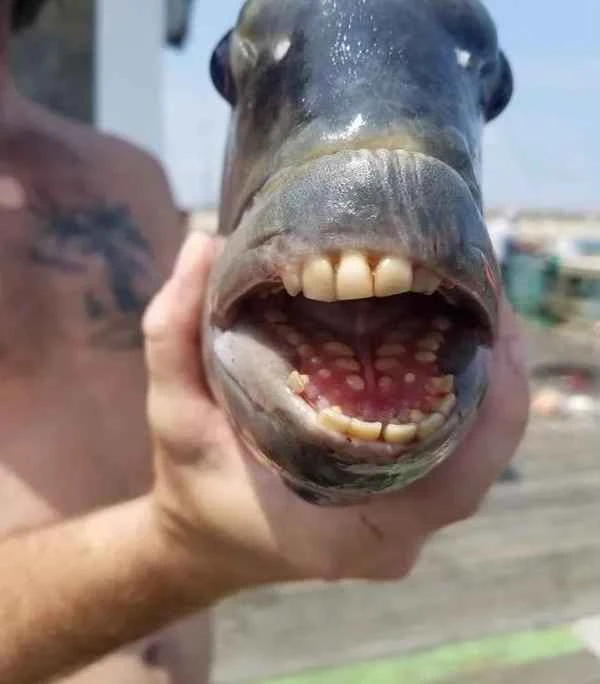
Get to know the sheephead fish—a fish with human teeth.
The sheephead fish is famous for its unusual teeth, which strikingly resemble human teeth! Native to the Atlantic Ocean, this fish is commonly found off the east coast of North America. The sheephead fish (scientific name: *Archosargus probatocephalus*) has become an internet sensation due to its unique oral structure. Let's delve deeper into the unique features of this fish and why it has become a wonder of the ocean.
Appearance and Habitat
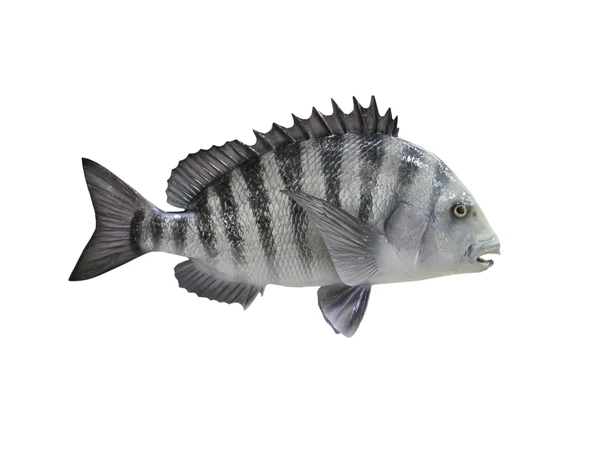
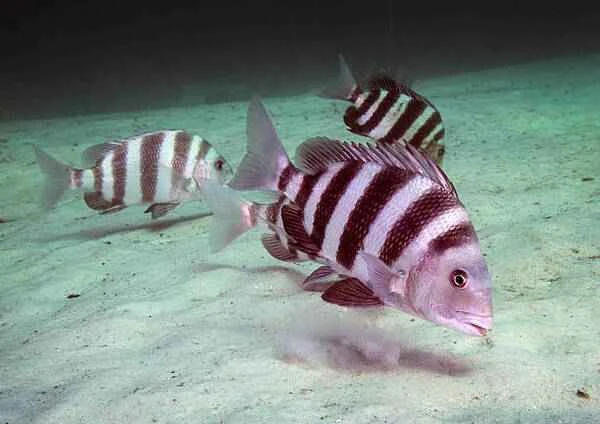
Sheephead fish are medium-sized, typically growing to about 30 inches (76 cm) and weighing around 15 pounds (6.8 kg), but most are smaller. They are also distinctive in appearance, with a tall, laterally compressed body and striking black stripes, often earning them the nickname "prisoner fish." These stripes make them very conspicuous among anglers and divers. Sheephead fish usually inhabit rocky coastlines, docks, breakwaters, and near bridges, foraging for their preferred food in these locations.
Teeth similar to human teeth
The most striking feature of the sheephead fish is its teeth—creepy resemblance to human teeth. So why do their teeth look like humans? The answer lies in their diet. Sheephead fish primarily feed on hard-shelled creatures such as crabs, barnacles, and clams. To bite through these tough shells, they have evolved a unique tooth structure. The front teeth are broad and flat, similar to human incisors, while the back teeth are rounded for crushing food.
Unlike many fish, the teeth of the sheephead fish do not fall out and be replaced frequently; instead, they continue to grow to ensure that their chewing ability is not affected. This unique dental adaptation is crucial to their survival, giving them a powerful oral structure capable of handling a variety of foods.
Distribution range
Sheephead fish are found along the western Atlantic coast, from Nova Scotia, Canada, to Brazil, but are most common in the southeastern United States. They prefer warm waters and are particularly abundant near the Gulf of Mexico and the coast of Florida.
Ecological role and human value
Not only do sheephead fish have a unique appearance, but they also play an important role in the ecosystem. By preying on crustaceans and mollusks, they help control the populations of these species, thus preventing these small creatures from overpopulating. In their habitat, sheephead fish help maintain the natural balance and prevent ecological imbalance.
For humans, the goat's head fish is a popular target for fishing because it is not only difficult to catch but also has delicious flesh. The goat's head fish has delicate, white flesh and is often grilled or fried, making it a delicacy in many seafood dishes.
Interesting facts about the sheephead fish
Multiple rows of teeth: The teeth of the sheephead fish are arranged in multiple rows, which enhances their ability to chew hard-shelled food.
Clever swimmers: Because they are good at "stealing" bait without getting hooked, sheephead fish are also known as "bait thieves".
Longevity: Sheephead fish in the wild can live up to 20 years, which shows that they are highly adaptable to diverse marine environments.
The sheephead fish may not be as famous as a shark, nor as brightly colored as a coral, but its unique charm makes it one of the more fascinating creatures in the ocean. So, the next time you hear "a fish with human teeth," remember it might be this friendly sheephead fish. Whether you're a fishing enthusiast, a marine lover, or simply interested in exotic creatures, the sheephead fish deserves your attention and understanding.
Sheephead fish: Survival crisis, conservation status, diet and delicious cooking methods
The sheephead fish is widely known for its "human teeth," but its uniqueness extends beyond that. Besides its distinctive appearance, the sheephead fish faces several environmental challenges, plays a vital role in the ecosystem, and has become a sought-after delicacy for anglers and gourmets. Let's learn more about its survival crisis, conservation status, diet, and why it has become a culinary treasure in many coastal communities.
Survival crisis and protection level
Although the sheephead fish is not currently listed as an endangered species, it faces several environmental pressures. Coastal development, pollution, and the destruction of key marine ecosystems, such as oyster reefs and seagrass beds, all negatively impact their populations. These areas are vital foraging and breeding grounds for the sheephead fish, and their destruction threatens their survival.
While overfishing has not yet reached a severe level, it still poses risks. Goathead bream are favored by both commercial and recreational fishermen due to their delicious taste and challenging fishing conditions. However, most areas have ensured stable goathead bream populations through sustainable fishing management practices. In the United States, state regulations protect them, including limits on catch size and quantity, to prevent overfishing.
Currently, the sheephead fish is listed as "Least Concern" by conservation organizations, meaning it is not at risk of extinction in the near future. However, continued monitoring and protection of its habitat remain crucial to ensure the species' future stability.
Diet of the sheephead fish
The sheephead fish is an omnivorous animal, but primarily feeds on hard-shelled marine invertebrates. Utilizing its strong "human teeth," the sheephead fish can chew and digest a variety of prey, including:
Crab: Crab is one of the favorite foods of the ram's head, whose powerful jaws can easily crack open the crab's hard shell.
Barnacles: The barnacles are scraped off from rocks, docks, or pillars with their front teeth and then crushed with their back teeth.
Clams and oysters: These tough shellfish pose a challenge to many predators, but the ram's teeth are designed just right to bite through their hard shells.
Shrimp: Mollusks such as shrimp are also their food, supplementing their diet with harder foods.
Plants: Although primarily carnivorous, sheephead fish sometimes ingest algae and other plant materials, demonstrating their adaptability.
Their diverse diet allows them to thrive in rich coastal environments, especially in rocky, docky, or coral reef areas teeming with marine life.

Sheep's head fish is a delicious dish
In the southeastern coast of the United States, particularly in the Gulf Coast region, goathead fish is considered a delicacy. It is favored by anglers not only because it is difficult to catch, but also because its excellent flavor makes it a popular dish.
The flesh of the goathead fish is white, firm, and mild in flavor, making it suitable for a variety of cooking methods. Its taste is often compared to other mild-fleshed white fish, such as red snapper or grouper, but because it feeds on crustaceans, it has a slightly sweet flavor.
Popular cooking methods:
Grilling: Grilling is the preferred method for cooking scad. The firm flesh is perfect for grilling, and simple seasonings such as lemon, garlic, and herbs can enhance the flavor. Many people enjoy grilling the whole scad, especially smaller fish, as this retains its juices and adds to the flavor.
Deep-frying: Sheephead fish is often coated in breadcrumbs and deep-fried, a common practice, especially in kitchens along the southern coast. Crispy on the outside and tender on the inside, it's delicious served with salad, tortillas, or sauces like tartar sauce and mayonnaise.
Baking: Baking the goat's head fish with herbs, butter, and a splash of white wine is also an excellent choice. The fish retains its moisture and absorbs the flavors of the added ingredients, and it's best served with steamed vegetables or potatoes.
Fish wraps: In recent years, goat's head fish has become increasingly popular in fish wraps. Its mild flavor and firm texture make it perfect for adding spices such as cumin and chili powder, and it tastes even better when paired with fresh salad and avocado.
The goathead fish may be known for its "human teeth," but its peculiarity goes far beyond that. Despite facing risks of habitat loss and overfishing, the species has remained stable thanks to adaptation and conservation measures. It is widely loved in the culinary world for its mild flavor and versatility in cooking, making it a staple ingredient in coastal kitchens.
Whether you're fishing for fun, concerned about environmental protection, or simply want to try some fresh seafood, the goathead fish is an interesting and valuable species that deserves attention and respect.