The aye-eye (pronounced "eye-eye") is one of the world's most peculiar and misunderstood creatures. A nocturnal lemur found only in Madagascar , it is renowned for its distinctive appearance. However, these very characteristics have not only made it an ecological wonder but have also unfortunately burdened it with a reputation for misfortune. Let's explore the wonders of this primate and the superstitions that threaten its survival.
What is an aye-aye?
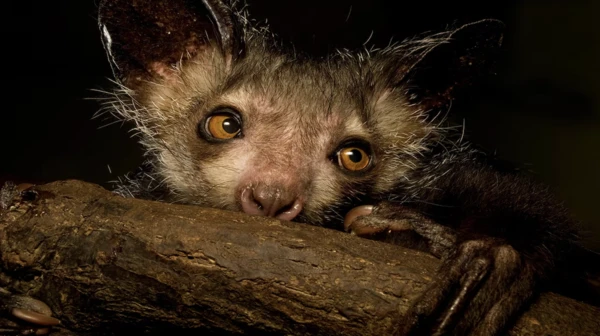
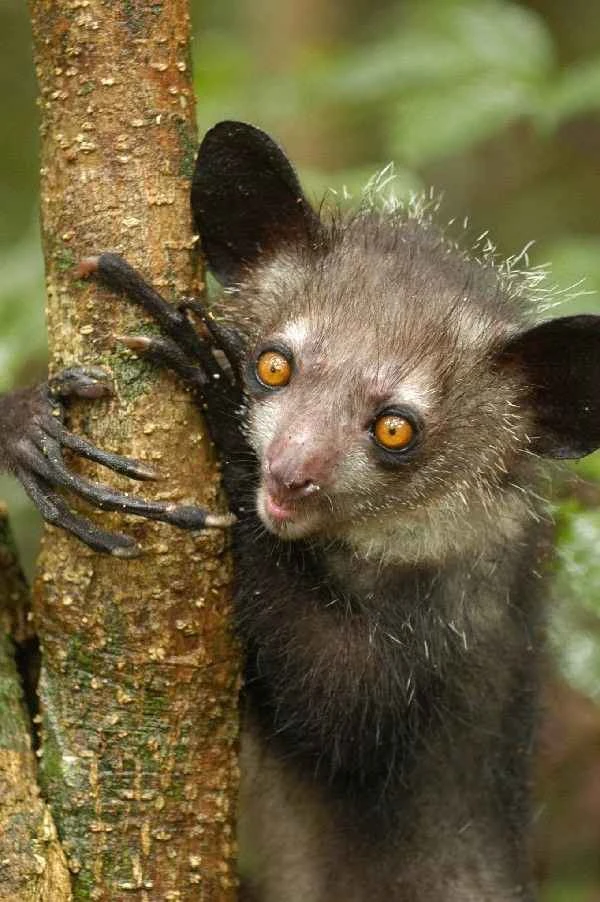
The aye-aye is a small, nocturnal primate known for its unique characteristics that help it survive in the forests of Madagascar. Its scientific name is * Daubentonia madagascariensis *, and it is the largest nocturnal primate in the world, belonging to the lemur family. It has evolved some remarkably unique skills for foraging and hunting:
Large eyes : help it see in the dark.
Huge ears : as sensitive as a bat's, able to hear the faint sounds of insects hidden in tree trunks.
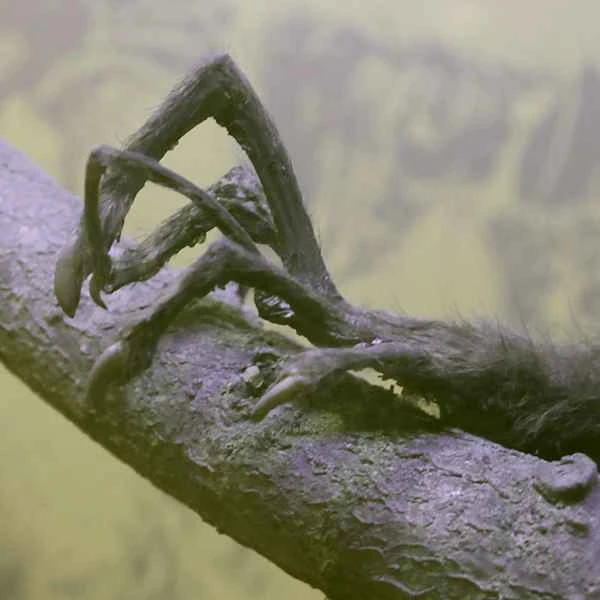
Extra-long middle finger : This is the most peculiar feature of the aye-aye, which uses this middle finger to tap tree trunks to find where insects are hiding.
How do aye-aye find food?
The aye-aye possesses a unique foraging method known as tapping foraging . It taps tree trunks with its long middle finger, listening for hollow sounds to locate beetle larvae hidden within. Once it finds its target, it uses the same middle finger to reach deep into the trunk and retrieve its prey. Its main diet includes:
Insects and larvae : especially beetle larvae, which it finds by tapping.
Fruits and nuts : It uses rodent-like teeth to crack open hard shells.
Nectar : Occasionally consume nectar to increase dietary diversity.
Why is the aye-aye important?
Despite their unusual appearance, the aye-aye plays a vital role in Madagascar's ecosystem. It helps maintain forest health and balance by preying on insects that damage trees. Therefore, the aye-aye lemur is not only unique but also ecologically significant.
The superstition of the aye-aye
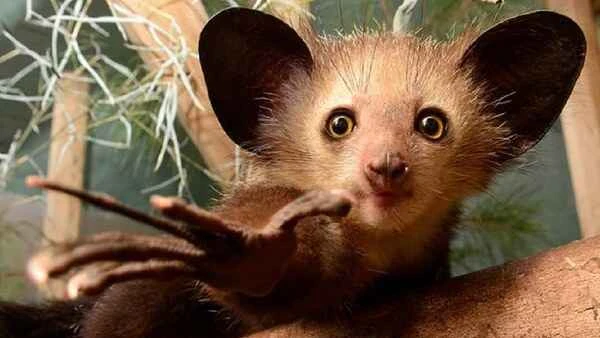
In Madagascar, many people consider the aye-aye an omen of bad luck. Folklore holds that if an aye-aye points at someone with its long finger, that person will suffer misfortune or death. Its eerie appearance—large eyes, a slender body, and its signature middle finger—leads to its association with evil or death. Unfortunately, these superstitions have resulted in many aye-ayes being killed by local villagers who view them as a threat rather than an important member of the ecosystem.
The current state of conservation of the aye-aye
Currently, the aye-aye is listed as an endangered species . Their numbers are declining due to habitat loss caused by deforestation and hunting driven by superstition. Conservation organizations like the Durrell Wildlife Conservation Trust and the Madagascar Fauna are working to change public perception of the aye-aye by educating communities and establishing protected areas to ensure their survival and survival.
Fun facts about aye-aye
Rodent-like teeth : The aye-aye's incisors grow continuously like those of a rodent, so it constantly gnaws on wood to maintain their length.
Flexible middle finger : Its middle finger can be three times as long as the other fingers, making it ideal for foraging.
Nocturnal animals : Aye-aye is a nocturnal animal that nests and sleeps in trees during the day.
A unique family : the aye-aye is the only surviving member of its family, Daubentoniidae .
Aye-aye population and conservation status
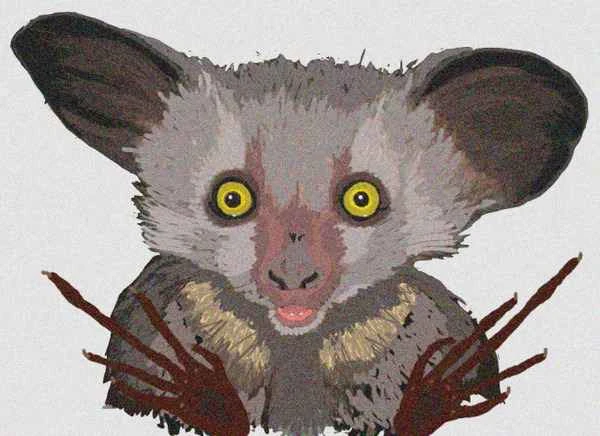
Today, the number of aye-ayes is declining. Because they live in dense forests and are elusive, an accurate count is difficult to determine, but current estimates suggest that only about 1,000 to 2,500 aye-ayes remain in the wild . The International Union for Conservation of Nature (IUCN) lists them as endangered , with major threats including habitat loss due to deforestation and hunting due to local doom-related traditions.
Multiple conservation efforts are underway, with organizations such as the Durell Wildlife Conservation Trust and the Madagascar Wildlife Group actively working to dispel superstitions about aye-yaks and protect the species' survival through habitat conservation and community education activities.
Physical characteristics: height and weight
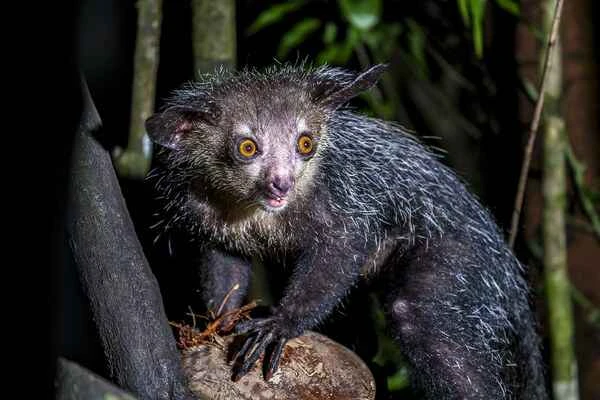
The aye-aye is as unique in appearance as in behavior. It is one of the larger nocturnal primates, measuring approximately 35 to 43 centimeters (14 to 17 inches) in length, increasing to over 60 centimeters (24 inches) with its bushy tail. Its weight typically ranges from 1.8 to 2.7 kilograms (4 to 6 pounds), with males usually slightly larger than females. Covered in coarse, dark brown or black fur, the aye-aye possesses large, bright eyes adapted for nocturnal activity, and its long, slender finger bones help it find food in a unique way, extremely rare among other animals.
Habitat and distribution range
Aye-ayes are found only in Madagascar , inhabiting a variety of forest regions, from the tropical rainforests of the east coast to the dry broadleaf forests and mangroves of the west and north. While they can adapt to different forest types, they rely on environments with dense vegetation and mature trees, which provide them with food and shelter. As deforestation continues to reduce Madagascar's forest cover, aye-ayes are forced to live in smaller, more isolated areas, making survival increasingly difficult.
Conservation and ecological significance
Aye-ayes play a vital role in Madagascar's ecosystem by preying on larvae and beetles under tree bark, helping to control insect populations and prevent these pests from damaging trees, thus promoting forest health and biodiversity. Conservation efforts focus on habitat protection, community education to dispel superstitions, and the establishment of protected areas to help aye-ayes gain greater survival opportunities.
The aye-aye may inspire fear in some, but it is an indispensable and wondrous creature in the forests of Madagascar. Despite its tarnished reputation due to superstition, conservationists are working to reverse this negative perception to ensure this unique species is passed down to future generations. The aye-aye reminds us of the diversity and wonder of nature and demonstrates the importance of protecting every misunderstood species.