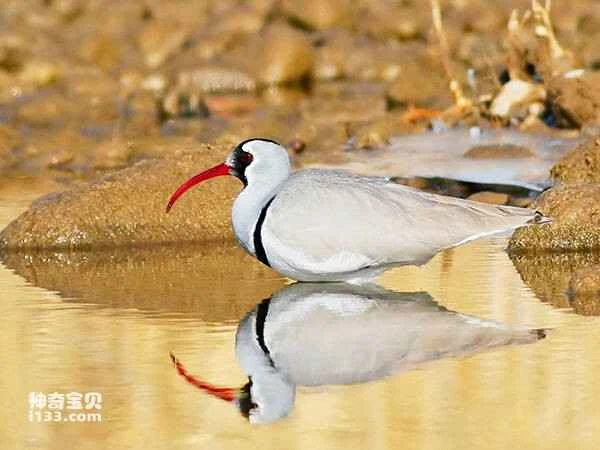
The ibis-billed sandpiper is a distinctive species of sandpiper with a black, white, and gray body, and a reddish beak and legs. Its beak is long and curved downwards. It is often seen alone or in small groups of 3-5 individuals, foraging on the gravel and sandy banks of rivers. It dips its head and neck into the water to feed. Its diet consists mainly of worms, centipedes, and insects and insect larvae from the orders Ephemeroptera, Trichoptera, Isoptera, Hemiptera, Coleoptera, and Hymenoptera. It also eats small fish, shrimp, and mollusks. It is wary and will crouch motionless at the slightest sound, remaining motionless until danger approaches, at which point it will quickly walk away along the winding paths between the gravel or take flight to escape.
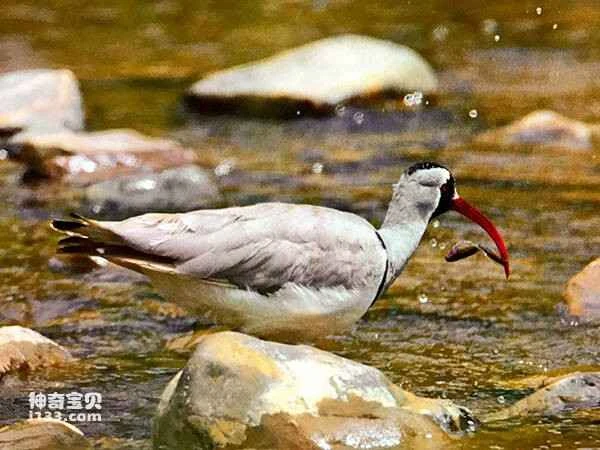
Recently, staff at the Tangjiahe area of the Giant Panda National Park photographed five rare birds—Ibisbills—on the banks of the Qingzhujiang River in Qingxi Town.
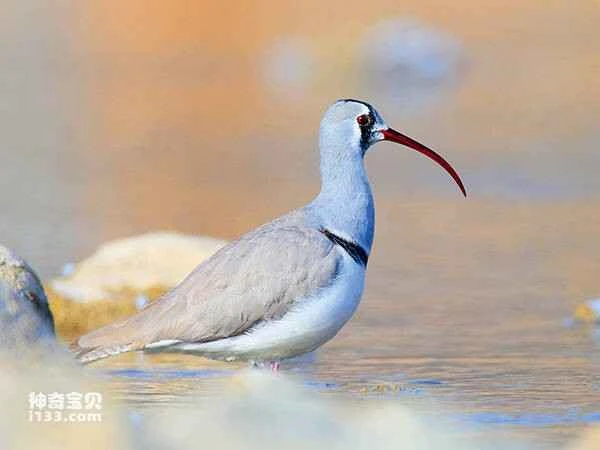
The ibis-billed sandpiper is an ecological indicator bird. With the effective protection of the rivers and aquatic ecological environment in the Tangjiahe area for 45 years and a series of protection measures such as the river chief system adopted since the establishment of the Giant Panda National Park, food supplies and temporary stopover environments have been provided for migratory wading birds and geese and ducks passing through the area. This further confirms that the aquatic ecological environment around the Giant Panda National Park is getting better and better, and the community residents' awareness of protection is also getting higher and higher.