Semi-aquatic turtles are classified by turtle enthusiasts based on their habits. Compared to aquatic turtles, semi-aquatic turtles prefer to live on land or underwater, but most semi-aquatic turtles cannot stay in deep water for too long, otherwise they are at risk of drowning. Below, I will introduce you to the world's top ten semi-aquatic turtles, including: Golden Coin Turtle, Yellow-margined Box Turtle, Amboina Box Turtle, Spiny Mountain Turtle, Saw-edged Turtle, Painted Box Turtle, Carolina Box Turtle, Japanese Ground Turtle, Cane Forest Turtle, and Wood-gray Turtle. These turtles have unique appearances and behavioral characteristics, making them very popular among turtle enthusiasts.
1. Golden Coin Turtle
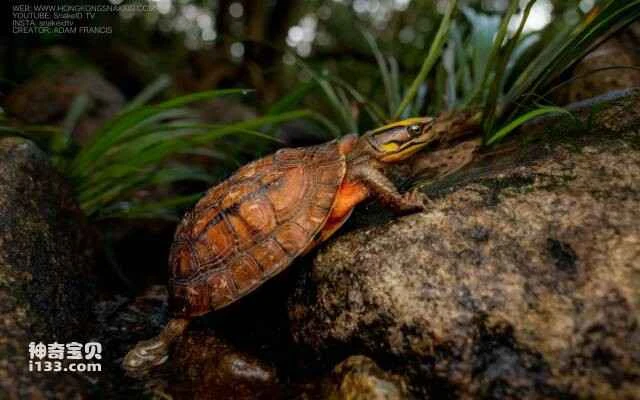
The Golden Coin Turtle, also known as the Three-lined Box Turtle, is a highly prized ornamental turtle. They are amphibious and breathe through lungs. They are mainly distributed along the coast of my country, as well as in Southeast Asian countries such as Vietnam and Laos. They prefer to inhabit valleys, streams, river forks, and lakes in mountainous and hilly areas, and sometimes venture into damp mountain ravines, grasslands, and rice paddies.
Golden coin turtles are omnivorous, feeding on various fish, shrimp, fruits, vegetables, and small insects in the wild. They enjoy basking in the sun on land during sunny days, but mostly hide in shady places during hot weather. They are gregarious and burrowing. Overall, the golden coin turtle is a very interesting species and is beloved by turtle enthusiasts.
2. Yellow-margined Box Turtle
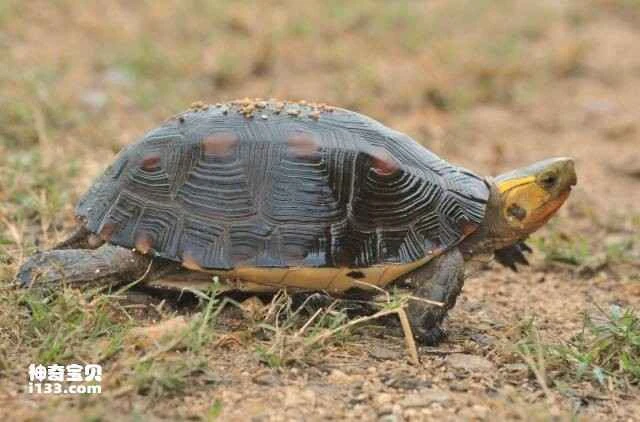
The Yellow-margined Box Turtle, also known as the Yellow-margined Box Turtle, is mainly distributed in central and southern my country, as well as Ishigaki and Iriomote islands in the Okinawa region of Japan. This turtle is an omnivorous animal, preferring to eat insects, fish, shrimp, and fruits and vegetables. It is often found in damp places such as forest edges, rivers, and lakes, hiding under fallen trees, rocks, or fallen leaves.
Yellow-margined Box Turtles frequently venture out to forage during rainy seasons, while during the dry season they tend to stay near streams and valleys with flowing water. They are primarily nocturnal in summer, hiding during the day in shady areas of firewood or among piles of rocks along the streambank. In winter, these turtles hibernate, typically choosing a sheltered spot on a sunny slope made of weeds, twigs, and fallen leaves as their hibernation ground.
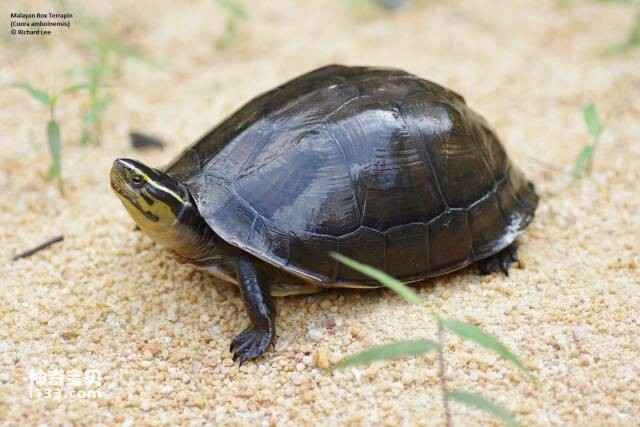
3. Amboina Box Turtle
The Amboina box turtle, also known as the Malayan box turtle, is one of the most widely distributed semi-aquatic turtles. They are widely found throughout Southeast Asia, inhabiting slow-moving, soft-bottomed waters such as swamps, wetlands, ponds, rivers, and rice paddies in plains areas. Amboina box turtles are herbivores, but also eat worms, snails, and other small insects. Although they are primarily aquatic, they can sometimes be found on land, some distance from the water. In captivity, their enclosures can be designed for both aquatic and terrestrial use.
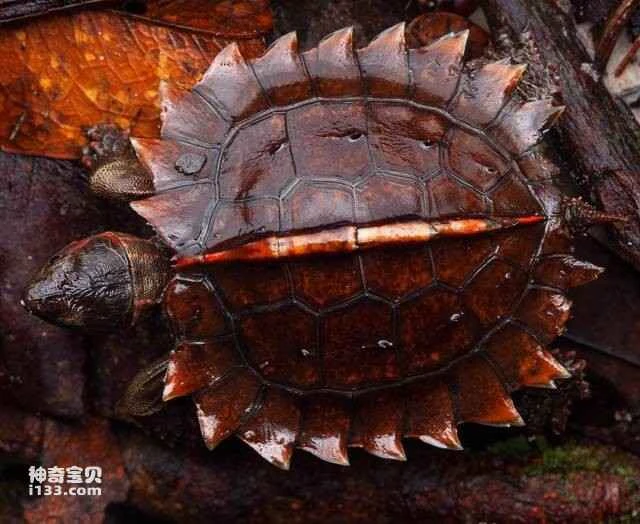
4. Spiny Mountain Tortoise
The spiny mountain tortoise is a semi-aquatic turtle, also known as the sun tortoise, because of the sharp spines that surround its carapace. They are found from southern Myanmar to some small islands in Sumatra and Indonesia, living in rainforests at altitudes of 100 to 170 meters, and primarily feeding on fruits, leaves, stems, and tubers.
Spiny mountain tortoises typically inhabit clear stream areas, hiding among fallen leaves and grass. As juveniles, they tend to be more terrestrial, lacking webbing between their toes and not being good swimmers; they are often found wandering in the cool, damp forest floor.
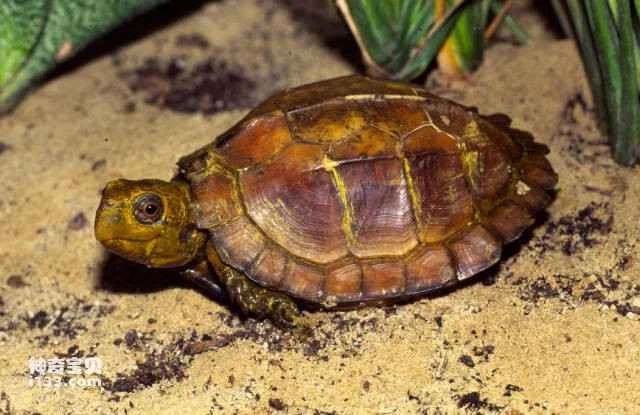
5. Saw-edged turtle
The serrated-edged turtle, also known as the eight-horned turtle or eight-ridged turtle, is recognized as one of the most terrestrial and semi-aquatic turtle species. They are distributed in Hunan, Hainan, Yunnan, and Guangdong provinces of China, as well as Vietnam, Myanmar, and India. Serrated-edged turtles primarily inhabit hilly and mountainous areas in tropical and subtropical regions, living in relatively humid environments. They are usually not far from water sources and have a habit of drinking regularly.
The serrated tortoise prefers to eat snails, worms, insects, and other similar foods, and is entirely terrestrial, making it more similar to other terrestrial tortoises. Therefore, some argue that classifying it as a terrestrial tortoise is more appropriate.
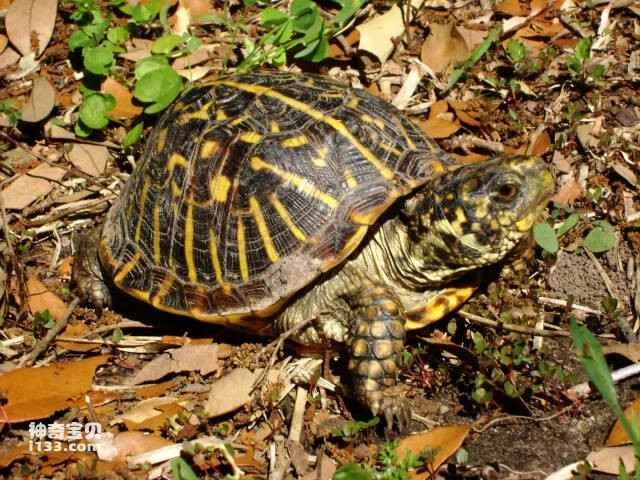
6. Ornate Box Turtle
The painted box turtle, also known as the "western box turtle," is similar in habits to the three-toed box turtle, but its distribution area is drier. They mainly live in the arid grasslands between the United States and Mexico, and can even adapt to desert environments, feeding on insects, worms, and fruits and vegetables.
Box turtles possess the ability to store water in their bladders, similar to tortoises, allowing them to tolerate higher levels of drought than other box turtle species. In 1986, the painted box turtle became the state reptile of Kansas, while in Indiana it is listed as an endangered species.
7. Carolina Box Turtle
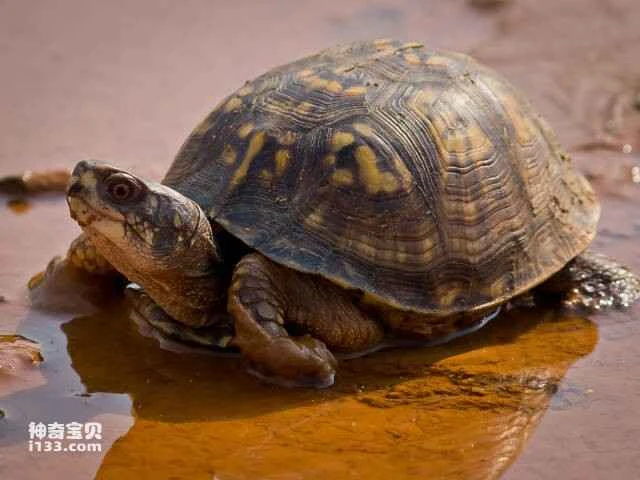
Carolina box turtles are turtles whose shells are about 10-22 cm long and arched high like a box, hence their name. They are mainly distributed in the United States, from Maine and Michigan to Texas and Florida. These turtles are omnivorous, feeding mainly on berries, fungi, earthworms, snails, and insects.
Carolina box turtles inhabit open woodlands, swamp meadows, floodplains, and shrub-covered grasslands. Although they are semi-aquatic turtles, they spend most of their time on land.
8. Japanese Ground Turtle
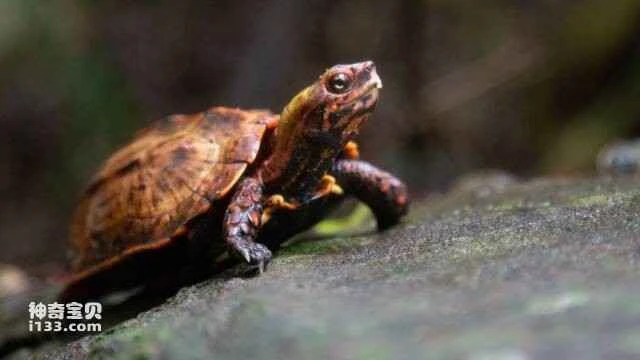
The Japanese ground tortoise is a semi-aquatic turtle endemic to Japan, with a generally brown body. Adults typically have a carapace length of 13-18 cm and are widely distributed on Hiroshima Island. They live in humid forests and feed mainly on insects, snails, tadpoles, frogs, or weeds and fruits.
Japanese ground tortoises are known as expert reptiles, often found in mountainous forests, foraging for food in what are called "grasslands." They also frequent streams and rivers, but should not enter deep water areas as they risk drowning.
9. Sugarcane Forest Turtle
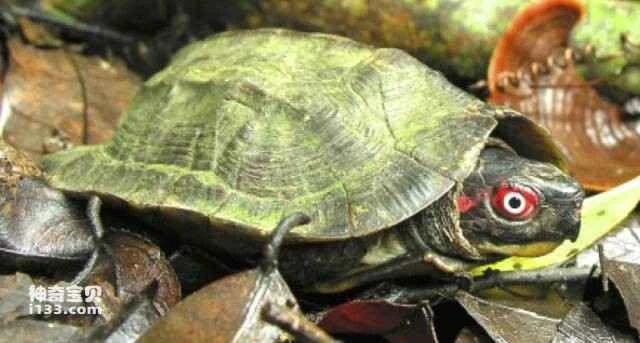
The cane forest turtle is a rare semi-aquatic turtle species found only in certain areas of southern India. They inhabit densely wooded hilly areas at altitudes above 300 meters, living in underground burrows and primarily feeding on plants.
Although the cane forest turtle is a semi-aquatic turtle, it doesn't like to stay in the water and isn't particularly fond of water, often crawling in bushes. This rare turtle species is not commonly seen, but it has received considerable attention and research. In 1911, Indian herpetologist Jaganath Vijaya discovered a male and a juvenile turtle in the Kochi forest of Kerala in southwestern India, and subsequently tagged 125 others of the same species.
10. Wood Grain Turtle
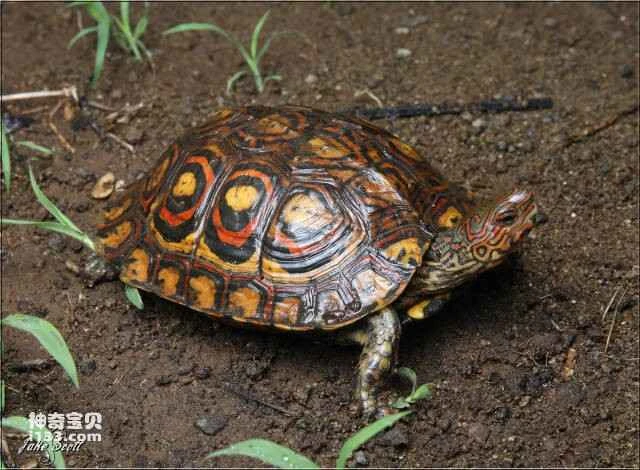
Wood turtles are a typical omnivorous turtle species found in countries such as Mexico, Costa Rica, Guatemala, and Honduras. Juveniles tend to eat insects, such as mealworms, crickets, and earthworms, while adults are more omnivorous.
These turtles spend most of their time on land, foraging and living similarly to box turtles. Although they are not large, they are very active, have a large appetite, and are not picky eaters. Therefore, wood-shelled turtles are among the easiest and healthiest turtle species to keep as pets.
The list of the world's top ten semi-aquatic turtles was compiled by searching relevant online platforms to identify semi-aquatic turtles within the order Testudines, taking into account their population size, morphological characteristics, popularity, and influence. If you have any questions, please feel free to leave comments, criticisms, or corrections.