The *Classic of Mountains and Seas* is an ancient book from the pre-Qin period. It covers various aspects of ancient mythology, geography, animals, plants, minerals, witchcraft, religion, history, medicine, folklore, and ethnic groups. Among its animal records, it mentions as many as 277 species, including tigers, leopards, yaks, bears, brown bears, wolves, dogs, rabbits, pigs, horses, monkeys, apes, orangutans, rhinoceroses, oxen, pigs, deer, muntjacs, mongooses, piglets, takins, antelopes, sheep, elephants, snakes, mole crickets, weasels, camels, otters, foxes, elk, and dust moles, as well as the *bokou*, *bifang*, *dijiang*, *heluoyu*, birds, and *xingxing*. It is a work of historical value. So, what are the ten most notorious man-eating beasts in the *Classic of Mountains and Seas*? Let's take a look.
This list of the top ten man-eating mythical beasts from the Classic of Mountains and Seas is primarily based on descriptions of these creatures in the famous book. The Classic of Mountains and Seas is an ancient book of strange tales, and the existence of these beasts in reality is questionable. Therefore, this article is for informational purposes only. This list is for reference only. If you have any questions, please feel free to follow and leave a comment at the end.
1. Tengu
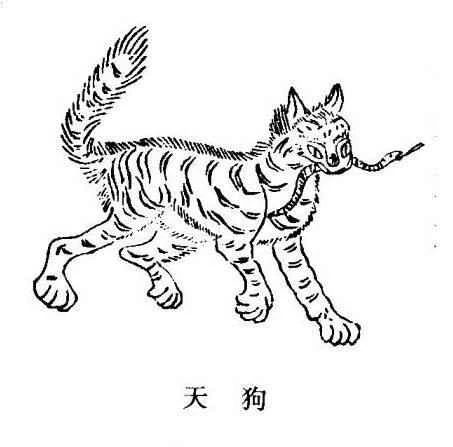
The Celestial Dog (天狗) is an animal in ancient Chinese folklore. It was first recorded in the *Classic of Mountains and Seas* (山海经), which states: "Three hundred li further west is Yinshan. The Zhuoyu River originates there and flows south into Fanze. Many patterned shells are found there, and there is a beast called the Celestial Dog. It resembles a wildcat with a white head, and its cry is like a 'liuliu' sound. It can ward off evil." As described in the text, the Celestial Dog is an animal resembling a wildcat with a white head, and is considered an auspicious beast that wards off evil. It is likely some kind of ancient mammal and may have actually existed. However, the term later evolved to describe comets and meteors. Ancient people considered shooting stars in the sky to be extremely unlucky, so the Celestial Dog also became a name for an ominous star.
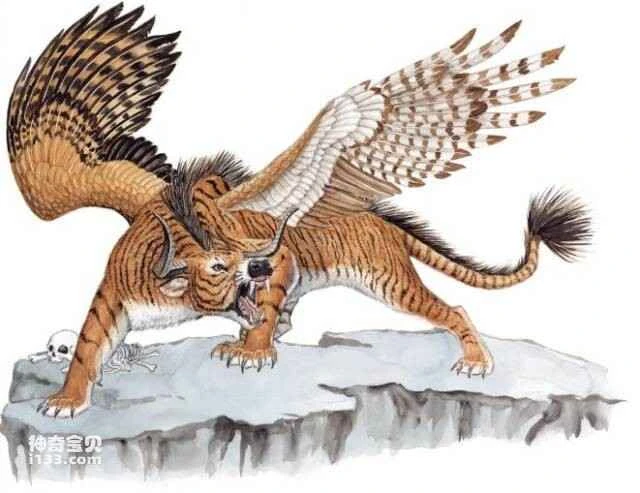
2. Qiongqi
Qiongqi, one of the Four Fiends in ancient Chinese mythology, is primarily recorded in the *Classic of Mountains and Seas*. The *Classic of Mountains and Seas: Northern Seas* describes Qiongqi as resembling a tiger with wings, a man-eating beast that begins its meal at the head; it is a ferocious monster. However, the *Classic of Mountains and Seas: Western Mountains* presents a different image of Qiongqi, describing it as resembling an ox with porcupine-like fur, quite different from the description in the *Classic of Mountains and Seas: Northern Seas*. Nevertheless, both are man-eating beasts, and there is no difference in that respect.
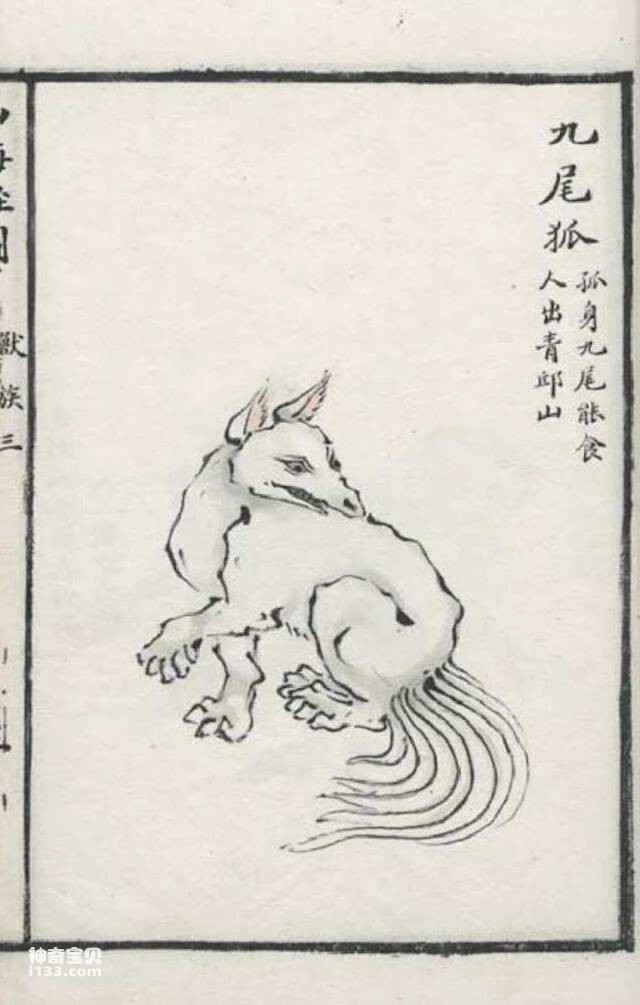
3. Nine-tailed fox
The nine-tailed fox is a mythical creature in traditional Chinese mythology and folklore, believed to be a fox spirit capable of transforming into a beautiful woman. Its name comes from its nine tails, with each additional tail said to increase its power and wisdom. In legends, the nine-tailed fox is typically described as extremely beautiful, intelligent, and cunning, skilled in transformation and illusion, able to control wind and rain, snowfall, and guide spiritual energy, while also possessing healing and exorcising abilities. However, due to its alluring appearance and dangerous nature, the nine-tailed fox is often seen as an ominous creature, and its association with humans is believed to bring misfortune and bad luck. The image of the nine-tailed fox holds a very important place in Chinese culture, appearing not only in literary works, paintings, and films, but also profoundly influencing many aspects of Chinese culture and society, such as poetry, drama, medicine, and Taoism. The *Classic of Mountains and Seas* states: "On Mount Qingqiu there is a beast, its shape like a fox with nine tails, its cry like that of an infant, capable of devouring people, and those who eat it will not be harmed."
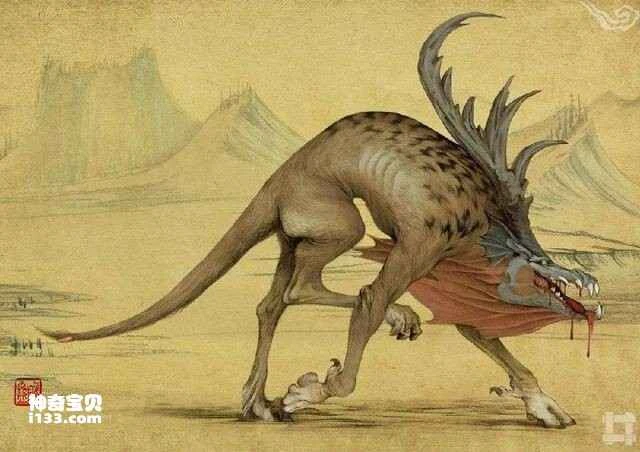
4. Gu Diao
The *Classic of Mountains and Seas*, specifically the *Southern Mountains Classic*, records: "Five hundred li further east is Mount Luwu. The Zegeng River originates there and flows south into the Pang River. In the river dwells a beast called the Gu Diao, which resembles an eagle but has horns, and its cry is like that of an infant; it eats people." The Gu Diao, also known as the Zuan Diao, is a man-eating monster that is neither bird nor eagle, resembling an eagle with horns on its head, and its cry sounds like that of an infant. Archaeologists have unearthed a pure gold eagle-beaked, deer-shaped beast-bodied creature from a late Warring States period Xiongnu tomb in Nalingaotu Village, Shenmu, Shaanxi Province. Its design bears similarities to the Gu Diao described in the *Classic of Mountains and Seas*. This type of design exhibits typical characteristics of northern steppe culture. In legend, the Gu Diao possesses the special ability to spit out poisonous Gu, which can be used to attack enemies or curse someone. It can also control natural elements such as water, fire, and wind, theoretically allowing it to manipulate all things in the universe at will.
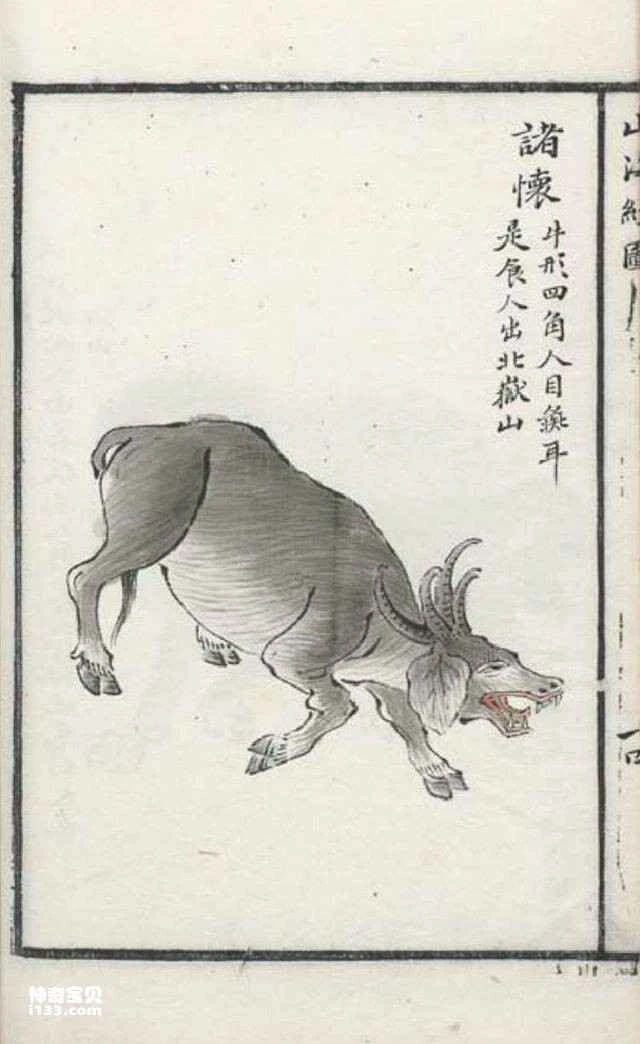
5. Zhu Huai
Zhu Huai is a mythical beast in ancient Chinese mythology. According to the *Classic of Mountains and Seas* (specifically the *Northern Mountains Classic*), Zhu Huai resembles an ox with four horns, human eyes, and boar ears. It can make a sound similar to that of a flying goose and is said to devour humans. Although some texts describe Zhu Huai as a wild boar, this description is not widely accepted. In ancient texts and artworks, Zhu Huai is typically depicted as a strange, ox-shaped monster with powerful demonic abilities and a ferocious nature. Despite being a mythical creature, Zhu Huai's image and legends have influenced many aspects of Chinese culture, including literature, painting, sculpture, and folk tales.
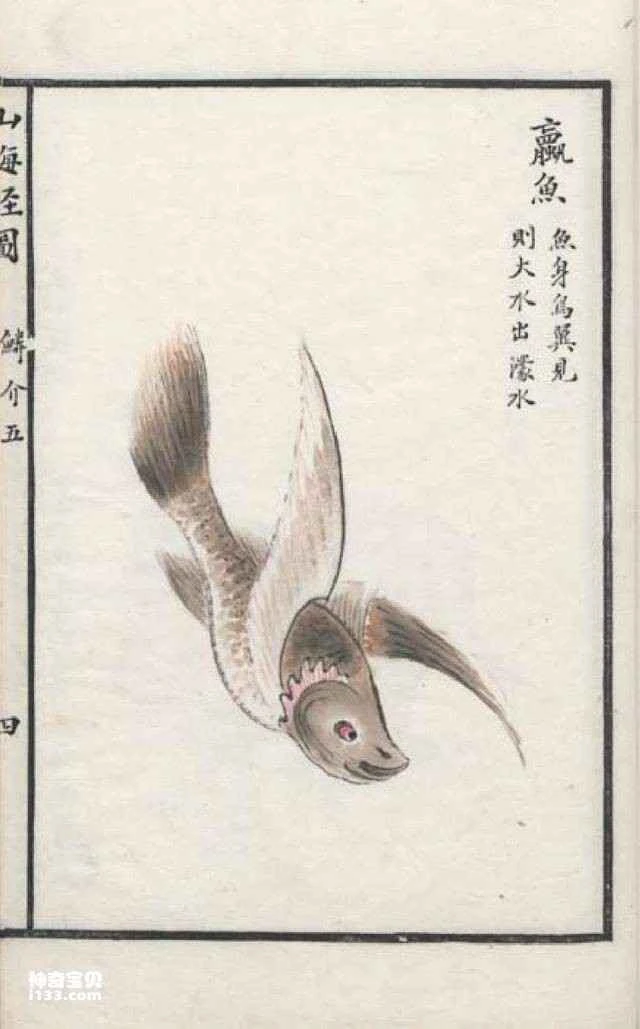
6. Snail
The Yingyu is a mythical creature in the *Classic of Mountains and Seas*, resembling a fish with bird wings and capable of emitting a call similar to that of a mandarin duck. According to the *Classic of Mountains and Seas, Northern Mountains*, the Yingyu frequently appears near Mount Gui, and its appearance brings floods. Mount Gui, located in the central Qinling Mountains of ancient China, is a renowned mountainous region famous for its beautiful scenery and abundant natural resources. The Meng River is a stream on Mount Gui, its source abundant with yellow shells, flowing through the mountain before joining the Yang River. However, whenever the Yingyu appears, it causes the Yang River to swell, resulting in large-scale floods. Although the Yingyu is merely a fictional creature in the *Classic of Mountains and Seas*, it still holds symbolic significance in ancient Chinese culture, regarded as a symbol and warning of natural disasters.
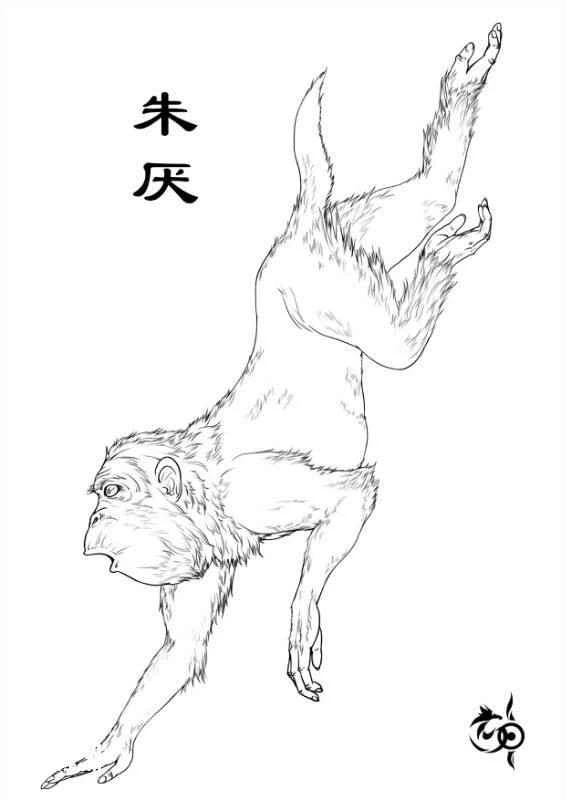
7. Zhu Yan
Zhu Yan is a ferocious beast in Chinese mythology, said to resemble an ape with a white head and red feet. Like the Fu Hou (a type of harp), Zhu Yan is considered a symbol of war and calamity. It is said that the appearance of Zhu Yan foretells large-scale warfare. Another version suggests that Zhu Yan is actually an ape with clean fur, capable of swift running, and typically appears in two forms: a monkey-like form and a human-faced monkey. In Chinese mythology, Zhu Yan is a very powerful being, its appearance often foreshadowing war or disaster. Therefore, people often regard it as an ominous sign and hope to avoid its appearance. Although the form and characteristics of Zhu Yan may vary slightly in different versions, it remains a mythical figure with strong symbolic meaning, representing people's fear and vigilance against war and disaster.
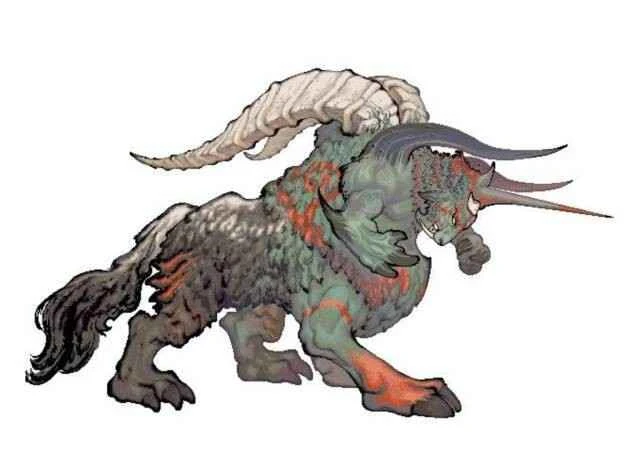
8. Taotie
Legend has it that the dragon has nine sons, each with a different appearance and characteristics. The fifth son, Taotie, is a ferocious and cruel monster. According to the *Classic of Mountains and Seas*, it resembles a sheep, with eyes under its armpits, tiger teeth, and human claws. It has a large head and mouth, and is extremely gluttonous, eating anything it sees, ultimately dying from its own overeating. Due to Taotie's image and characteristics, it has been used in later cultural traditions to describe greed, violence, and gluttony. The image of Taotie frequently appears in games, novels, comics, and films, usually depicted as a ferocious monster or a greedy and lazy character.
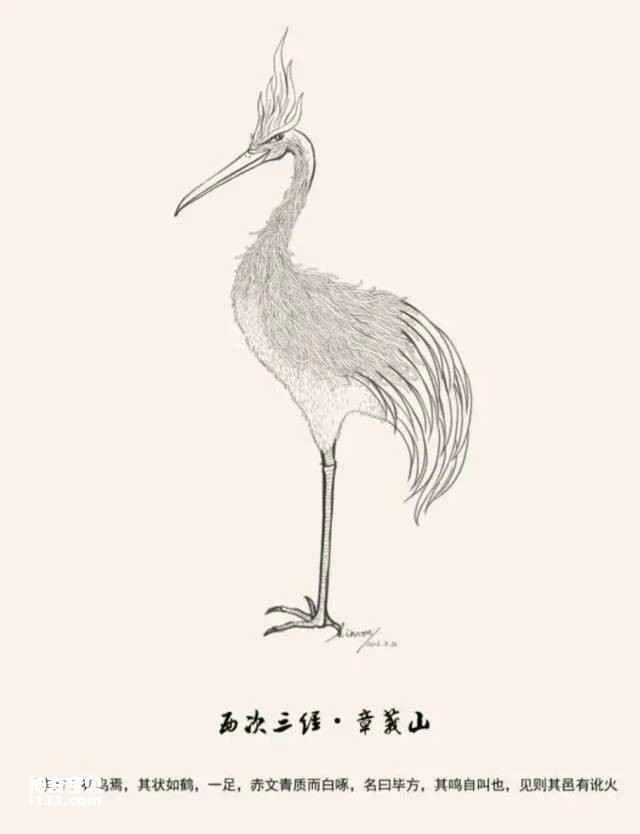
9. Bifang
In ancient Chinese legends, the Bifang is depicted as a mysterious creature, resembling a red-crowned crane but with a human face, only one leg, a blue body with red spots, and a white beak. According to legend, the Bifang lives in trees, cannot eat grains, but can consume flames. It is also seen as an omen of fire and served beside the Yellow Emperor's chariot when he gathered spirits, later becoming revered as the attendant of the God of Fire. This mythical creature has been passed down for thousands of years and holds significant symbolic meaning in Chinese culture.
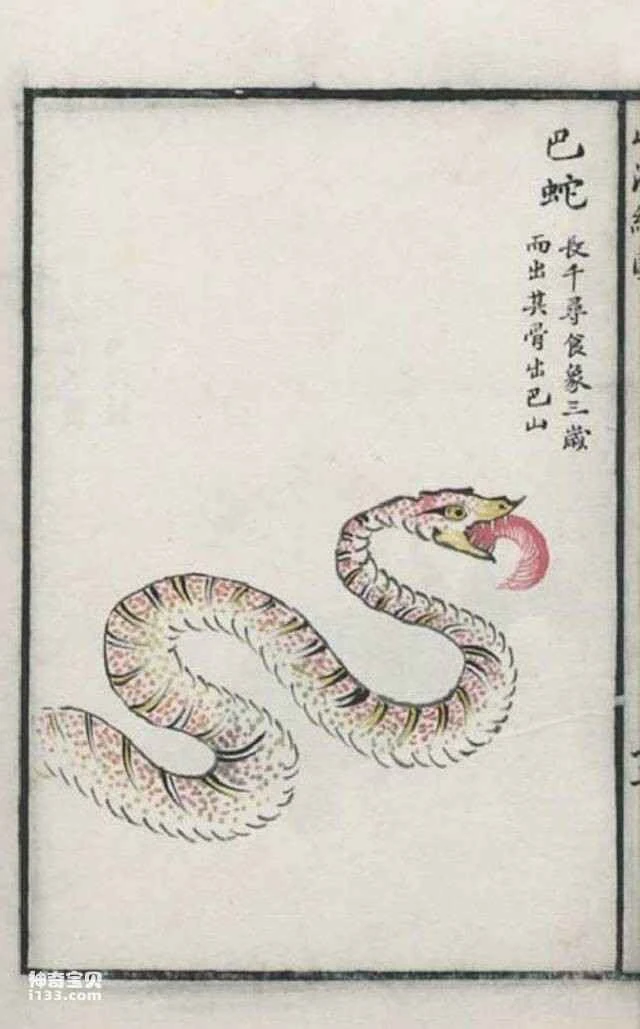
10. Snake Cultivation
According to the *Classic of Mountains and Seas*, the Xiu Snake was a ferocious beast with various forms, described as a black snake with a green head, or a greenish-yellow, reddish-black creature. It typically lived in water and fed on other animals, including giants like elephants. The Xiu Snake attacked humans, posing a threat. Legend has it that the Yellow Emperor sent the archer Yi to slay the Xiu Snake, and Yi ultimately cut it in two. The Xiu Snake's corpse transformed into a hill, now known as Baling.
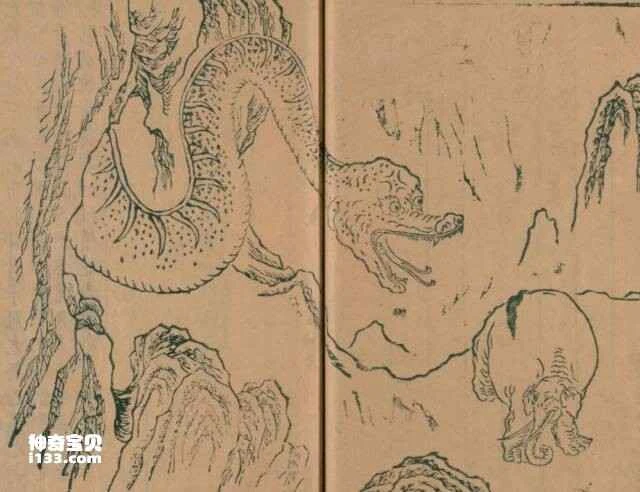
The ancient Classic of Mountains and Seas contains illustrations, with the earliest and most widely circulated being the Qing Dynasty edition illustrated by Wu Renchen. This book states that its illustrations originated from Shu Ya's redrawing, but only included 144 of the more "mysterious" illustrations, categorized into five groups: spirits, alien lands, beasts, birds, and fish. Ma Changyi, a researcher at the Institute of Literature of the Chinese Academy of Social Sciences, selected 1000 illustrations from nine existing illustrated editions of the Classic of Mountains and Seas, and, together with the text, wrote *Ancient Illustrated Classic of Mountains and Seas*, a significant work for current research on the illustrations of the Classic of Mountains and Seas.