Florida, with its year-round sunshine, white sand beaches, and vibrant wildlife, is unlike anywhere else in the United States. This southern state, considered a perpetual summer paradise, provides the perfect habitat for a diverse array of birds, especially tropical parrot species. Amidst the state's expansive terrain, some species stand out from the rest. The five most common parrot species in Florida come from all over the world. These colorful and charming birds, known for their playful movements and melodious calls, have successfully captured the attention of locals and tourists alike. Although they represent only a small fraction of Florida's birdlife, this makes them all the more special! Read on to learn everything about the five most common parrot species in Florida.
Why Florida is the best habitat for parrots
First, before we delve into the fascinating world of Florida parrots, let's explore why this state's unique ecological paradise is such a perfect fit for them. Located in the southeastern corner of the United States is the peninsula that makes up Florida. It boasts a series of stunning natural landscapes. There's no doubt that this state possesses a treasure trove of natural beauty. From the famous Everglades with its vast swamps and mysterious Cypress Marshes, to Miaca River State Park, with its acres of abundant trees, trails, and native wildlife, Florida provides a diverse environment for birds to thrive. So, let's embark on a journey to explore the captivating world of Florida parrots.
None of Florida's wild parrots are native to the state. In fact, every tropical bird found in the state has been introduced as a pet or used in bird shows. From their fascinating markings and unique behaviors to their crucial role in Florida's ecosystem, these feathered inhabitants have a story to tell!
What's the difference between a parrot and a long-tailed macaw?
Parrots and parakeets both belong to the order Psittaciformes. While this is true, parrots and parakeets are actually two completely different species. Generally, parrots are larger than parakeets, averaging between 3 and 40 inches in size. They come in a variety of colors, the most common being bright green. You can also often find parrots with red, yellow, or blue feathers. Parakeets, on the other hand, typically do not exceed 18 inches in length (measured from head to tail tip). Parakeets also come in green, but many are combinations of blue and white, green and yellow, or various shades of gray. Parrots have a more robust build, partly due to their larger size. Another useful addition is their powerful beaks. In contrast, parakeets have a more slender, docile frame and beak.
Another significant difference between parrots and parakeets is their overall intelligence. Parrots are generally easier to train than parakeets. Some experts believe this is due to their higher intelligence. That said, both parrots and parakeets have a well-developed ability to mimic sounds, vocalizations, and even human speech patterns. Although these two birds are technically different species, we will discuss them in this article. This is because, while the Sunshine State has many parrots, it also has just as many parakeets!
5. Blue-and-gold macaw
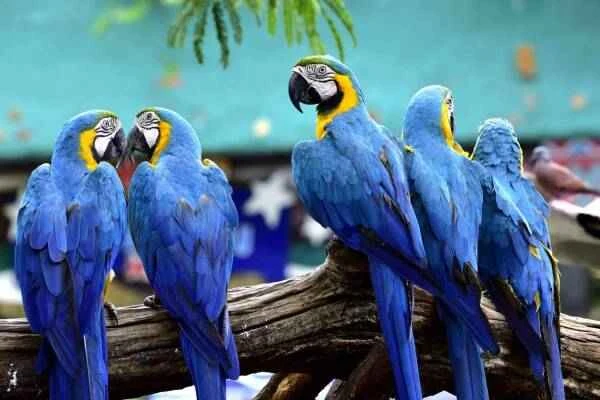
Blue macaws and golden macaws typically live 35 to 40 years in the wild. They sustain themselves on nuts, seeds, fruits, and other plant matter.
Surprisingly, more than 20 wild blue and golden macaws (Ara ararauna) inhabit Florida. They are found throughout Central and South America, primarily in Panama, Venezuela, Bolivia, Colombia, Paraguay, and Peru. This species prefers tropical forests, woodlands, and savannas. Although not widely distributed or common, it is possible to spot this species soaring in the skies near Coral Gables, Pincrest, and Palm Bay. They have lived in Florida since the mid-1980s. It is noteworthy that this species is not native to Florida or any other part of the United States. Instead, these macaws arrived in Florida as escapees from animal shows, quarantine facilities, and private collections.
This species is easily identifiable in the wild because it differs from any other bird in the state. The Blue and Golden Macaw is distinguished by its vibrant cobalt blue outer plumage and golden underside. Blue and Golden Macaws typically have white faces and black patches on their throats. They are also significantly larger than other parrots. Their size varies, reaching up to 35 inches in length with a wingspan of up to 45 inches. A striking feature is their long, fan-shaped tail. Sexes appear similar, but the female's head is noticeably smaller and more slender.
4. Orange-winged Parrot
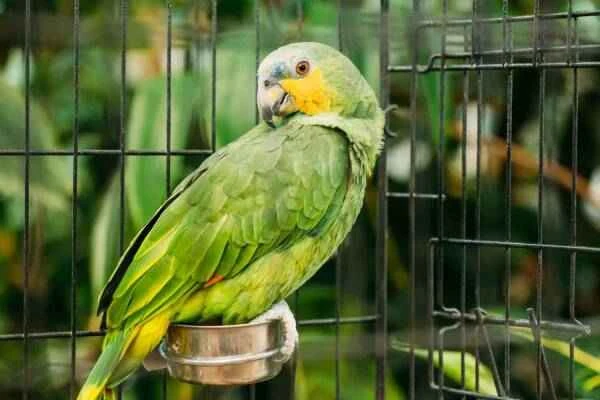
Orange-winged parrots are naturally charming, funny, and talkative. Their comical personalities make them an ideal species to keep as pets.
Orange-winged parrots, primarily found in Miami and Fort Lauderdale, are another common bird in Florida. Also known as the Loro Guaro, they are native to northern South America, Guyana, Brazil, Trinidad and Tobago. This species breeds in tropical regions, inhabiting forests, mangrove swamps, and grasslands. In Florida, orange-winged parrot populations are mainly found near urban parks and beaches. The most common sighting locations are Matheson Hammock, Brewer Park, Pompano Beach, and Miami Springs and surrounding areas.
If you want to spot the Orange-winged Parrot, you can look for some key features. Although most of their bodies are covered in bright green feathers, one of their most distinctive features is their wings. As the name suggests, the Orange-winged Parrot has prominent bright orange and red spots on its wings. These distinctive markings can sometimes be seen when the bird is roosting, but most of the time, they are only visible when in flight.
Besides their wings, the feathers under their tails are also orange. Typically, the rest of their tail feathers are green with pale yellow tips. In addition, these birds have a pale blue mask, a yellow crown, and bright yellow cheek markings. Orange-winged parrots are medium-sized birds, averaging 13 inches in length from head to tail tip. Like other parrots, they can live to be over 50 years old!
3. Red-crowned Amazon parrot
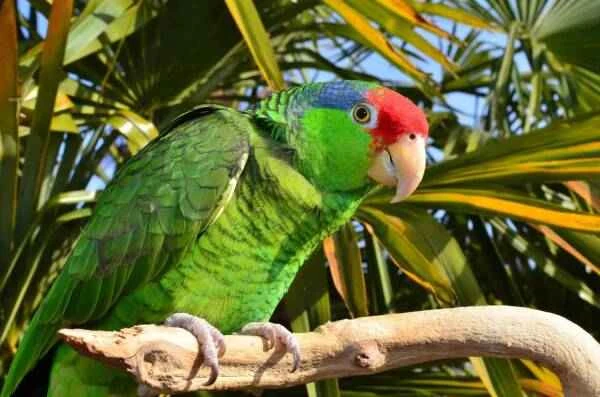
One definitive way to discern a bird's emotions is to observe its eyes. Because their pupils dilate and contract easily, you can easily identify whether they are anxious, excited, interested, aggressive, or fearful.
Another common parrot in Florida is the Red-crowned Amazon (Amazona viridigenalis), also known as the Green-cheeked Amazon or the Mexican Red-headed Parrot. These birds are native to Mexico and other parts of Central America and arrived in Florida due to problems with alleged smuggling activities. Today, they are one of the most endangered parrot species. The number of wild Red-crowned Amazons in Florida actually exceeds their native population.
The high level of development of the caged bird trade and long-term habitat loss are two major reasons for the rapid decline of this species in the wild. It is estimated that more than 400 of these birds live in Florida, most commonly in the southeastern cities of the state. While this number may seem small, experts welcome this growth, as there are currently only a few thousand left in the wild.
How to identify a red-crowned Amazon parrot?
The Red-crowned Amazon parrot is typically described as stocky or stout, growing up to 12 inches long and weighing an average of 11 ounces. Their wingspan is approximately 25 inches. The distinctive blue ring around their eyes and the striking red crest are key identifying features. Furthermore, their iris color ranges from bright yellow to deep red. Gray eyes indicate a juvenile bird, as iris color changes as they mature. Males generally have more red than females, while the female's iris is red rather than blue between the eyes.
The Red-crowned Amazon parrot also has red and blue feathers on its wings and a yellow stripe at the end of its tail. They have distinctive calls and are notorious for the loud noise they produce at dawn and dusk. This bird is known for its unique, explosive calls, often heard as whistling, chirping, or screeching. While some birds are adept at talking and mimicking sounds, they excel at imitating sounds that are particularly striking to them, such as car horns, the sounds of other animals, and even telephone calls!
2. Nandi Parrot/Black-crested Parrot
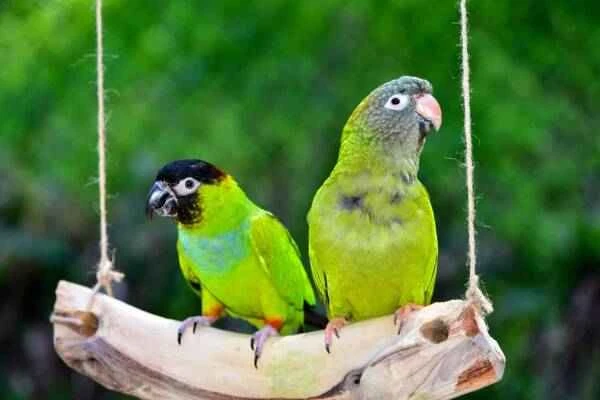
Black-crowned parrots are popular at bird shows due to their high intelligence. They are more popular than other birds because they can quickly learn new tricks and vocalizations.
The second most common parrot in Florida is the Nandi Nenday (Aratha nenday), also known as the Black-crowned Nenday (Nandayus nenday). This species is not native to Florida. Instead, a group of them was released from a pet store in 1959 and first went wild. Today, they can be found throughout the state, from the Florida Keys to Jacksonville in the north. With a population of approximately 1,000 birds, this beautiful species has a larger population in Miami and throughout Tampa Bay, particularly in St. Petersburg.
The Nandi Parakeet is recognizable by its black "hooded" head and dark beak. Its name comes from a South American indigenous name. Mostly green, its thigh feathers are bright red. Some birds also have blue highlights on their wings and tails. These parakeets are about 12 inches long and weigh only 4.9 ounces, considered medium-sized. Due to their relatively large size, males and females can sometimes be distinguished. Aside from this, there are no other common differences between males and females. Their hooded markings on their heads and beaks are usually bolder than those of their female counterparts. The Nandi Parakeet also has a very distinctive call, characterized by a loud, repetitive screeching sound. When perched, they emit a harsh, discordant call. They are known for their high-pitched calls during flight.
1. Monk Parrot/Queen Parrot
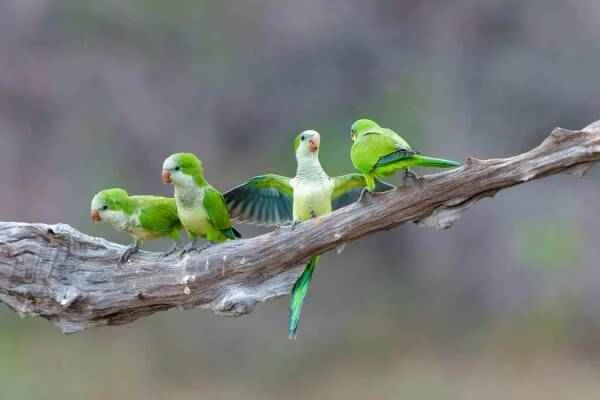
Quakers reach sexual maturity at two to three years of age and eventually mate with another individual. They are monogamous birds, typically mating and raising their young with only one partner throughout their lives.
The Monk Parrot (Myiopsitta monachus) is the most common parrot in Florida. This species has many other names, including Monk Parrot, Quaker, or simply Quaker. Although the species primarily inhabits parts of Miami, West Palm Beach, and Tampa, they can be found throughout Florida. Known for their quirky personalities, Monk Parrots originated in South America and thrive in temperate to subtropical regions. Their average lifespan is 20 to 30 years. They can reach 11 to 13 inches in length from head to the tip of their long, tapering tail. Females tend to be about 10-20% smaller than males, but this is not always an accurate measurement.
How to identify a monk parrot?
To spot casuarinas, look for their small, bright green bodies as they flit through the sky. Their primary and outer secondary flight feathers are visible in flight. Most casuarinas have blue wings, another distinguishing feature to look for when identifying this bird. In addition to their vibrant outer colors, they have a soft yellowish-green belly, a prominent grey face, and a subtle greyish-yellow chest area. Their beaks are pale with a slight pinkish or orange tinge. Their legs are grey. Brown eyes are the most common feature of this species, especially if you find yourself in close proximity to it.
Monk parrot calls (and other identifying factors)
Furthermore, they are very vocal birds. When perched or in their nests, they emit a distinctive call consisting of short, chattering notes. When in flight, they produce even louder calls. If kept in captivity or as pets, monk parakeets can learn to mimic human speech patterns. Additionally, a key characteristic of monk parakeets is that they build nests large enough to house colonies of 20-30 birds. They are the only parrot species that builds their own nests, so if you see a giant nest while traveling in Florida, be aware that there is almost certainly a flock of these birds nearby!
at last
In short, Florida is a tropical paradise, perfectly suited for a diverse array of parrot species. This article lists the five most common parrot species in Florida. We also explore how to accurately identify each bird and research where they originate and where they can be found in the state today. From the striking vibrant plumage of the Monk Parrot to the quirky personality of the Nandi Parrot, these feathered inhabitants bring an explosion of color and beauty to the state. That said, while these parrot species truly bring tropical wonder to Florida, these non-native birds also have an impact on the environment and other native species.
Negative impacts of non-native tropical birds on Florida's ecosystem
Non-native parrots have both positive and negative impacts on Florida's ecosystem. First, the large presence of these tropical birds can disrupt the balance between local animals and the environment. Competition for food, nesting sites, and other vital resources is common between native and non-native birds. This competition places additional stress on vulnerable native species, potentially leading to population declines. Furthermore, non-native species may introduce new diseases into areas where native species cannot cope. This further jeopardizes the health, well-being, and overall survival chances of native species.
By understanding the impact of non-native parrots on the state's environment and other bird species, we can strive to find a balance where the two groups can coexist harmoniously. Therefore, if you live in the Sunshine State, carry binoculars with you to fully appreciate Florida's diverse array of tropical parrots!