Ice Age fauna have long been recognized as closely associated with the global cooling event of the Pleistocene, and the animals in them also showed adaptations to cold environments, such as being huge, covered in long hair, and having body structures that could scrape snow, with mammoths and woolly rhinoceroses being the most representative.
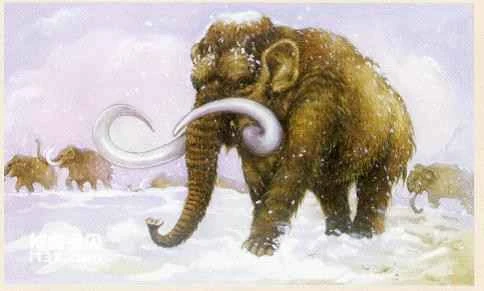
mammoth
These fascinating extinct animals have long attracted widespread attention. Their aforementioned characteristics were previously assumed to have evolved with the expansion of the Quaternary ice sheet, suggesting a possible origin in the high-latitude Arctic region. However, credible evidence remained elusive. Deng Tao et al., based on new fossil material from Tibet, have demonstrated that some members of the Ice Age fauna had already evolved and developed on the Tibetan Plateau before the Quaternary period. The harsh winters of the high-altitude Tibetan Plateau served as a "training ground" for the Ice Age fauna, enabling them to develop pre-adaptations to the Ice Age climate and subsequently successfully expand into the arid, cold steppes of northern Eurasia. This new discovery overturns the hypothesis that Ice Age animals originated in the Arctic Circle, proving that the Tibetan Plateau was their initial evolutionary center.

Migration and distribution of woolly rhinoceros
As the Ice Age began to emerge 2.8 million years ago, the Tibetan woolly rhinoceros left the plateau region, went through some intermediate stages, and finally arrived in the low-altitude, high-latitude regions of northern Eurasia, becoming an important member of the flourishing mammoth-woolly rhinoceros fauna along with yaks, argali sheep, and blue sheep during the Middle and Late Pleistocene.