Ray-finned fishes are the most successful aquatic group of all vertebrates, occupying almost every ecological niche in the Earth's waters. They are incredibly diverse in species and size, and their adaptability is remarkable. Their evolutionary history is epic, with various groups of "stars" appearing in different eras, making the "epic" of fish evolution as dramatic as the rising tide, wave after wave.
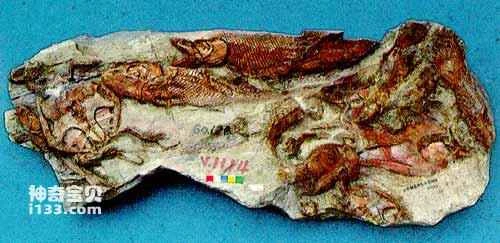
Bowfin fish
The evolution of ray-finned fishes on Earth has gone through three stages, which can be represented by the three major groups (subclasses) included in ray-finned fishes: the primitive cartilaginous fishes (cartilaginous fishes subclass), the intermediate holoostean fishes (holoostean fishes subclass), and the advanced teleostean fishes (teleostean fishes subclass).
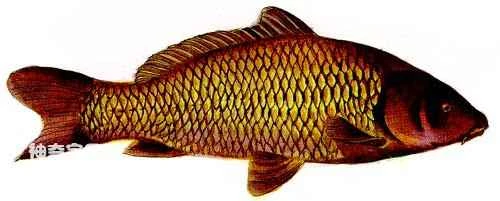
carp
Cartilaginous schizothorax were the earliest evolved bony fishes, appearing in the Devonian period and dominating during the Permian period of the Late Paleozoic. Then, in the Early and Middle Mesozoic, holoostauria developed and replaced cartilaginous schizothorax in aquatic life. In modern times, only the order Acipenseriformes survives among cartilaginous schizothorax, represented by the widely distributed sturgeon and the Chinese paddlefish found in North America and my country.
Holosteosaurs appeared in the Triassic period and reached their evolutionary peak in the Jurassic and Early Cretaceous periods. After that, they declined, with only two genera, gar and bowfin, surviving to the present day.
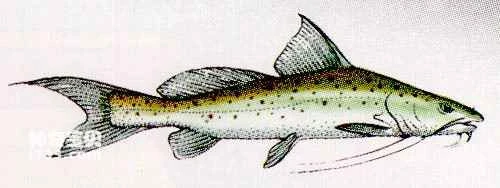
catfish
The decline of bony fishes was caused by the rise of teleost fishes. The earliest teleost fishes appeared in the Jurassic period, and from the Cretaceous period to the present, their families have continuously grown and expanded, becoming the true "masters" of rivers, lakes, and seas. Almost all bony fish we encounter today, such as grass carp, silver carp, common carp, crucian carp, catfish, perch, ribbonfish, yellow croaker, flounder, seahorse, and sardines, belong to the teleost fish family.
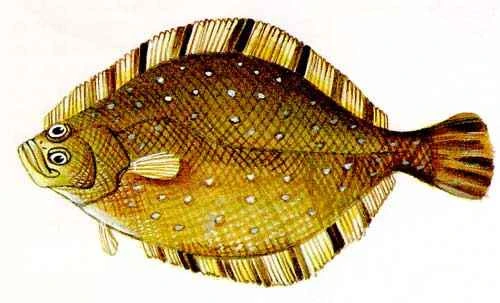
flounder
In the evolution of ray-finned fishes, we can see some clear examples of parallel evolution, with many "plots" repeating themselves over time. For instance, cartilaginous dinosaurs developed some short and tall types during the Permian; then, during the Jurassic, some very similar species evolved from holoostrid fishes; and finally, in the Cenozoic, the same evolutionary pattern was repeated in teleost fishes. Such examples abound in other areas as well.
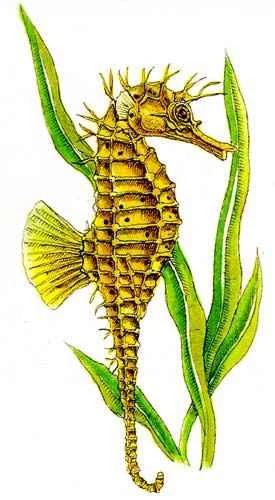
Haima
Why is this the case? The answer may be complex, but the struggle for survival is likely the most important factor. Throughout history, competition among fish has always been fierce. Due to variations in genetics and the result of natural selection, new types constantly emerge. Among these new types, some are always more advantageous in coping with their environment and competing with other fish. This leads to a continuous trend of "more advanced" types emerging within the entire bony fish family. However, the conditions for adapting to aquatic life are very strict. For example, a streamlined body shape is essential for fast-swimming fish, while a tall body and related body structures are particularly important for fish living in coral reefs. Similarly, a large mouth is advantageous for most carnivorous fish. Therefore, as more advanced fish replace their less efficient predecessors, they also face the same adaptation problems that their predecessors must solve in similar ways. This is the fundamental reason for the wave-like evolutionary pattern of bony fish.

sturgeon