The Demoiselle Crane , also known as the "Lady Crane," aptly describes its graceful and elegant appearance, reminiscent of a refined young lady, embodying a delicate and serene beauty in traditional Chinese culture. However, it is also resilient and tenacious, possessing not only exceptional survival skills in the wild but also being a creator of "flight miracles" in nature. In recent years, Chinese research teams have systematically studied the migration routes of the Demoiselle Crane using bird banding and satellite tracking methods, discovering that its flight path exhibits a unique circular structure—a discovery that is unprecedented worldwide.

The demoiselle crane gets its name from the long, flowing feathers on its neck and throat that drape over its chest like a raincoat. It has an elegant and refined appearance and its movements are elusive. Visits to Beijing have been recorded, but experts believe this is merely an occasional occurrence.
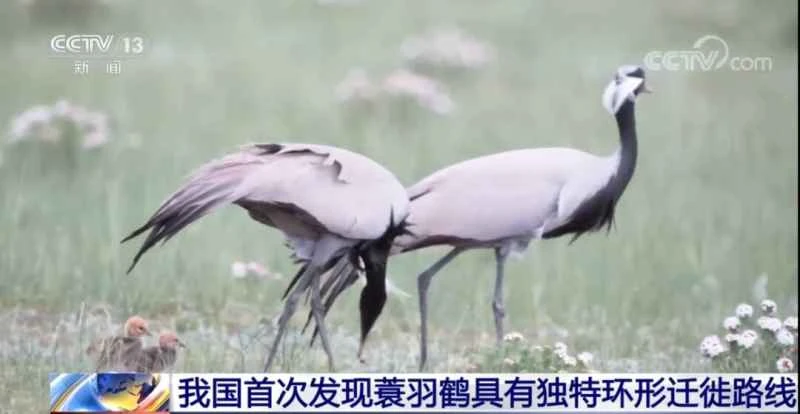
Professor Guo Yumin of Beijing Forestry University: It is impossible to confirm where it came from, but it must have come from a breeding population in a more northern region.
In autumn, demoiselle cranes embark on a long journey from their birthplace to the Indian coast to overwinter. This is a journey of over 5,000 kilometers, traversing from northeast to southwest China.
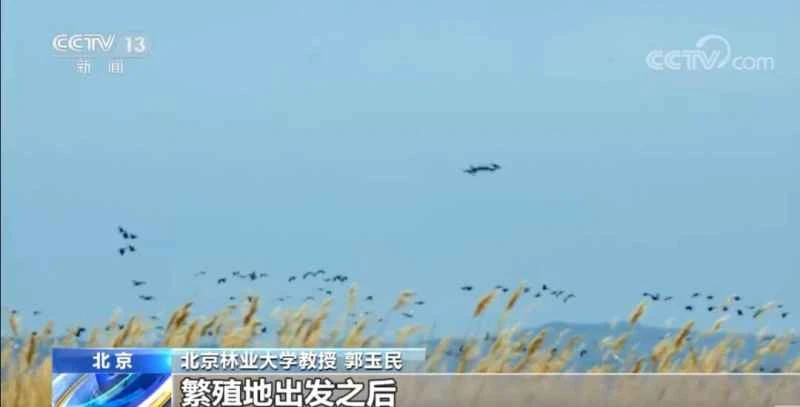
Professor Guo Yumin of Beijing Forestry University: After departing from their breeding grounds in Russia or Mongolia, demoiselle cranes fly west-southwest along the northern edge of Hebei Province and the Duolun and Lanqi areas of Inner Mongolia to Qinghai. They then fly diagonally across the eastern side of Qinghai Lake and continue south to Tibet.
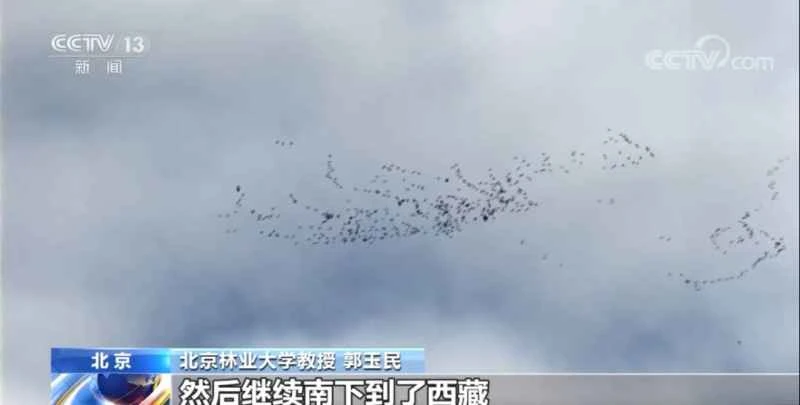
The legend that demoiselle cranes need to "fly over Mount Everest" to migrate for winter is actually a huge misunderstanding caused by the angle of the camera.
Professor Guo Yumin of Beijing Forestry University: Some people say it flies over Mount Everest, but that's not right. It flies over the Himalayas. It doesn't need to fly over Mount Everest; it has to pass through the mountain pass.
Even when flying over a mountain pass in the Himalayas, demoiselle cranes still face the threat of extreme cold and strong winds, and have to find a "window of opportunity" to complete the crossing challenge.
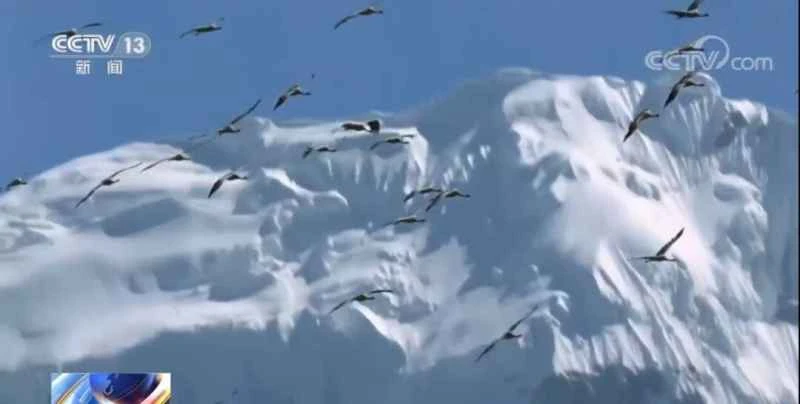
Professor Guo Yumin of Beijing Forestry University: Around the beginning of October, they crossed the Himalayas, descended to Nepal, then India, and finally spent the winter in the coastal areas of India.
According to satellite tracking images, demoiselle cranes that have finished overwintering on the Indian coast have chosen a different route, one that is longer and farther than their original path, to return to their birthplace.

Professor Guo Yumin of Beijing Forestry University: They went directly north, bypassing the original route. They left in March, and around April, they followed the Ili River Valley. Once they entered China, they crossed two deserts and arrived directly at their breeding grounds.
Migrating south via the eastern route for the winter and then returning north via the western route to breed, the Demoiselle Crane has carved out a magnificent circular migration route over thousands of miles, overcoming numerous difficulties and obstacles—a route first discovered by Chinese researchers. Experts also point out that this "circular trajectory" is not the Demoiselle Crane's only migration strategy.

Professor Guo Yumin of Beijing Forestry University: Some Demoiselle Cranes that breed in Central Asia have migrated to Africa, thus abandoning this circular migration route. Different regions and different groups have different migration strategies.
Experts list the habitat map of cranes in China
Experts explain that demoiselle cranes choose to migrate in circular routes to avoid various risks in nature as much as possible, thereby improving their breeding and survival capabilities. Through long-term natural evolution, cranes have not only discovered the optimal migration routes but also established their own territories, collectively forming this colorful yet well-ordered "crane world."
Of the 15 crane species currently existing on Earth, nine are found in China. These nine species, living within China, have, through long-term natural selection, carved out their own territories. These territories range from plateaus to plains, with lakes and wetlands of excellent water quality being the preferred habitat for cranes at all altitudes.

Professor Guo Yumin of Beijing Forestry University: Black-necked cranes have taken over the entire plateau, including the Qinghai-Tibet Plateau and the Yunnan-Guizhou Plateau. White cranes have gone to the tundra to breed, and red-crowned cranes have taken over the reed marshes.
After the flat, wet meadows have been prioritized for occupation, secluded forest wetlands are also a good option. Here, white-naped cranes live comfortably. Although other white-naped cranes occasionally coexist nearby, they do not disturb each other; they seem to have already drawn a boundary of peaceful coexistence.
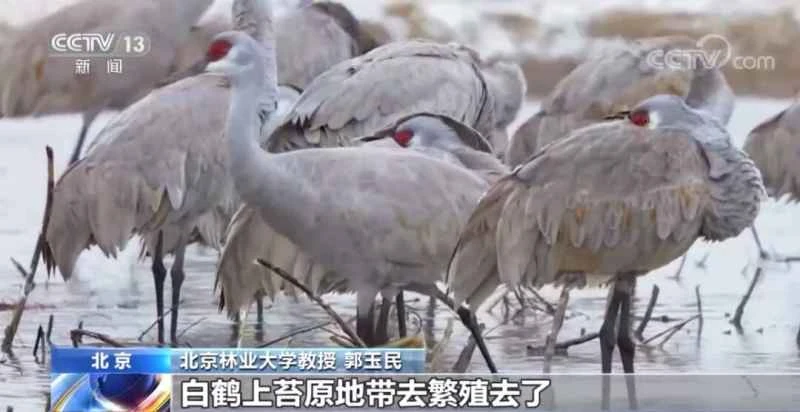
Professor Guo Yumin of Beijing Forestry University: White-naped cranes and red-crowned cranes sometimes share the same habitat, but the best spots are occupied by red-crowned cranes, while white-naped cranes are relegated to the edges. When white-naped cranes are overcrowded, they move to forest wetlands.
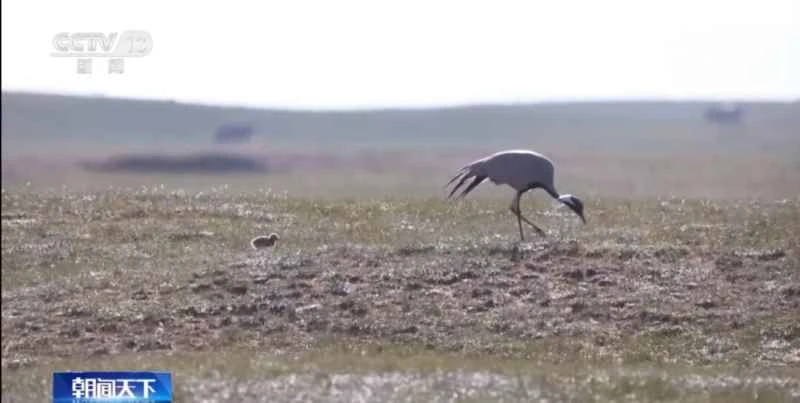
Demoiselle cranes are small in size and do not have the advantage of seizing territory. After they can only pick up the remaining relatively dry territories, they improve their survival ability by training themselves. This is also the way they survive, despite their relatively harsh habitat, their population has reached more than 200,000.

The common crane, with a global population of over 500,000, is the largest crane species in China. It has a more Zen-like way of survival: it doesn't discriminate about territory or neighbors.
Professor Guo Yumin of Beijing Forestry University: Common cranes are now widely distributed across Eurasia, going wherever the terrain suits them—farmland, farmland edges, even riverbanks. They are not bound by any particular habitat, and it is precisely because of this that the global population of common cranes is still only over 500,000.
The Yellow River Delta region has become a new wintering ground for cranes.
The Yellow River Delta National Nature Reserve, located at the mouth of the Yellow River in Dongying City, Shandong Province, is an important stopover and wintering ground for migratory birds in Northeast Asia and the Western Pacific. Among the bird species wintering in the Yellow River Delta are five crane species, four of which are national first-class protected species: the Siberian Crane, the White-naped Crane, the Red-crowned Crane, and the White-naped Crane. In recent years, a research team from Beijing Forestry University has conducted winter crane surveys and monitoring in the Yellow River Delta Reserve and its surrounding areas, achieving numerous scientific discoveries. During this period, they also rescued some birds that had encountered accidents.
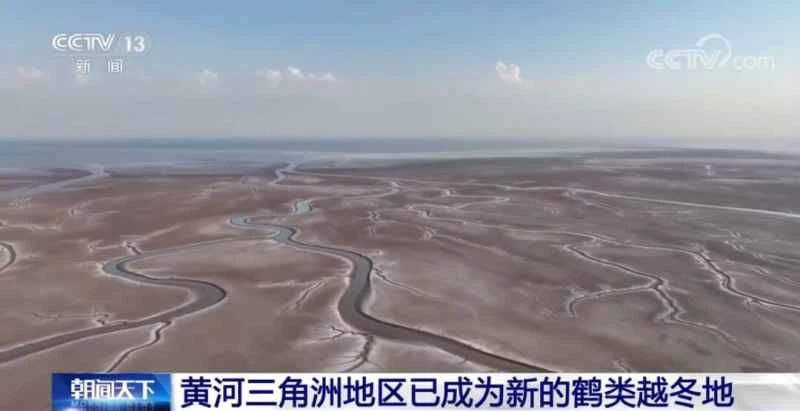
The Yellow River's estuary is also a wintering ground for numerous birds that migrate from all directions. Beneath the stillness, life surges, and birdsong rises and falls amidst the vast expanse. The flat and expansive lakes and wetlands did not facilitate the researchers' work. Although the cranes migrated from all corners of the country, they were difficult to distinguish when gathered together, making it quite a task to understand their composition.
Wen Lijia, a doctoral student at Beijing Forestry University: Near the 1200 management station of the Yellow River Delta National Nature Reserve, although the terrain is flat, visibility is poor due to fog in winter, and the distribution of cranes is relatively scattered, making it difficult to enter some areas.

With large flocks of cranes migrating for the winter, some individuals inevitably encounter accidents. Just in recent days, a research team, in collaboration with volunteers, rescued two injured white cranes in nearby farmland.
Volunteer Ding Hongan: After two days of emergency treatment, the two cranes were finally out of danger. After ensuring that all their vital signs were normal, we released the two cranes.
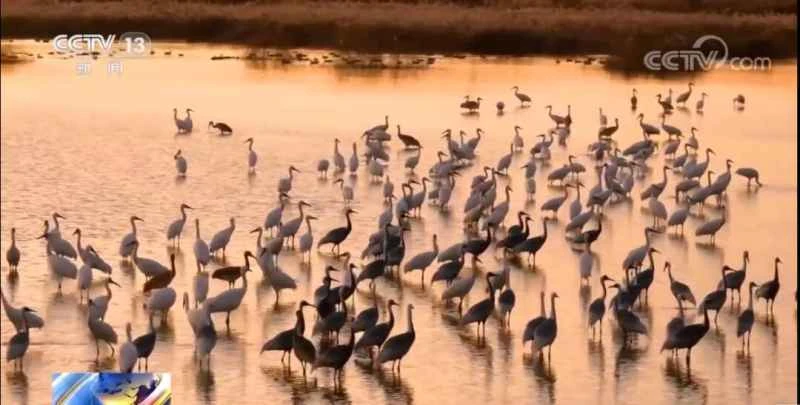
According to satellite data transmitted by the trackers, the two Siberian cranes are still active in the Yellow River Delta region, where they overwinter. So, what is the magical attraction of the Yellow River Delta for cranes? It is understood that of the fewer than 6,000 Siberian cranes in the world, more than 600 individuals were found overwintering here last year. For other crane species, due to their large numbers, precise data is still being investigated and monitored.
The Yellow River Delta region is rich in aquatic plants and abundant in fish and shrimp, making it a preferred wintering destination for cranes. Some cranes even take advantage of the excellent living conditions here to start breeding, turning their wintering grounds into breeding grounds.
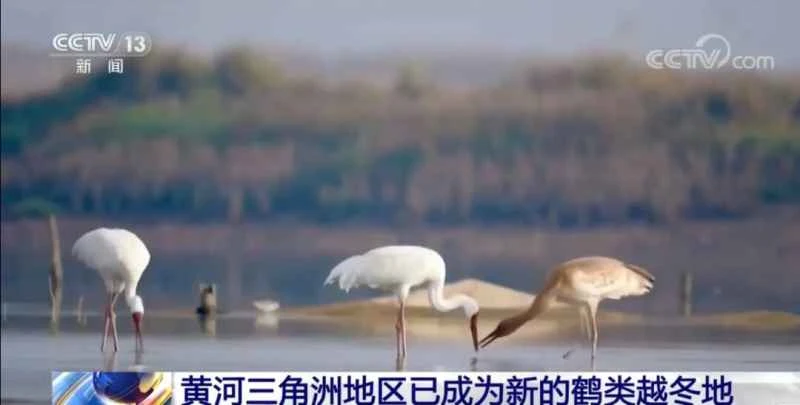
Professor Guo Yumin of Beijing Forestry University: In 2020 (wintering season), red-crowned cranes were found breeding in the Yellow River Delta.
Experts point out that the protection of the Yellow River Delta and its surrounding areas is of paramount importance. The sediment from the Yellow River is further creating larger new wetlands, and research teams will further strengthen their investigation and monitoring work in this area.
Professor Guo Yumin of Beijing Forestry University: This place may become a very important wintering habitat for cranes in our country in the future. So it is important to conduct monitoring early so that we can have data early.
This article is reprinted from CCTV News Client.