According to experts, in the long process of natural evolution, cranes have not only explored the optimal migration routes, but also divided their own living territories, which together constitute a colorful yet well-ordered "crane world".
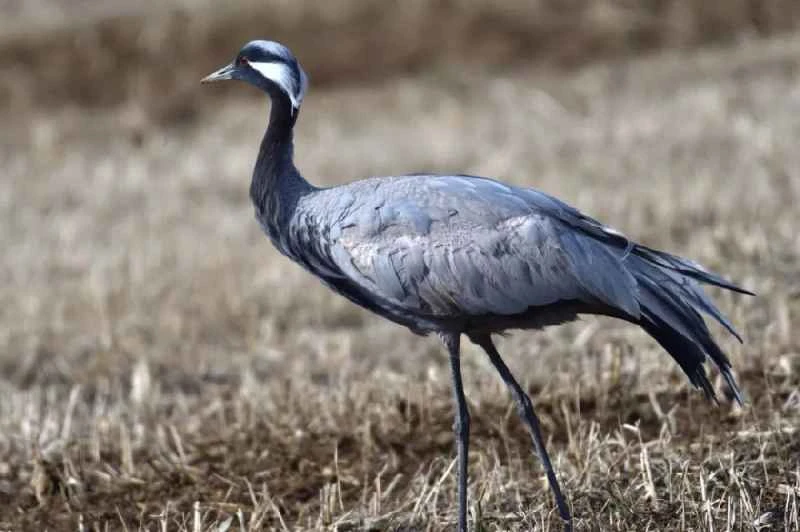
There are 15 species of cranes in existence worldwide, divided into the subfamilies of crowned cranes and cranes. The crowned crane subfamily includes two species, the black crowned crane and the grey crowned crane, which live in Africa; the crane subfamily includes the remaining 13 species of cranes: demoiselle crane, white-naped crane, white-naped crane, grey crane, sandhill crane, red-necked crane, white crane, red-crowned crane, black-necked crane, wattled crane, Australian crane, white crane, and blue crane.
Nine species of cranes primarily inhabit China: Demoiselle Crane, White-naped Crane, White-crowned Crane, Common Crane, Sandhill Crane, Red-necked Crane, Siberian Crane, Red-crowned Crane, and Black-necked Crane. Among them, six are Class I protected wild animals in China, and three are Class II protected wild animals. Through long-term natural selection, they have established their own territories and domains, ranging from plateaus to plains. Lakes and wetlands with excellent water quality are the preferred habitat for cranes at all altitudes.
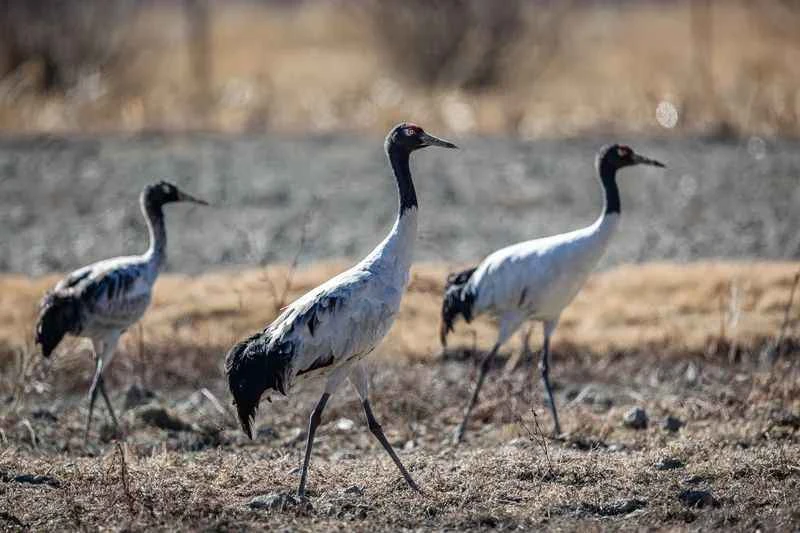
" The black-necked crane has taken over the entire plateau, the Qinghai-Tibet Plateau, and the Yunnan-Guizhou Plateau." The black-necked crane is a Class I protected wild animal in China. It is the only crane species in the world that grows and breeds on the plateau, and it is also the latest crane species to be discovered globally.
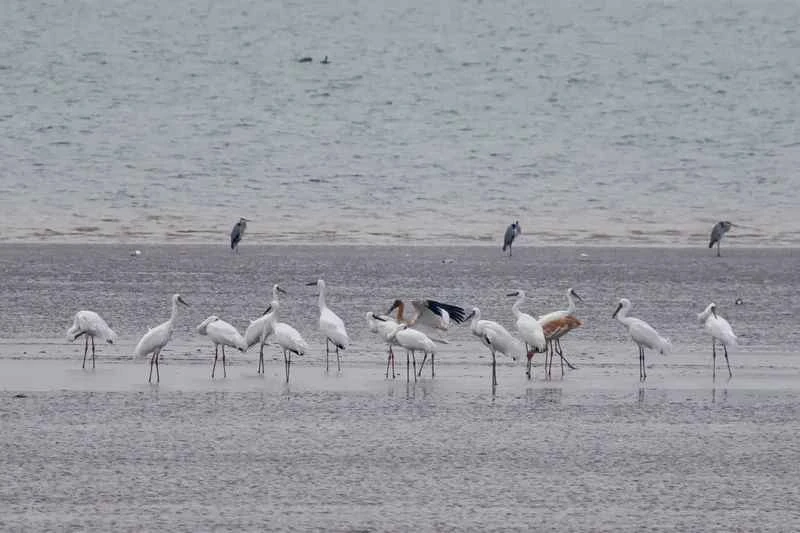
" The Siberian cranes have gone to the tundra to breed." The Siberian crane is a Class I protected wild animal in China, mainly distributed from Northeast China to the middle and lower reaches of the Yangtze River, along the coast, and in Xinjiang. The Siberian crane is the crane species with the most specialized habitat requirements, showing a strong attachment to shallow wetlands and preferring lowland tundra.
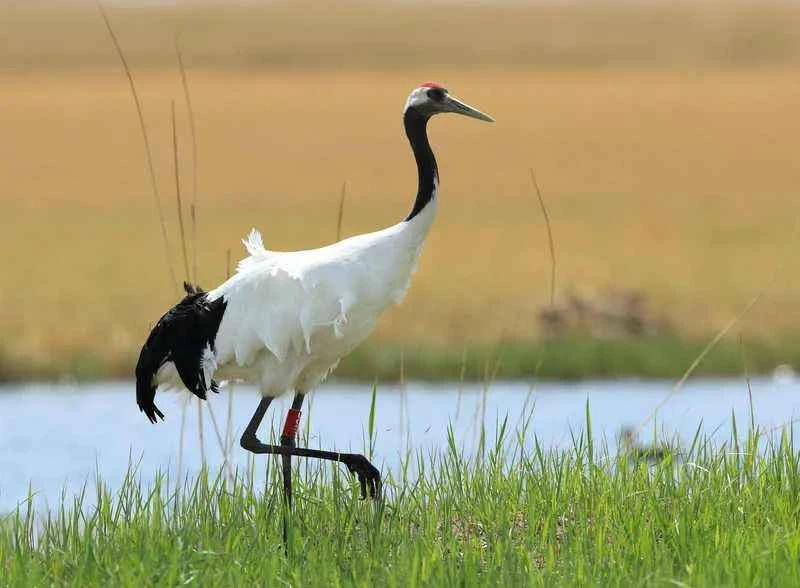
" Red-crowned cranes have taken over the reed marshes." The red-crowned crane is a Class I protected wild animal in China. In ancient China, it symbolized happiness, good fortune, loyalty, and longevity, and possessed a regal and otherworldly appearance, hence the name "fairy crane." Every autumn, red-crowned cranes migrate from their breeding grounds in Northeast China to the south for the winter. China has established a number of nature reserves in the breeding and wintering areas of red-crowned cranes and other crane species, including Zhalong, Xianghai, and Yancheng, with the largest population found in the coastal mudflats of Yancheng, Jiangsu Province.
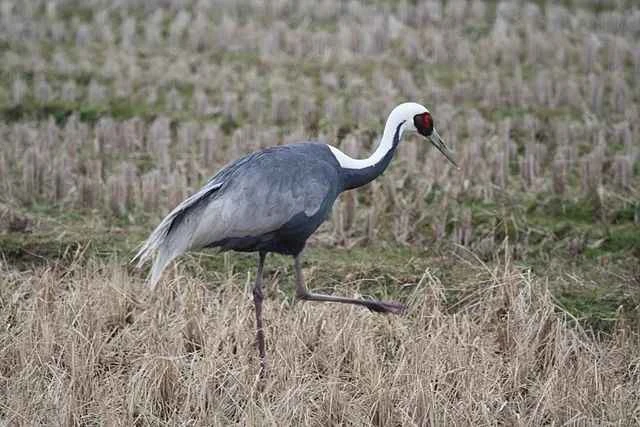
"Sometimes the white-naped crane and the red-crowned crane share the same habitat, but the best spots are occupied by the red-crowned crane, while the white-naped crane is on the edge." The white-naped crane is a Class I protected wild animal in China. Its size is between that of the white-naped crane and the red-crowned crane. Its habitat is between the reed marshes of the red-crowned crane and the forest wetlands of the white-naped crane, or their edge areas.
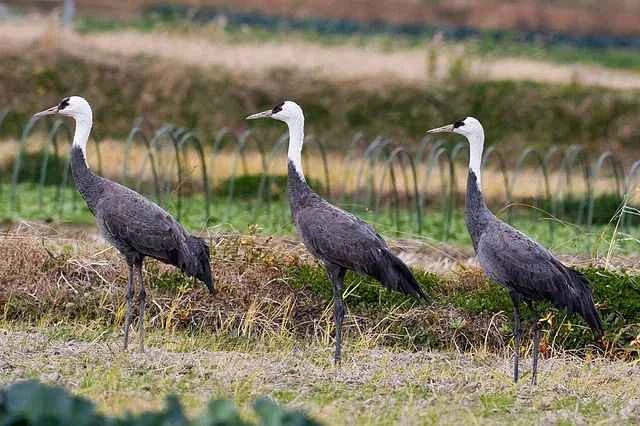
"When there's no room left for the white-naped cranes , they move to forest wetlands, where they live comfortably." The white-naped crane is a Class I protected wild animal in China. It lives in remote forest wetlands, avoiding competition with other crane species. It mainly breeds in the Amur River basin in Russia and the Lesser Khingan Mountains in China, but sometimes it nests in the same areas as the common crane and migrates together.
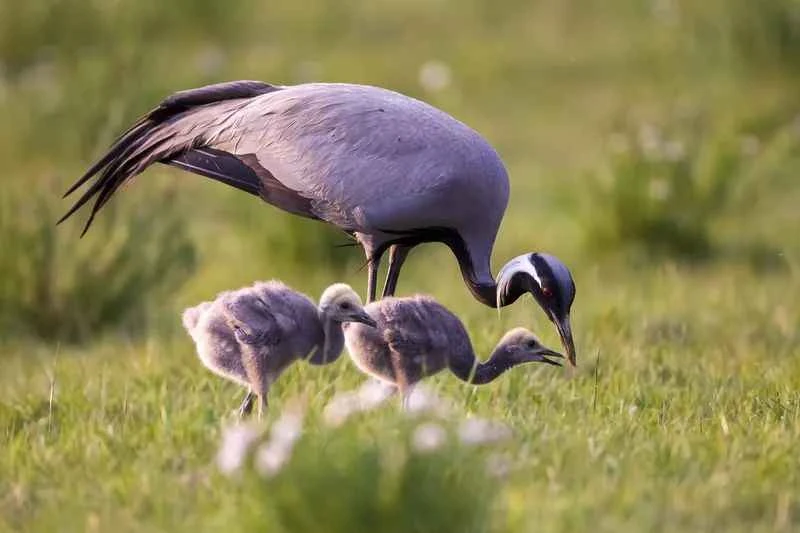
" Demoiselle cranes lack the advantage of territorial control and, due to their relatively harsh habitats, can only choose from the remaining, relatively dry areas." The demoiselle crane is a Class II protected wild animal in China. Known for its elegant and dignified demeanor, it is also called the "Lady Crane." Every year, they migrate south from the border region between China and Mongolia, flying over the Himalayas to the Thar Desert in India to overwinter. In China, they breed in Xinjiang, Ningxia, Inner Mongolia, Heilongjiang, and Jilin provinces, and overwinter in southern Tibet; during their migration, they are also seen in Hebei, Qinghai, Henan, and Shanxi provinces.
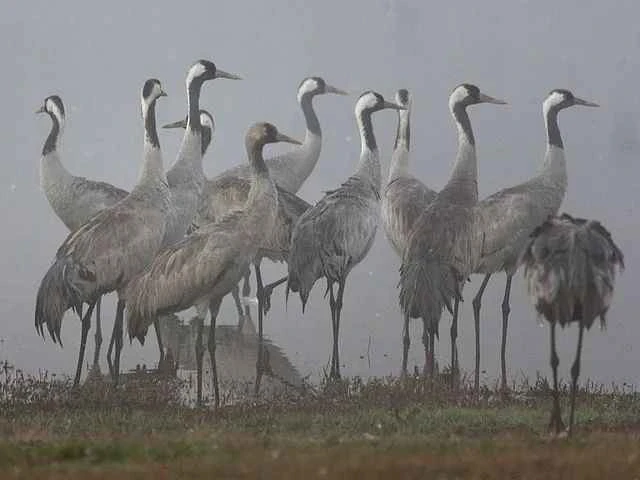
" The Common Crane has a more Zen-like way of life: it doesn't discriminate in terms of territory or neighbors, and it has the largest population of cranes in China." The Common Crane is a Class II protected wild animal in China and is one of the more numerous and common crane species. It is widely distributed across Eurasia, with a global population of over 500,000. It inhabits open plains, grasslands, marshes, riverbanks, wilderness, lakes, and farmland, going wherever is suitable.
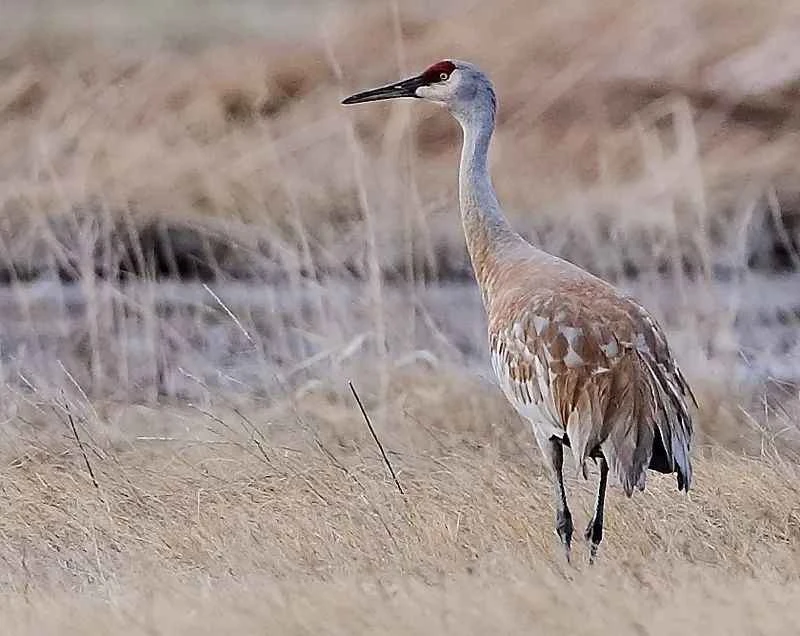
Sandhill cranes inhabit various wintering grounds in family groups, often intermingling with other crane species. A Class II protected wild animal in China, the sandhill crane is mainly distributed in North America, Cuba, and northeastern Siberia, and is occasionally seen in China. They inhabit grasslands with tundra and along rivers, marshes, and lakes.

The red-necked crane is fading from China. Just as its global population is declining, no records of red-necked cranes have been found in China in recent years. The red-necked crane is a Class I protected wild animal in China, found only in Yunnan province. It inhabits grassy fields, marshes, wetlands, and forest edges.