You may know that North Sulawesi boasts some of the world's most incredible fish, but did you know there are at least eight different species of octopus to see? Add these eight to your list and see if you can spot any others while diving in Ganga and Banga Islands.
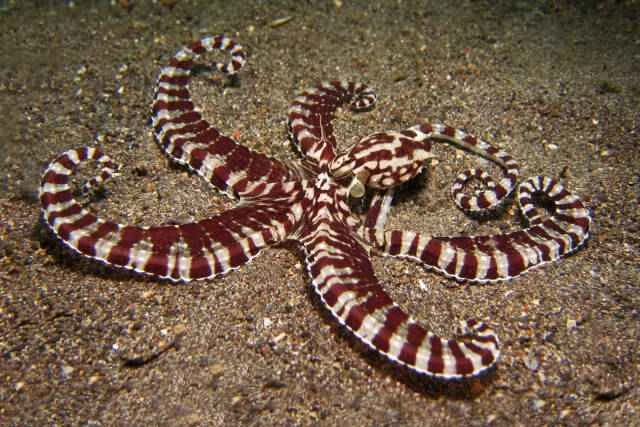
Figure 1. Mimicking octopus
One of the most famous octopus species in the world is the mimic octopus. You've probably seen videos of them impersonating other species, such as sea snakes, crabs, and flounders. This incredible ability to transform is amazing to watch on screen, but it's even more so in real life.
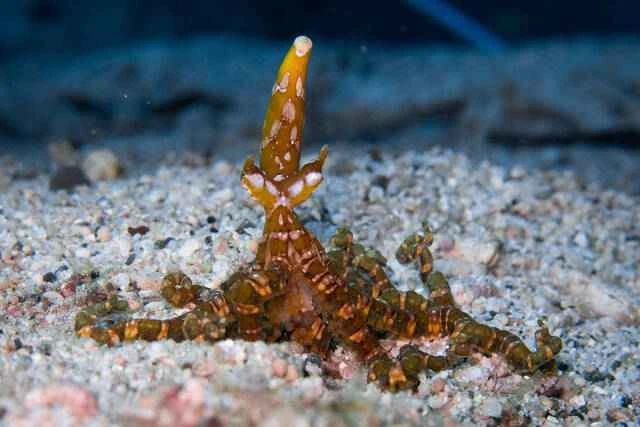
Figure 2, The Amazing Octopus
The amazing octopus is often mistaken for the mimic octopus, another species that can change its body shape to resemble other marine species. The two types of octopuses even share similar colors. However, you can notice some obvious differences.
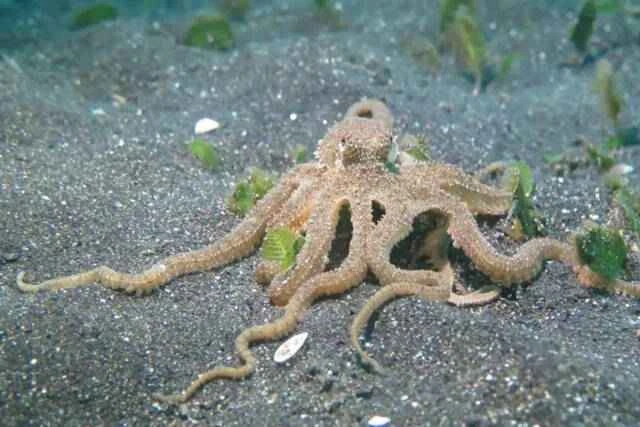
Figure 3, Long-armed Octopus
You might think every octopus is a long-armed octopus, but this particular octopus is only found in the Indo-Pacific region. It is sometimes called the Indonesian long-armed octopus. It is actually a very small species, with a body length of only about 6 centimeters, and even with its long arms, the total length is only about 15 centimeters.
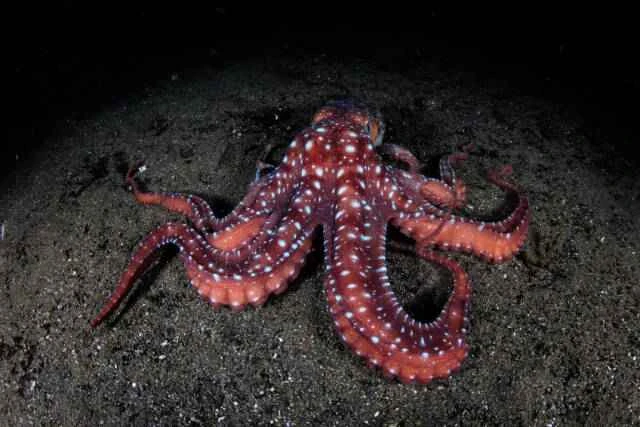
Figure 4, Starry Night Octopus
This is one of the rarer octopus species in North Sulawesi, but you're more likely to spot it if you enjoy night diving. It's a small octopus, but its arms can reach up to 80 centimeters in length!
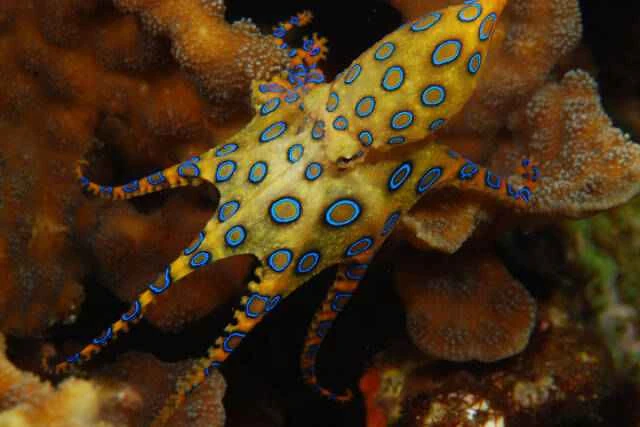
Figure 5, Blue-ringed octopus
This little creature has a bad reputation, being known as one of the most venomous animals in the ocean. That's true, but they are quite docile unless provoked. Thankfully, they are easy to spot and avoid because they have distinct blue-black rings that pulsate and turn rainbow-colored when disturbed.
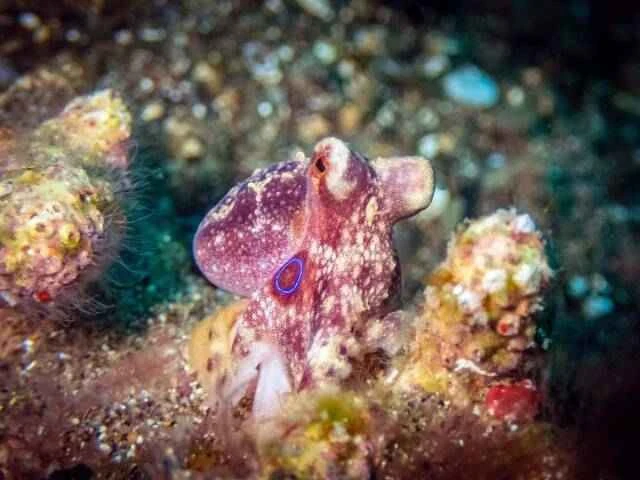
Figure 6. Venomous Leopard Cat Octopus
Like the blue-ringed octopus, this strangely named venomous cat octopus, sometimes also called the Morty octopus, is a small species with blue rings on its body. However, they are easily distinguished by the two blue rings on each side of their body, rather than being covered in blue rings.
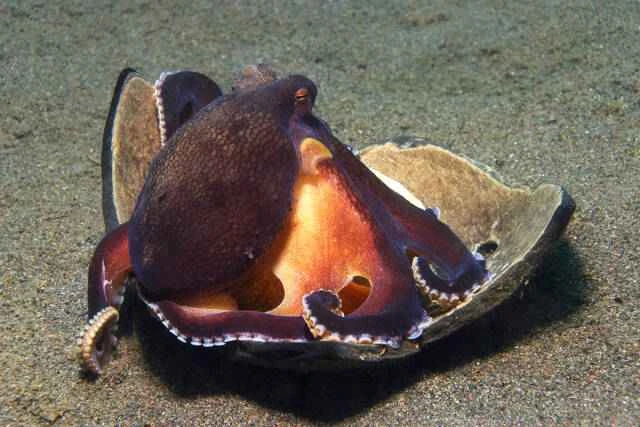
Figure 7, Coconut Octopus
This is one of the most impressive octopus species in North Sulawesi, both in brain and muscle. It gets its name from its habit of hiding in coconut shells or even carrying shelter under the mantle, allowing it to conceal itself anywhere. They are also adept at using tools such as clubs and fragments to protect themselves from predators.
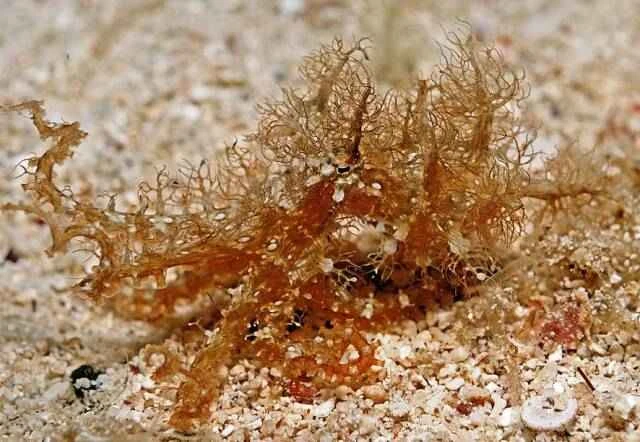
Figure 8, Hairy Octopus
Finally, there's the rare hairy octopus. This is a tiny octopus species, with the largest specimens measuring only 10 centimeters in length. As its name suggests, it has a hairy appearance and blends perfectly into patches of seaweed and rock. Its coloration ranges from reddish-brown to white and cream, making them appear as if they belong to a completely different species. Discovering one of these while diving will surely excite you and make it a must-have on your list.