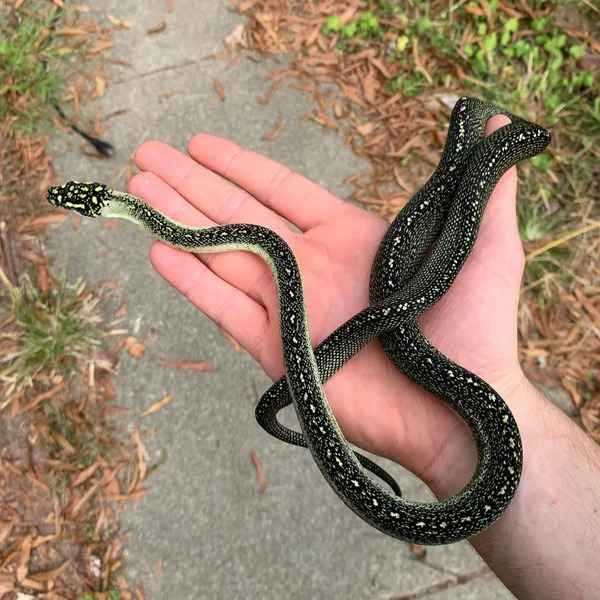
The diamond python ( Morelia spilota ), also known as the jungle carpet python , is a beautiful snake native to eastern Australia. This snake gets its name from its distinctive black and yellow or black and white markings, which resemble diamonds. In this article, we will provide a detailed overview of the diamond python's appearance, behavior, habitat, diet, and care requirements.
Whether you aspire to become a snake keeper or are simply interested in reptiles, this guide will provide you with the essential information to understand diamond pythons.
What is a diamond python?
The diamond python is a non-venomous python, meaning it hunts by constricting and compressing its prey to suffocate it, rather than using venom. Unlike many venomous snakes, the diamond python relies on its strength to kill its prey.
Scientific name : Morelia spilota
Common names : Diamond Python, Jungle Carpet Python
Family : Pythonidae
Native habitat : Rainforests and forests in eastern Australia, particularly in New South Wales and Queensland.
Appearance features
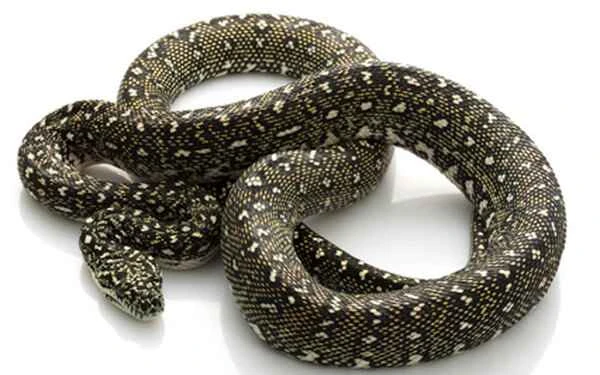
Diamond pythons are renowned for their beautiful patterns. Their scales are smooth and glossy, displaying a dazzling sheen. While the colors and patterns of diamond pythons can vary, they typically possess the following characteristics:
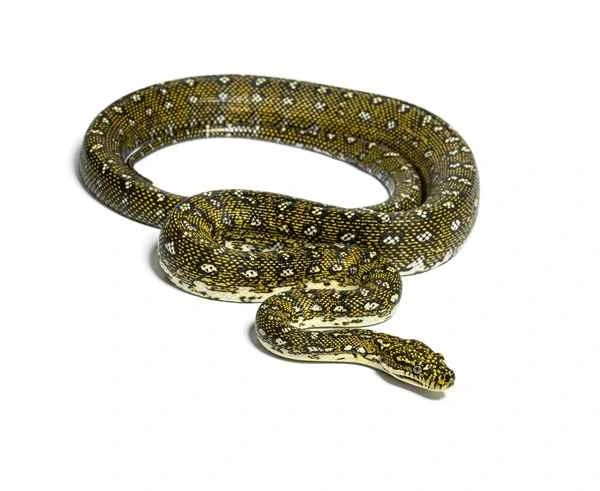
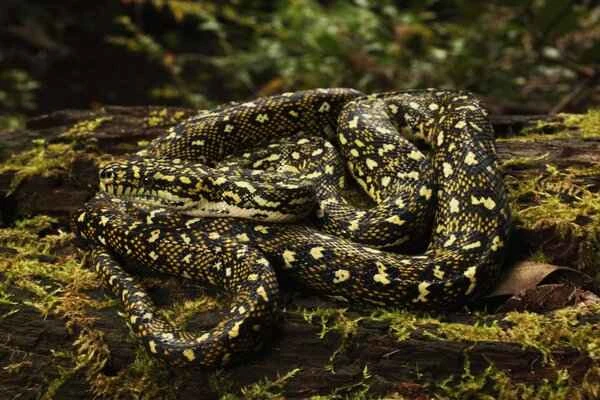
Body color : mainly black, with yellow or white markings.
Pattern : Usually presents a "diamond" or "chain" pattern, and the pattern of each snake is unique.
Size : Adult diamond pythons typically grow to 6 to 10 feet (1.8 to 3 meters) long, but some individuals can grow up to 12 feet (3.7 meters).
Head : Relatively small, triangular in shape, with distinct dark markings around the eyes.
Behavior and personality
Diamond pythons are known for their docile nature and are ideal for experienced reptile enthusiasts. They primarily inhabit trees but will also be active on the ground.
Activity patterns : Diamond pythons are primarily nocturnal (active at night), but they can also be active during the day in cooler weather.
Temperament : These pythons are generally not aggressive, especially when kept as pets, and are quite docile.
Defensive behavior : They may attack when threatened, but they do not usually show aggression unless provoked.
Habitat and Distribution
Diamond pythons are native to the rainforests and forests of eastern Australia. They are arboreal snakes, meaning they spend most of their time in trees, but also inhabit the forest floor.
Preferred habitats : humid, rainy environments, such as rainforests, forests, and scrublands.
Geographical distribution : Diamond pythons are found in New South Wales and Queensland, especially in densely vegetated, wooded areas.
diet
As a constricting predator, the diamond python hunts by ambush. They primarily feed on small mammals, birds, and reptiles, although they can also eat larger prey such as opossums and small kangaroos.
Hunting method : Diamond pythons are ambush predators. They blend into their environment through camouflage, waiting for prey to approach unnoticed.
Diet in captivity : In captivity, diamond pythons typically eat mice, rabbits, or other small mammals. Depending on their size and age, they are fed every 1 to 2 weeks.
Reproduction and Childbirth
Diamond pythons are oviparous, meaning they reproduce by laying eggs. During the breeding season, male diamond pythons fight for females.
Breeding season : Usually occurs in winter (June to August in the Southern Hemisphere).
Eggs : Female diamond pythons typically lay 10 to 30 eggs, with an incubation period of approximately 2 months.
A comparison of the diamond python with other pythons.
The diamond python shares many similarities with other pythons, but it also has some unique characteristics. We will compare the diamond python with other popular pythons such as the ball python and the reticulated python.
| feature | Diamond Python | Ball Python | Reticulated python |
|---|---|---|---|
| scientific name | Morelia spilota | Python regius | Python reticulatus |
| body shape | 6-10 feet (up to 12 feet) | 3-5 feet | 10-20 feet (can exceed 30 feet) |
| Colors and patterns | Black with yellow/white "diamond" pattern | It is usually dark brown with light yellow or gold patterns. | Dark brown with intricate geometric patterns |
| character | docile and calm (suitable for experienced keepers) | Gentle and mild (suitable for beginners) | They may be aggressive and require an experienced caretaker. |
| native habitat | Eastern Australia (rainforest, forest) | Tropical regions of West Africa | Southeast Asia (rainforest, grassland) |
| diet | Small mammals, birds, reptiles | Small mammals, birds | Large mammals, birds, and even livestock |
| life | They can live 20-30 years in captivity. | They can live 20-30 years in captivity. | They can live 15-25 years in captivity. |
Keeping diamond pythons
Although diamond pythons are relatively easy to keep, they still require a suitable environment and careful care.
Nesting box : Diamond pythons need a large and secure nesting box that provides enough space for crawling and climbing, as they are arboreal snakes.
Size: Adult snakes require a 6-foot-long enclosure with branches and hiding places.
Temperature : A temperature gradient is required. The temperature of the heated area in the middle of the habitat should be maintained at 90-95°F (32-35°C), while the cooler area can be maintained at around 75°F (24°C).
Humidity : Maintain a humidity level of around 60%, spray water regularly and provide a water basin.
Diet : Diamond pythons in captivity typically eat mice or small rabbits. Young snakes eat smaller prey, while adult snakes require larger food.
Health Precautions
Like all snakes, diamond pythons can also experience health problems. Common health issues include:
Respiratory tract infection : usually caused by improper temperature or humidity control.
Ticks and parasites : If the habitat is not cleaned regularly, parasites such as ticks may appear.
Obesity : Overfeeding can lead to obesity, which can affect the long-term health of snakes.
Diamond pythons are elegant, non-venomous constricting pythons, highly popular among reptile enthusiasts for their unique appearance and relatively docile temperament. Native to eastern Australia, they live in humid forests and rainforests, primarily preying on small mammals, birds, and reptiles. With proper environment and care, diamond pythons can live long lives, making them ideal pets for experienced reptile lovers.
Whether you're considering keeping a diamond python or are simply interested in this beautiful species, it's important to understand its care requirements and behavioral characteristics.
Diamond Python Syndrome: A Detailed Analysis
Diamond Python Syndrome (DPS) refers to a range of health problems affecting diamond pythons ( Morelia spilota ). While not formally defined in scientific literature, the term is widely used among reptile enthusiasts and keepers to describe various symptoms caused by improper husbandry or environmental factors. DPS is more common in captivity and less frequent in the wild. It is typically closely related to factors such as temperature, humidity, diet, and stress in the captive environment.
Symptoms of Diamond Python Syndrome
Although diamond python syndrome is not a specific disease, it encompasses a variety of symptoms, the most common of which include:
Respiratory problems : Diamond pythons are prone to respiratory infections, which manifest as wheezing, rapid breathing, or nasal discharge. These infections are usually caused by improper temperature and humidity in their enclosure.
Shedding problems : Insufficient humidity or lack of proper shedding aids can cause diamond pythons to experience retained shedding skin, especially around the eyes or tail. If not treated promptly, this can lead to discomfort or infection.
Weight loss or loss of appetite : If a snake is not getting enough food or is under stress, it may refuse to eat or lose weight. This usually occurs when the captive environment is too stressful or the diet is inappropriate.
Abnormal behavior : Stress or improper husbandry conditions may cause diamond pythons to exhibit abnormal behaviors, such as increased aggression or excessive hiding. This behavior is usually associated with environmental maladjustment.
Swelling or bloating : In some cases, diamond pythons may experience bloating, which could be caused by internal infection, indigestion, or parasites.
Excessive sleepiness : Diamond pythons with DPS may become unusually sleepy and inactive for extended periods. This is usually caused by stress, improper diet, or unsuitable temperature conditions.
Causes of Diamond Python Syndrome
Diamond python syndrome is usually associated with improper husbandry conditions or external stressors. Common causes include:
Improper temperature and humidity : Diamond pythons originate from humid rainforest regions, so they need an environment with a temperature difference between warm (90-95°F) and cooler (75°F) areas, and a humidity level of 50-60%. Inappropriate temperature and humidity are one of the main causes of health problems.
Improper diet : A monotonous diet or feeding unsuitable prey can weaken a snake's immune system, making it more susceptible to infections and other health problems. In captivity, diamond pythons should primarily feed on small mammals such as mice or birds.
Stress : Stress is a significant factor in many cases of diamond python syndrome. Stress can stem from overcrowded habitats, frequent handling, insufficient hiding places, or noisy environments. Stress weakens the snake's immune system, making it more susceptible to illness.
Insufficient habitat space : Small roosting boxes and a lack of climbing space can lead to stress and health problems in diamond pythons. As a semi-arboreal snake, the diamond python needs space to climb and move around.
Genetic factors : Some diamond pythons may have a genetic predisposition to certain health problems, although this is relatively rare.
Prevention and treatment of diamond python syndrome
To prevent diamond python syndrome and ensure the snake's health, owners should follow these guidelines:
Maintain appropriate temperature and humidity : Ensure there is a suitable temperature gradient within the snake's enclosure and keep the humidity around 50-60%. Regularly check the environment using reliable thermometers and hygrometers.
Provide a balanced diet : Offer diamond pythons a variety of prey, including appropriately sized mice, rabbits, and other animals. Avoid overfeeding and ensure the prey is of appropriate size to prevent obesity or digestive problems.
Reduce stress : Reduce snake stress by providing a quiet and safe environment. Provide ample hiding places and crawling space, and avoid frequent handling of the snake, especially during feeding time or when the snake is adapting to a new environment.
Regular health checks : Closely observe your snake for signs of illness, such as lethargy, unusual behavior, rapid breathing, or shedding problems. If any problems are found, consult a herpetologist promptly for appropriate treatment.
Provide good molting assistance : Ensure the snake's habitat has suitable humidity so that it can molt smoothly. A humid molting box (wet storage area) can also be provided so the snake can rub off the old skin.
Provide ample habitat : Diamond pythons require a spacious habitat as they are semi-arboreal snakes and typically need sufficient space to climb and stretch. An adult's enclosure should be at least 6 feet long and include climbing branches and hiding places.
Health Precautions
Like all snakes, diamond pythons can also experience health problems. Common problems include:
Respiratory tract infections : usually caused by improper temperature and humidity control.
Parasite infection : If the habitat is not cleaned regularly, it may lead to parasites such as ticks.
Obesity : Overfeeding can lead to obesity, which in turn affects the long-term health of snakes.
Diamond python syndrome (DPS) is not a formal disease, but rather a general term describing a range of health problems caused by improper husbandry or environmental factors. Symptoms can include respiratory problems, loss of appetite, unusual behavior, and lethargy. To prevent DPS, keepers should ensure suitable temperature and humidity, a balanced diet, and an environment that does not cause excessive stress. With proper care and a suitable environment, diamond pythons can maintain good health and enjoy a long life.