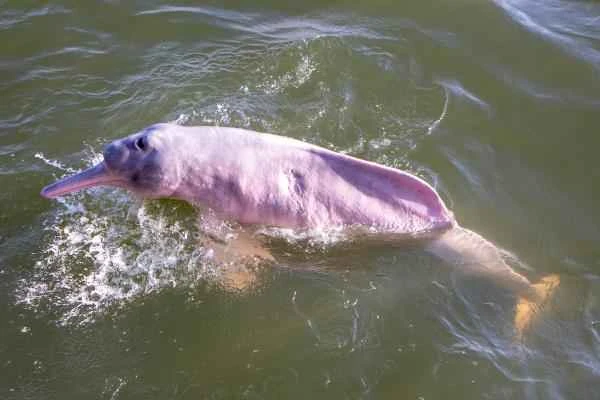
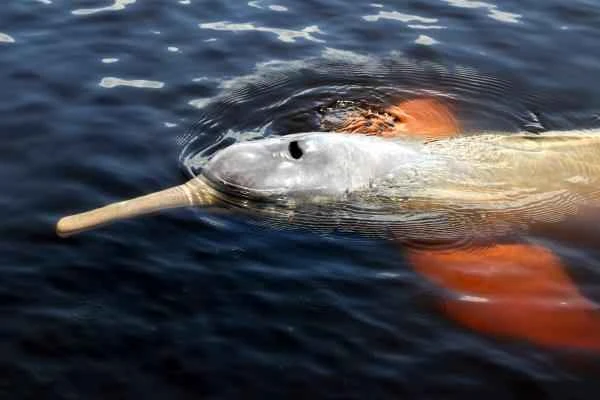
The Amazon pink river dolphin (scientific name: *Inia geoffrensis*), also known as the Amazon freshwater dolphin, is a rare freshwater mammal found in the Amazon and Orinoco river basins of South America, inhabiting countries such as Colombia, Venezuela, Brazil, Bolivia, Peru, and Ecuador. They are known for their skin color changing from gray to pink with age and their agile swimming adapted to wetland environments. However, the pink river dolphin faces multiple threats and has been listed as an endangered species.
The main reasons why the pink river dolphin is endangered
1. Accidental catch in fishing nets
Pink pufferfish are easily caught by mistake in fishing nets used for catching edible fish, especially when mixed with nets used for catching Amazonian manatees (Trichechus inunguis). In 2010, statistics from Tefe, Brazil, showed that 176 pink pufferfish died due to fishing activities.
2. Hunting as bait
Pink pufferfish are hunted to be used as bait for a fish called Piracatinga (Calophysus macropterus). This is the primary cause of their deaths. Despite a ban on such fishing in Brazil, illegal activities continue. It is estimated that approximately 4,000 pink pufferfish are hunted annually in the Amazonas state alone.
3. Dams block rivers
To meet the water demands of a growing population, dams have been built in many places, altering the natural flow of rivers, shrinking the range of pink river dolphins, and intensifying competition for resources.
4. Reduced wetland water volume
The pink river dolphin depends on the good water level of wetlands, but climate change and human development have led to a significant reduction in wetland water volume, threatening its survival environment.
5. Heavy metal and organochlorine pollution
Heavy metals and organochlorine pesticides discharged from agriculture and industry pollute water bodies, posing a serious threat to the health of pink river dolphins. These pollutants are potentially carcinogenic and affect the animal's immune system.
Global Pink River Dolphin Population Status
There is currently no comprehensive population count for the pink river dolphin due to its wide range and complex behavior. Some protected areas, such as the Mamirauá Reserve near the Brazilian Amazon, are estimated to contain around 13,000 individuals. Population numbers vary significantly across different regions, necessitating further research.
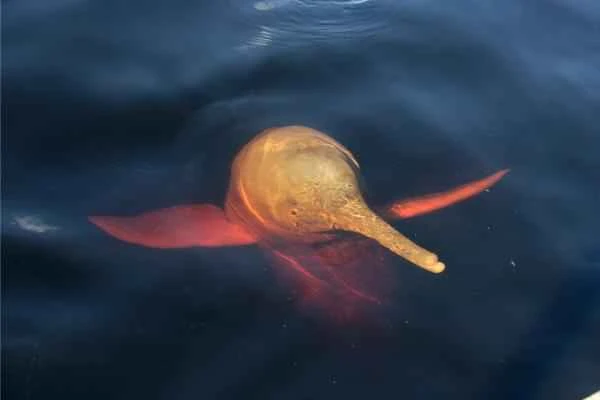
How can we help the pink pufferfish?
Reduce personal pollution of water bodies and avoid dumping waste into rivers and lakes.
People living outside the habitat can raise public awareness of conservation through public education and outreach.
Support relevant conservation organizations, such as the World Wildlife Fund (WWF), by participating in donation or animal adoption projects to contribute to scientific research and conservation.
To learn more, please visit the "More Dolphin Species" section.