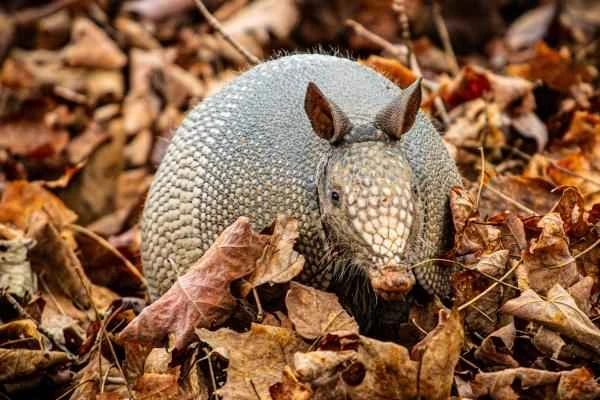
Armadillos are unique mammals belonging to the family Dasypodidae, known for their full-body bony armor, which effectively protects them from predators. Despite their global fame, armadillos now face multiple threats to their survival, leading to a sharp decline in their population and pushing them to the brink of extinction.
The main reasons why armadillos are endangered
1. Habitat loss
Agricultural expansion, urbanization, and deforestation have led to a significant reduction and fragmentation of armadillo's natural habitat, impacting their foraging and reproductive activities. Habitat isolation hinders gene flow, weakening population diversity and resilience.
2. Traffic accidents
Armadillos are slow-moving and are easily hit by vehicles when crossing roads. Traffic accidents are a major cause of their death and seriously affect the number of fertile individuals.
3. Hunting and illicit trade
In some areas, armadillos are hunted in large numbers for the purpose of consuming their meat or using their shells to make handicrafts. This illegal trade disrupts the ecological balance and threatens the survival of the species.
4. Environmental pollution
Chemicals and water pollution reduce food and water safety, affecting the health and reproductive capacity of armadillos.
5. Threat of disease
Armadillos can contract and transmit diseases, such as leprosy bacteria, which can cause health problems and increase the risk to the population.
6. Climate Change
Extreme weather and temperature changes affect the food chain and habitat environment, indirectly threatening the survival of armadillos.
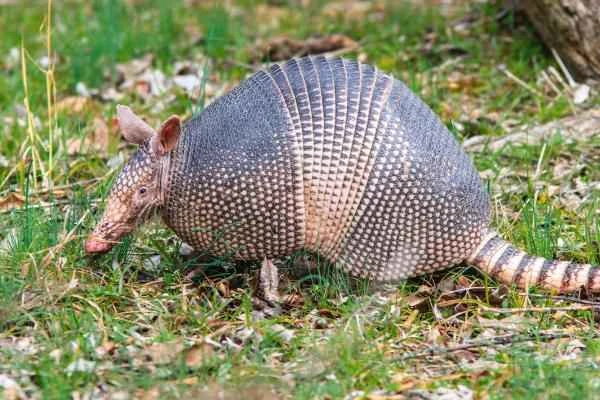
Biological characteristics of armadillos
They weigh between 19 and 33 kilograms and are 75 to 100 centimeters long.
Its head is small and thick, and its back is covered with a polygonal bone shield.
The skin is flesh-colored and the face is hairless.
It has about 100 teeth with similar shapes.
It has gray bony armor on its back and tail, with yellowish edges.
The forelimbs have sharp and large claws, which can reach up to 20 centimeters in length.
Its tongue secretes mucus to help catch insects; its main food is ants.
They have a keen sense of smell, are nocturnal, and have a weak ability to recognize colors.
Armadillos are mainly distributed in South America, from Colombia to northern Argentina, inhabiting the tropical rainforests, floodplains, and grasslands of the Amazon basin. They spend most of their time living in underground burrows they have dug themselves.
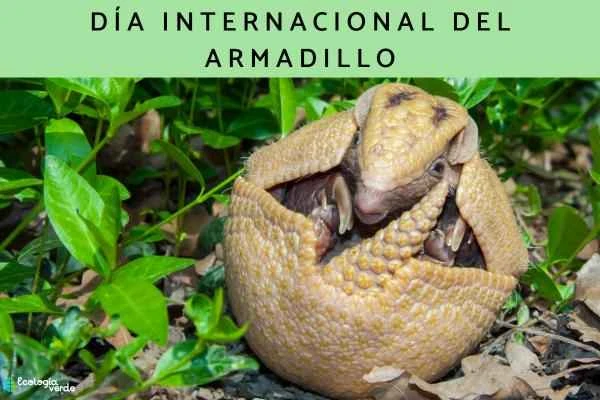
International Armadillo Day
August 13th is designated as International Armadillo Day, which aims to raise public awareness of armadillo conservation and promote biodiversity conservation efforts.
How can we help armadillos?
Support and participate in habitat protection projects.
Drive slowly to prevent traffic accidents.
Refuse to buy armadillo-related products and report illegal hunting.
Participate in or support educational and awareness campaigns to protect armadillos.
Support scientific research and promote research on armadillo ecology and behavior.
If you encounter an injured armadillo, contact a professional rescue organization immediately.
Support the conservation efforts of relevant environmental organizations.
Promote legislation to protect armadillos and their ecosystem.
To learn more, please read "Why Jaguars Also Face the Threat of Extinction".