Argentina boasts incredibly rich biodiversity—from the Andes Mountains to the Pampas, from Patagonia to the South Atlantic coast, its diverse climate and landscapes have fostered a vast array of wildlife. However, due to human activities (deforestation, overhunting, pollution, habitat fragmentation, etc.), many species are now vulnerable or threatened.
This article reviews 34 endangered animal species in Argentina and introduces their basic characteristics, habits, and major threats, helping readers to more intuitively understand the urgency of conservation.
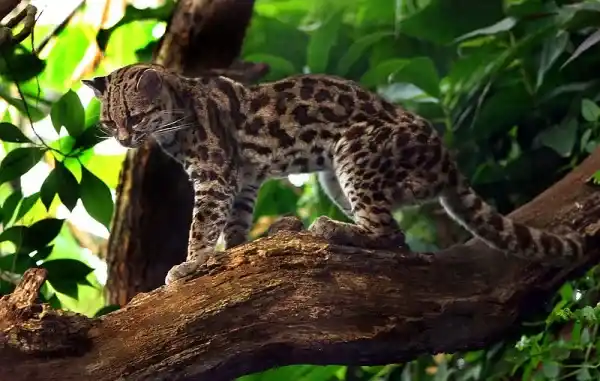
1. Southern right whale ( Eubalaena australis )
Overview : The largest mammal in Argentina, often observed in the waters near the Patagonian coast (such as Puerto Maddrin). It can reach a length of about 15 meters, has a "V" shaped blowout, and the "callos" pattern on its head serves as a fingerprint-like distinguishing feature. Occasionally, it is seen leaping out of the water up to about 3 meters.
Threats : Historically, whaling (for oil extraction, etc.) led to a sharp decline in numbers in the 19th century. Today, they still face threats such as ship collisions, entanglement in fishing gear, pollution, and noise pollution.
Key points for protection : As it has been designated a "natural monument" by Argentina, continued control of near-shore shipping routes and regulation of ecotourism are crucial.
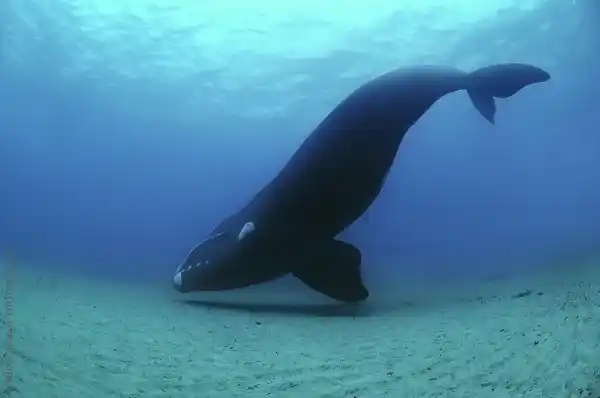
2. Crested Fox ( Chrysocyon brachyurus )
Overview : The largest canid in South America, found in northeastern Argentina (Chaco, Formosa, Corrientes, Santa Fe provinces). It has reddish-brown fur, long limbs, and large, erect ears; adults can weigh up to 35 kg.
Habits : Mostly solitary, nocturnal and twilight, adept at ambushing small mammals and birds, and also feeds on fruit.
Threats : Encroachment of wetlands and grasslands by agricultural expansion, habitat fragmentation by roads, livestock conflict and accidental killing.
Key conservation points : Habitat corridor connectivity, traffic slowdown, and public education are crucial.
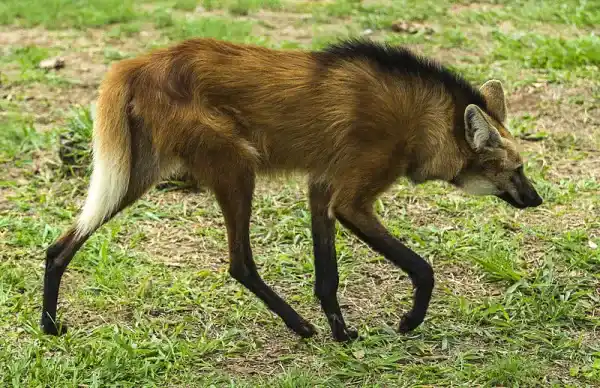
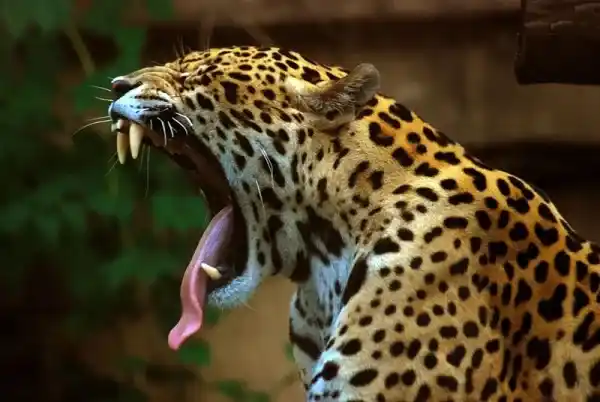
3. Jaguar ( yaguareté / Panthera onca )
Overview : The world's third-largest cat family and the largest cat family in the Americas . Their markings are similar to a leopard's but more robust, with an extremely powerful bite capable of crushing tortoise shells. In Argentina, they are mainly distributed in the humid forests and jungles of provinces such as Miciónes.
Ecological role : Top predator, maintaining the balance of prey populations and ecosystems.
Threats : Habitat loss and fragmentation, poaching and human-wildlife conflict.
Key conservation points : Establish cross-border protection networks and strengthen anti-poaching and community coexistence programs.
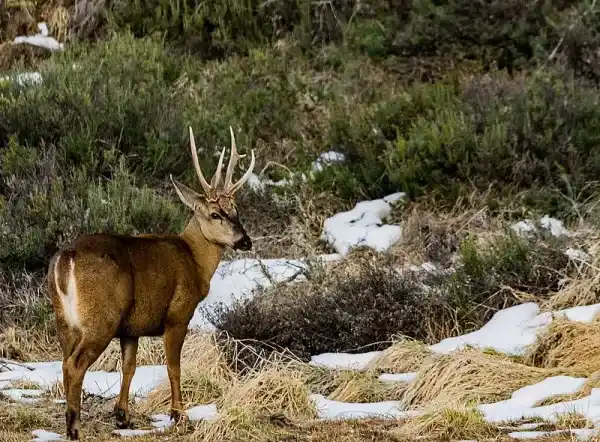
4. Southern Andean deer ( Hippocamelus bisulcus , huemul )
Overview : The iconic deer of the Patagonian mountains, robust in build, with large ears, relatively short limbs, and males possess well-developed antlers.
Threats : poaching, canine harassment, livestock grazing crowding, forest fires and diseases.
Current situation : The estimated total number in the wild is less than a thousand, and they are distributed in discrete small groups.
Key conservation points : Strictly limit human disturbance in core habitats and restore mountain herbaceous and shrub vegetation.
5. Magellanic penguin ( Spheniscus magellanicus )
Overview : A medium-sized penguin with a white stripe from the top of its head to the sides of its neck, a black back, and a white belly. It stands about 45 cm tall and weighs 3 kg. It is usually monogamous and maintains a long-term pair bond.
Diet : Mainly mid-to-upper-level fish, squid, krill and crustaceans.
Threats : Oil spills and marine pollution, overfishing leading to food shortages, and tourism disrupting breeding grounds.
Conservation priorities : breeding ground buffer zones, ocean clean-up operations, and regulated bird/whale watching.

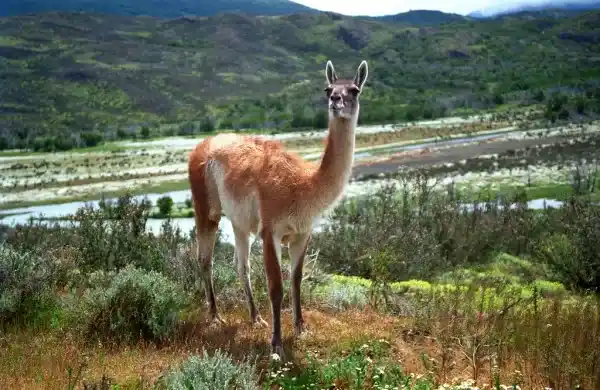
6. Guanicoe ( Lama guanicoe )
Overview : A wild camel closely related to the alpaca, with a darker head and lighter-colored belly and limbs. It can live for more than 20 years and is a fast runner (to escape predators such as cougars).
Social : Usually consists of a small group of one male, several females, and juveniles.
Threats : Historical overhunting and habitat degradation.
Trend : The number has rebounded in some protected areas.
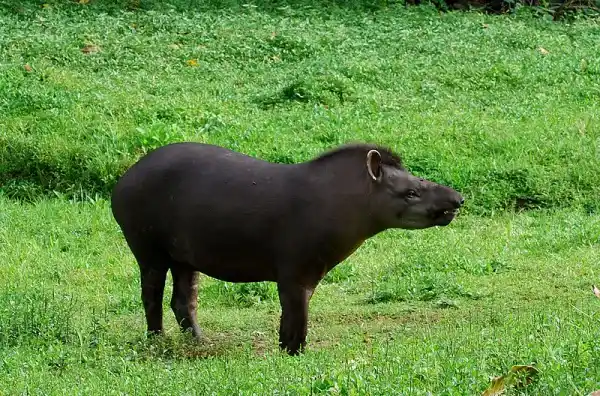
7. Tapirus
Overview : Commonly found in the humid forests and hills of northern Argentina (Salta, Formosa, Chaco, Miciones, Corrientes, etc.), with an elongated snout that forms a short nose, facilitating the feeding of tender leaves, roots, and fruits.
Threats : Deforestation leads to habitat destruction, poaching, and road deaths.
Key protection points : rainforest connectivity, ecological corridors, and nighttime traffic speed limits.
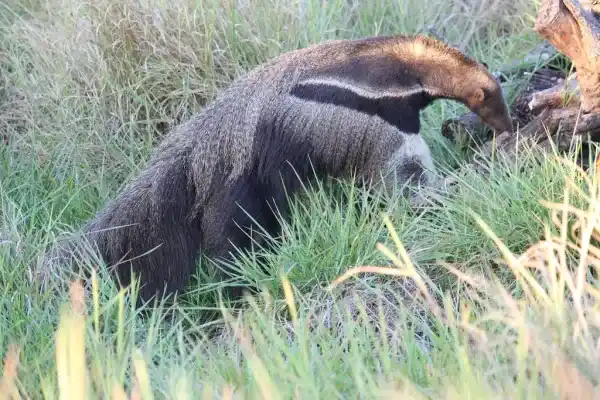
8. Giant anteater ( Myrmecophaga tridactyla )
Overview : It can reach a length of about 2 meters and weigh nearly 40 kilograms; it has poor eyesight but an extremely sensitive sense of smell, and its long, thin snout and sticky tongue that can extend to about 60 centimeters are suitable for feeding on ants and termites.
Threats : Habitat burning and migration, canine attacks, poaching, and low reproductive rates.
Key conservation points : Controlled burning and protection of caves and nests in the grassland-forest ecotone.
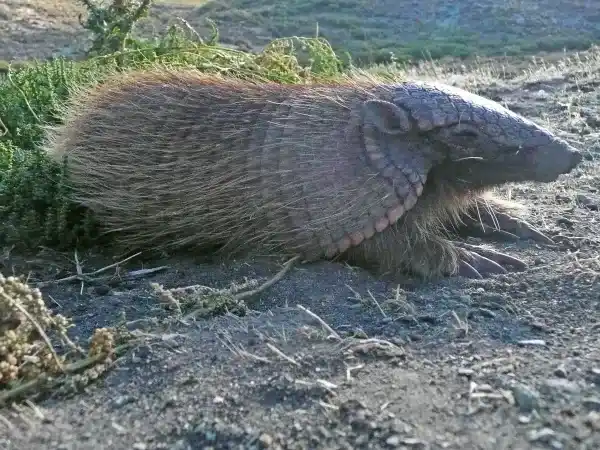
9. Giant armadillo ( tatú carreta / Priodontes maximus )
Overview : Reaching nearly 1.5 meters in length and weighing about 60 kilograms, it is one of the mammals with the most teeth on Earth (up to nearly 100). Nocturnal, it uses its powerful forepaws (up to 20 centimeters long) to dig for ants, termites, and other invertebrates.
Threats : Habitat loss, poaching, and localized small populations.
Trend : It is estimated to have declined by about 30% over the past 20 years, requiring stronger protection and monitoring.
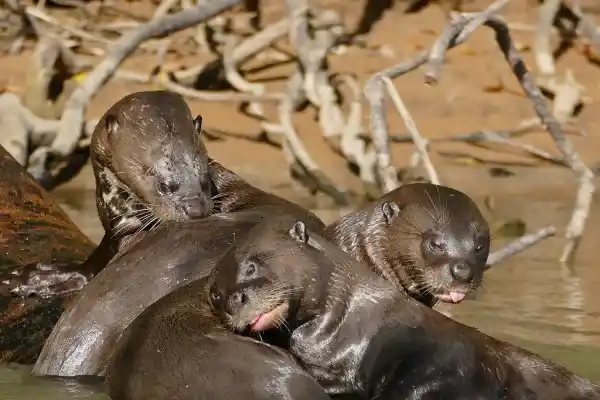
10. Giant otter ( Pteronura brasiliensis , lobo de río )
Overview : The largest member of the aquatic weasel family, measuring approximately 1.5–1.8 meters in length and weighing about 25 kilograms; highly gregarious, with diverse vocalizations (capable of multiple "vocal codes").
Threats : River pollution and habitat degradation, fur poaching, and overfishing leading to food shortages.
Key protection points : comprehensive watershed management, hunting ban, and community-based joint management of fisheries.
More species in vulnerable/threatened/endangered status (Argentina)
The following species face varying degrees of threat across different regions and time scales, requiring comprehensive assessment in conjunction with local lists and protected area management plans.
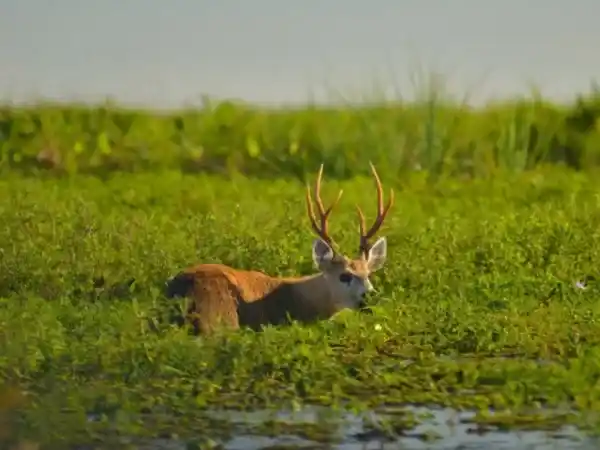
Swamp deer ( Blassocerus dichotomus )
Green macaw ( Ara militaris )
Long-tailed Tiger Cat/Small Spotted Cat ( Leopardus wiedii )
Mala rabbit ( Dolichotis patagonum )
Andean Flamingo ( Phoenicoparrus andinus )
Cougar ( Puma concolor )
Laguna Blanca Frog ( Atelognathus patagonicus )
Chinchilla lanigera
Capuchin monkey ( Cebus apella )
Grey fox ( Lycalopex griseus )
Andean condor ( Vultur gryphus )
Southern otter / Lontra provocax
Chaco wild boar ( Catagonus wagneri )
Mountain rhea ( Rhea pennata )
Atacama mountain frog ( Telmatobius atacamensis )
Red howler monkey ( Alouatta caraya )
Pink Fairy Armadillo ( Chlamyphorus truncatus )
Broad-snouted caiman / Patterned caiman ( Caiman latirostris )
Pampas deer ( Ozotoceros bezoarticus )
Red Goose ( Chloephaga rubidiceps )
Bushdog/Vinegar Fox ( Speothos venaticus )
Chara pretrei ( Amazona pretrei )
Glass frog (Vitreorana uranoscopa) ( Hyalinobatrachium uranoscopum )
Somuncuria somuncurensis
Note: The ranking of the lists may vary slightly between different provinces/countries; the latest official red list and local regulations shall prevail.
How can we help Argentina's endangered animals?
Individual and community level
Choose environmentally friendly alternatives: bring your own shopping bags, prioritize public transportation and low-carbon travel, sort and recycle waste, and practice the "Zero Waste" concept.
Respect nature reserves and wildlife habitats, and do not disturb breeding and raising seasons.
Do not buy or raise wild animals or their products of unknown origin or those traded illegally; understand and comply with regulations such as CITES .
Report any instances of poaching, smuggling, or illegal online sales of wild animals.
Refuse to release invasive alien species into the wild, and avoid ecological risks caused by abandoning them after raising them.
Support local conservation organizations, research, and community co-management projects as a volunteer or donor.
Sharing science knowledge in schools and communities helps young people understand the importance of "harmony between humans and nature".
Government and Institutional Level (Key Points of the Initiative)
Strengthen habitat connectivity (ecological corridors), in-situ protection of wetlands/grasslands/forests, and restoration of degraded areas.
Strengthen law enforcement: anti-poaching patrols, regulation of maritime routes and fishing gear, and monitoring of pollution and invasive species.
Developing community benefit models: ecotourism profit sharing, pasture-wildlife coexistence programs, compensation mechanisms, and conflict mediation.
Establish transnational collaboration (at the watershed and migration corridor levels) and share monitoring and research data.
Conclusion
The above is just a glimpse into the many threatened species in Argentina. Protecting them is protecting the stability of Earth's ecosystem and humanity's shared natural heritage. Every act of rational consumption, every report of illegal trade, and every instance of scientific communication is a crucial step in ensuring their continued existence.