In life, we often hear people say: "Rabbits and mice are both rodents."
From an appearance standpoint, this argument seems to make some sense: rabbits have large, long incisors, eat grass and vegetables, and are not very big, so they do look a bit like small animals such as mice or guinea pigs.
However, from a biological perspective, this statement is incorrect .
Rabbits are not rodents, but rather animals belonging to the order Lagomorpha.
The following article will help you understand:
What category of animals does a rabbit belong to?
What are the key differences between rabbits and rodents?
Why do people always think of rabbits as rodents?
The important role of rabbits in the ecosystem
Some interesting facts about rabbits (not just as simple as "not a rodent")
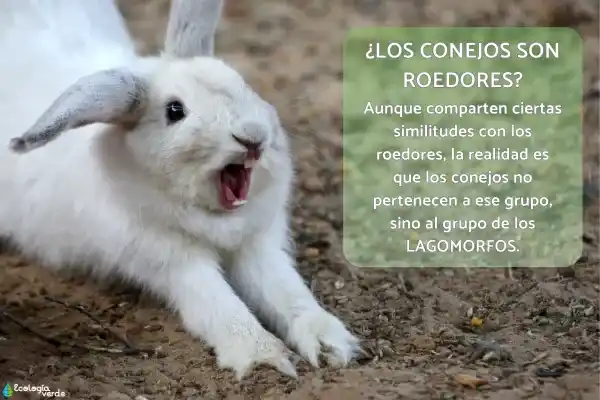
1. Are rabbits rodents or lagomorphs?
At first glance, many people would naturally categorize rabbits as "rodents" because they:
Has prominent front teeth
Mainly eat plants
Small in size, it looks a bit like a mouse, guinea pig, or chinchilla.
However, from a scientific classification perspective , rabbits and rodents are two different "family branches".
Scientific classification of rabbits
Kingdom: Animalia
Phylum: Chordata
Class: Mammalia
Order: Lagomorpha
Family: Leporidae
Genus: Rabbit (Oryctolagus)
Species: Oryctolagus cuniculus (the original species of European rabbit/domestic rabbit)
The key point is:
Rabbits belong to the order Lagomorpha, which is a separate order.
This category includes:
Rabbits
hares
Pikas (small animals that live in the crevices of rocks in high mountains)
They look somewhat like rodents, but they have distinct differences in anatomical structure and physiological characteristics .
Rodents belong to another order: Rodentia , which includes:
Rats, brown rats, house mice, etc.
Hamsters and gerbils
Squirrel, Chipmunk
beaver
Guinea pigs (Chinese guinea pigs, cavies)
Porcupines and many other species
Therefore, it can be stated very clearly:
Rabbits are not rodents, but rather animals of the order Lagomorpha.
II. What are the key differences between rabbits and rodents?
Although rabbits and many rodents share some similarities in appearance and lifestyle, they belong to different evolutionary branches . The following comparisons will focus on several easily understood aspects.
1. Differences in tooth structure: a decisive distinction
This is one of the core characteristics that distinguishes Lagomorpha from Rodentia.
Rodents:
There is only one pair of incisors in the upper jaw (the two front incisors).
Incisors grow throughout life and need to be constantly chewed to wear them down.
Rabbit (Lagomorpha):
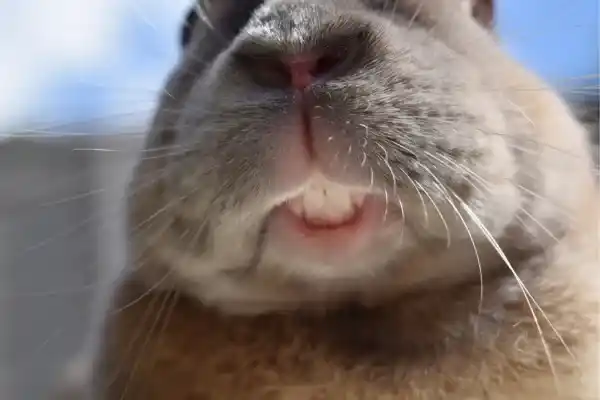
There are two pairs of incisors in the upper jaw.
Behind the front pair of large incisors, there is another pair of smaller incisors ("hidden incisors").
This double-layered incisor structure helps to wear down the teeth more evenly when chewing hard plants.
It was this extra "second pair of upper incisors" that ultimately led scientists to determine:
Lagomorpha should be separated from Rodentia to become a separate order.
2. Differences in ear shape
rabbit:
They usually have long and flexible ears .
Ears are not only used for hearing, but also for dissipating heat (the blood vessels in the auricle can carry away excess heat from the body).
Most rodents:
The ears are mostly short and round .
Although they do move around, their ears are generally not as exaggerated and long as a rabbit's.
Of course, ears are not the only criterion for classification, but they are one of the differences that many people can easily notice in terms of appearance.
3. Dietary differences: Strict herbivory vs. more flexible omnivory
Rabbits are "strict herbivores" .
A healthy rabbit diet should consist primarily of high-fiber plant-based foods.
In addition, rabbits have a very special behavior: coprophagia (more accurately, "eating soft feces") .
They will re-consume a special type of soft feces— cecotrophs— which are rich in:In this way, the rabbit can reuse the nutrients that were not fully absorbed in the first digestion, which is somewhat like "secondary processing".
It is crucial for their gut health and nutrient absorption .Vitamins
amino acids
Beneficial bacteria
Hay and fresh grass (the most important base)
A moderate amount of safe leafy green vegetables
A small amount of suitable vegetables
A small amount of specially formulated pelleted feed for rabbits (optional, but not a staple food).
There must always be a supply of clean drinking water.
Rodents:
Diets vary greatly from species to species.
Many rodents eat seeds, grains, fruits, and nuts ;
Some also eat insects or even small animals , tending to be omnivorous or "mainly plant-based, but also eating animal-based foods".
So overall:
Rabbits are "more purely herbivorous" than most rodents, with a diet closer to that of ruminants.
4. Differences in the digestive system
Rabbits' digestive system is highly adapted to high-fiber plants :
It has a very well-developed cecum , where a large amount of cecum fermentation takes place;
It relies on microorganisms in the cecum to break down fiber, thereby producing usable nutrients;
Then, the "second absorption" is completed by eating soft stools (cecal stools).
Many rodents:
This relies more on colonic fermentation or a relatively simple intestinal structure;
Although some rodents also exhibit similar "coprophagia" behavior, their overall digestive structure is significantly different from that of rabbits' cecal system.
5. Differences in reproductive characteristics
Rabbits and many rodents are known for their high reproductive rates , but there are some differences in their characteristics:
rabbit:
The gestation period is relatively short (for domestic rabbits, it is generally around 28–32 days).
The number of kits per litter is moderate , usually around 3–8.
Many rodents:
The pregnancy period is also very short;
Many species produce more offspring per litter ; for example, house mice and some rodents can have 8–12 or even more offspring per litter.
Different species vary greatly; this is just a general trend.
6. Examples of common species: Each species should not be confused with the others.
Lagomorpha:
Domestic rabbits and wild rabbits
hare
Pika
Rodentia:
Mice, field mice, hamsters
Guinea pigs (Chinese guinea pigs, cavies)
Squirrels, chipmunks
beaver
porcupines, etc.
From this perspective:
Rabbits may look like relatives to guinea pigs and hamsters, but they are actually much more distant from them in terms of lineage than you might imagine.
3. Why do people always think of rabbits as rodents?
This misunderstanding stems from both historical reasons and visual deception .
1. Historical classification errors
In the early history of animal classification, scientists knew little about the details.
Initially, lagomorphs were indeed classified under the order Rodentia , because:
They all have incisors that grow throughout their lives ;
They mainly gnaw on plants;
They also share similarities in body shape and lifestyle.
Until the mid-19th century , researchers discovered through more detailed dissections:
Rabbits have an extra pair of incisors in their upper jaw—a key feature not found in rodents.
Therefore, the scientific community officially removed rabbits, hares, pikas, and other species from the order Rodentia.
A new order was established: Lagomorpha .
2. Similarities in lifestyle can be misleading.
Rabbits and many rodents do indeed share many similarities in appearance and habits:
They all have incisors suitable for biting.
Mainly eat plants
High reproductive capacity
Small
Many species live by digging burrows, hiding in caves, or in secluded places.
These superficial similarities can easily lead people to subconsciously assume that:
"They're all pretty much the same, so they must be the same type."
However, from an evolutionary and anatomical perspective,
Rabbits and rodents have long since diverged, belonging to different lineages.
IV. The Important Role of Rabbits in the Ecosystem
Rabbits play a crucial role in many ecosystems, going far beyond simply being "prey."
1. A regulator of grasslands and vegetation
Rabbits primarily feed on grass and herbaceous plants, and their grazing behavior includes:
Helps control excessive plant growth ;
Promotes the regeneration and renewal of certain grasslands;
This creates different vegetation layers at different heights, providing diverse habitats for other animals (insects, birds, small mammals, etc.).
A suitable number of rabbits act like natural "lawn mowers".
It is very helpful in maintaining the structure of certain ecosystems.
2. Caves serve as "shared apartments" for other small animals.
Rabbits are accustomed to digging complex burrow systems (rabbit burrows, air-raid shelters, tunnel networks) ,
These caves are not only for their own use, but also for:
Small mammals
Reptiles
Some invertebrates
Used as a hiding place or a place to give birth.
Caves can also improve soil aeration and microenvironment to some extent.
Therefore, rabbits are not only eating vegetation, but also "constructing and modifying the terrain".
3. Indicator species of ecological health
In many regions, a stable rabbit population often means:
The vegetation condition is acceptable.
The relationship between predators and prey is relatively balanced.
Soil and habitat have not been severely damaged.
Conversely, if the number of wild rabbits in a region suddenly decreases sharply,
This could mean:
Disease outbreak
Human hunting exacerbates
Large-scale habitat loss or pollution
Therefore, rabbits often serve as a "side mirror" for judging the health of an ecosystem .
4. In non-native habitats, it may become a serious invasive species.
In their original habitat, rabbits are an integral part of the ecosystem;
However, once introduced into an ecosystem that does not belong to them (as in the classic case of Australia), it could cause big problems:
They are rapidly encroaching on grasslands at an extremely high rate of reproduction;
Competing for food with local herbivores;
Excessive grazing leads to soil exposure and intensified erosion.
At this point, the rabbit will transform from an "ecological engineer" into an "ecological destroyer."
They have become an invasive species that must be controlled.
Therefore, the ecological role of rabbits can be:
Key herbivores and ecological engineers in their native environment ;
High-risk invaders from other regions (if there are no natural predators to counterbalance them).
V. Besides "not a rodent", what other interesting and little-known facts are there about rabbits?
Rabbits are much more than just "long ears and cuteness"; there are many other things worth mentioning about them.
1. Teeth grow throughout life and must be constantly "polished".
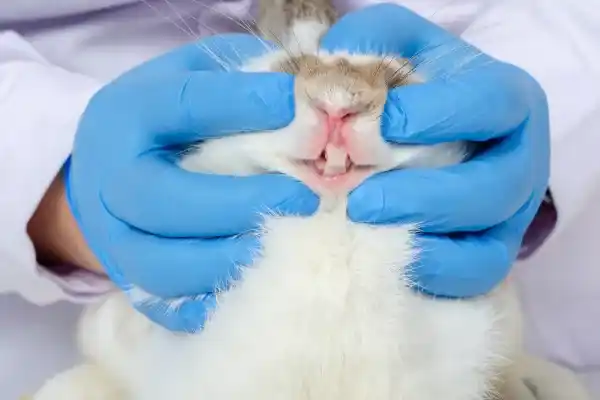
All of a rabbit's teeth are continuously growing ; not only the incisors but also the molars are growing.
If there is a long-term lack of sufficient hay and high-fiber foods for teeth grinding,
Teeth may:Too long, deformed
Stabbing the mouth or tongue
This can cause serious problems such as drooling, refusal to eat, and pain.
Therefore, for domestic rabbits:
Providing a continuous supply of high-quality hay is not an "optional" requirement, but a necessity .
2. Rabbits are actually very "social" animals.
Many people think that rabbits are "quiet animals that are easy to keep as a single pet."
However, in the wild, many rabbits and rabbit groups are social or semi-social :
They will pass through:
Soft gurgling, hissing sound
Body posture
Ear position and movement
Stomping the ground with its hind legs (warning signal)
Come and interact with your companions.
Rabbits kept alone, lacking companionship and human interaction,
It is easy to experience tension, boredom, or even depression .
Domestic rabbits also greatly need:
Ample interaction and companionship
Safe activity space
Abundant toys and environmental stimulation
Only then can one maintain physical and mental health.
3. Domestic rabbits can be domesticated very well.
Domestic rabbits ( Oryctolagus cuniculus domesticus ) have lived alongside humans for hundreds of years or even longer .
they:
Clean
Curious and intelligent
They can learn to maintain a fixed routine and even respond to their own name.
Therefore, more and more families are choosing rabbits as companion animals .
However, to raise rabbits well, you need to understand:
They are not "stuffed toys for display";
They have clear needs regarding the environment, diet, social interaction, and healthcare;
With a lifespan of 8–12 years or even longer, it is a long-term commitment.
4. Rabbit ≠ hare; they are not the same animal.
Rabbits are often confused with "wild rabbits," but strictly speaking:
hare:
They are generally larger and more slender;
With longer hind limbs, they are better at high-speed running;
They typically don't dig complex burrows, preferring to build their nests in the grass on the ground.
Leverets are born with fur all over their bodies, open eyes, and strong mobility .
Rabbit:
They have shorter, rounder bodies and prefer to live in cave systems;
The young (gazapos / kits) are born hairless, blind, and completely dependent on their mother and burrow for protection .
In other words:
Rabbits are not rodents, nor are they "juvenile hares," but rather closely related but different species.
VI. Summary: What category of animal is the rabbit?
To summarize briefly:
Rabbits are not rodents.
They belong to a separate order, Lagomorpha .
They are two different evolutionary branches, along with Rodentia.They differ significantly from rodents in terms of tooth structure, digestive system, diet, and reproductive characteristics .
In the ecosystem, a rabbit could be:
Ecological engineers who maintain grasslands and provide burrows for other animals;
They may also become invasive species that need to be controlled in other regions.
As a pet, a rabbit is:
Highly social, intelligent animals that need companionship and care .
It's far from being a simple little animal that's "easy to keep".
So next time someone says:
"Aren't rabbits rodents too?"
You can then answer with confidence:
"That's not right. Rabbits are lagomorphs, which are distant relatives of mice and don't belong to the same order."
Moreover, if you wish, you can now explain these differences clearly and professionally .
References
Tarantino, J. (August 19, 2025). Are rabbits rodents? The scientific truth. *The Environment Blog*. URL: https://www.theenvironmentalblog.org/2025/08/are-rabbits-rodents/
Providence Animal Hospital, Charlotte Branch. Are rabbits rodents? Website: https://www.charlotte.providencevets.com/site/blog/2020/12/18/are-rabbits-rodents
Animal Diversity Network. Lagomorpha: Hare, Pika, and Domestic Rabbit. Website: https://animaldiversity.org/accounts/Lagomorpha/
Rodents. Mammals. Encyclopædia Britannica. Website: https://www.britannica.com/animal/rodent