Hyenas are carnivorous mammals that mainly live in sub-Saharan Africa , with the spotted hyena being the most well-known. In the public's perception, they are often portrayed as treacherous, cowardly, and scavenging "carnivores."
But in fact, especially spotted hyenas , they are not only highly efficient hunters, but also have intelligence close to that of primates, as well as an extremely complex social structure among mammals.
Below, we'll take you through some of the most interesting and surprising facts about hyenas , revealing their true nature.
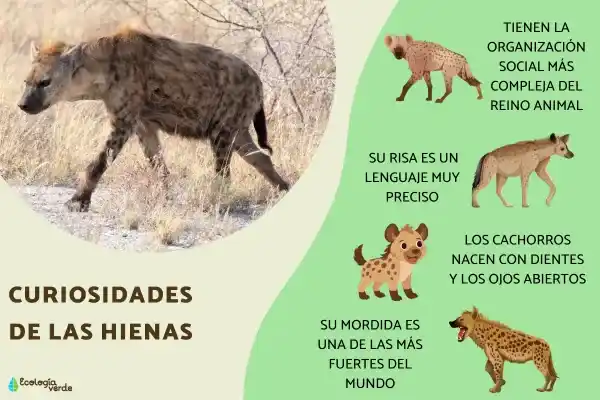
I. Hyenas possess one of the most complex social structures among mammals.
Spotted hyenas, in particular, live in large social groups called "clans," which can consist of more than 80 individuals . These clans are not loose gatherings, but rather a very well-defined social system.
In matriarchal societies, females have the final say . Hyena societies are a typical example of matriarchal systems .
Females have a higher status than males.
Even newborn female cubs are of a higher rank than adult males.
The hierarchy is strict, and every individual "knows who they are."
Each hyena has a clearly defined social status within the clan.
Affect it:Food priority
Can one have priority in obtaining a spouse?
How much support do they get in the conflict?
Clan stability relies on maintaining order through "alliances + greeting rituals + public pronouncements."
Phylogenetic alliances between females
Various calls convey information
A unique **"greeting ritual**: Two hyenas stand side by side, sniff each other, and display their genitals to confirm each other's identities and ease tension.
Males must "mingle in society" to establish themselves . Mature males typically leave their birth clan and enter a new one, requiring the following:
Showing obvious submissive attitude
Patiently and discreetly remain on the edge
Gradually gain acceptance through long-term cooperation and obedience.
This complex social structure allows hyenas to defend vast territories, organize group hunting , and handle internal conflicts in a highly "strategic" manner.
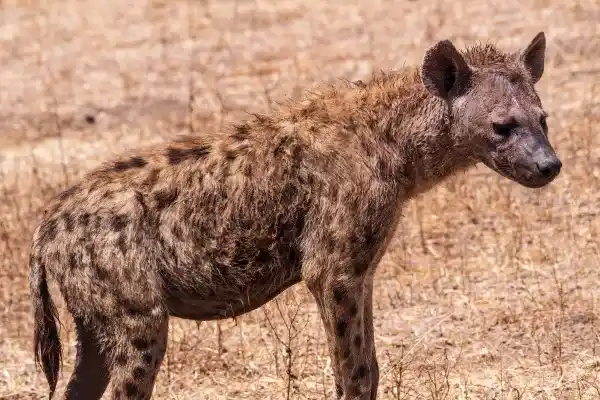
Second, the signature "laughter" is not humor, but a precise language.
The hyena's sharp, rapid "clucking laughter," which sounds like maniacal laughter, is actually a highly developed vocal communication system .
These "laughter" and shouts can:
Expressing stress and dissatisfaction . For example, when fighting for food, tense and anxious individuals may make sounds similar to "laughter."
It conveys emotions such as "I'm in a hurry" and "I'm unhappy".Conveying social information : The pitch, rhythm, and structure of sound can carry information, for example:
Who is this (individual identity)?
Their approximate level and age
Current emotional state
Helping with coordination <br />When hunting together or defending the clan, sound can:
Positioning themselves against each other at night when visibility is poor or in tall grass.
Call for backup
Organizing group movement and encirclement
Even more impressive is that each hyena's "laughter" has a unique voiceprint , which is equivalent to a "voice signature".
Even when they can't see each other, companions can tell who is "speaking" just by their voice.
III. Crushing bones like chewing biscuits: Amazing bite force
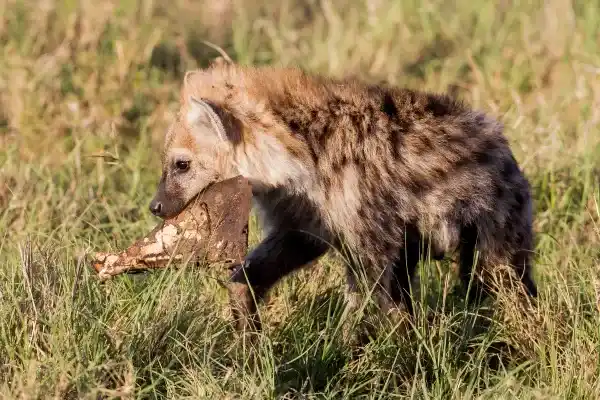
Hyenas possess one of the most powerful bites in the animal kingdom. An adult spotted hyena can exert a bite force exceeding 1,000 kilograms per square centimeter , enabling them to do many things that other predators cannot:
They can easily crush the large bones of large prey , such as zebras, wildebeests, and buffalo.
Find hidden nutrients in bone marrow . Bone marrow has an extremely high fat content and is a very valuable source of energy.
Hyenas can devour parts that other carnivores cannot chew.It can digest almost anything.
Their stomach acid is extremely strong, which can effectively digest them:bone
skin, cartilage
Tough tissues such as tendons
This makes hyenas important "scavengers" and "resource recyclers" on the grasslands.
Therefore, hyenas are not simply scavengers, but also possess the dual roles of apex predator and cleaner .
IV. The "fake penis" of female hyenas is so outrageous that even scientists find it absurd.
One of the most bizarre phenomena in the animal kingdom has been observed in spotted hyenas :
The female's external genitalia look almost exactly the same as the male's .
This structure, known as a "pseudopenis," is essentially a highly elongated and abnormally developed clitoris.
Females use this organ to urinate, mate, and even give birth ;
It also has skin folds similar to a scrotum, making it look like a male external genitalia.
This extreme trait is associated with extremely high levels of androgens (such as testosterone) in females, especially during pregnancy. High androgen levels lead to:
A stronger physique
Higher aggression and dominance
It is conducive to maintaining dominance within the clan.
But the cost is enormous:
Due to the narrow birth canal, childbirth is extremely difficult ;
Many first-time mothers and their young die during their first birth .
This is one of the most extreme examples of evolutionary specialization in nature, and its origin and advantages are still the subject of much discussion in the scientific community.
V. Highly Efficient Hunter: Success Rate Even Exceeds Many Large Felines
In movies and TV shows, hyenas are often portrayed as cowardly creatures who only know how to "scavenge leftovers".
But in reality, especially for spotted hyenas, in many areas they hunt 60-70% of their own food .
Its hunting success rate is even higher than that of many large cats such as lions and leopards.
Their high efficiency stems from multiple aspects:
Teamwork Hunting <br />A pack of hyenas can:
They take turns chasing their prey, exhausting its energy.
Approaching from different directions, cutting off escape routes;
The division of labor was clear: some were responsible for harassing, while others were responsible for intercepting and killing.
Amazing endurance <br />Unlike cheetahs, which rely on sprints to win, hyenas can run long distances at high speeds .
By wearing down the prey through prolonged attrition.Excellent night vision . They are primarily active at dusk and night, allowing them to easily spot prey in the dark.
On many nights, they become the true "dominant predator".Choosing goals wisely usually prioritizes:
Attacking young, old, injured, or weak individuals;
By exploiting the confusion within the prey group, one can pinpoint the most likely target for success.
This strategy significantly increases the success rate of hunting and reduces the risk of injury.
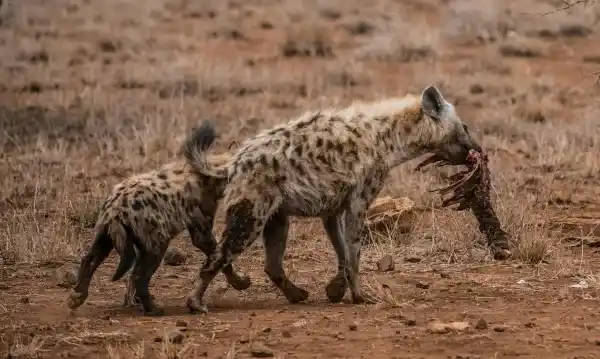
6. Hyena puppies are born with their eyes open, teeth in, and they fight.
Hyena cubs are quite different from most mammals; they are very "advanced" from birth:
They are born with their eyes open . While many carnivore cubs are born with their eyes closed, hyena puppies can see from birth.
This helps them adapt to the environment quickly.The teeth are already in. <br />Newborn hyena pups have sharp teeth in their mouths, which is extremely rare among carnivores.
Hyena pups exhibit obvious aggressive behavior from birth .
They bit and fought over each other's nipples;
Early hierarchies are formed among siblings within the same littermate;
When resources are scarce, fratricide can sometimes even occur.
This extreme "precocity" is closely related to the fierce competition for resources within the clan.
The earlier you become strong and aggressive, the more likely you are to survive in a survival-of-the-fittest environment.
VII. Their intelligence level is comparable to that of large primates.
Hyenas are not only incredibly strong and socially complex, but they also possess surprisingly high intelligence .
Multiple studies have shown that hyenas perform on many cognitive tasks in a manner comparable to that of some primates :
The ability to solve complex problems <br/>They can be achieved through trial and error and reasoning:
To open simple locks or mechanisms;
Find a detour to reach the food;
They indirectly obtain food by using objects in the environment.
Planned collective coordination : When hunting in groups or confronting other predators, hyenas will:
Adjust your stance according to the situation;
Call for backup and assemble your teammates;
Temporarily change strategies, such as luring the enemy or encircling them.
Highly developed social cognition <br />They can understand:
The intention behind gestures and facial expressions;
Is the other party high-level or low-level?
Who are allies, and who are sworn enemies?
Hyenas possess long-term memory ; they can remember:
Many clan members and individuals from neighboring clans;
Past cooperative relationships and conflict records;
Which individuals are trustworthy, and which require vigilance?
In some cooperative experiments, hyenas even outperformed chimpanzees in their teamwork.
This further illustrates that highly complex social life is an important driving force for the evolution of its intelligence .
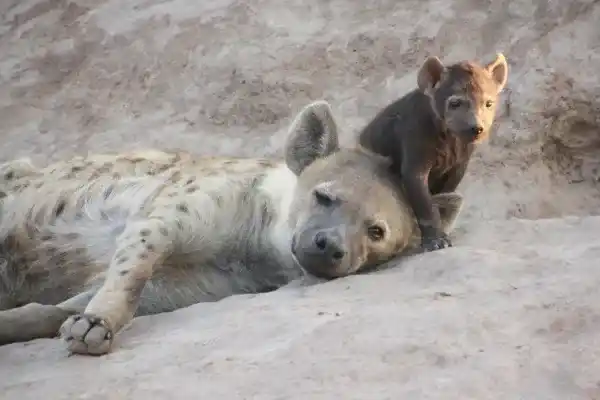
8. The laughter can be heard 5 kilometers away.
Hyenas have a rich vocalization system that can be heard very far .
In the quiet night, they:
Roar, shriek
Grunting, howling
It can spread for more than 5 kilometers across grasslands.
This allows them to:
Quickly call your companions to assemble ;
Report the danger and warn of the approach of lions, exotic hyenas, or humans;
Gather more members near the prey or carcass to share the food or defend the area ;
To assert dominance over other predators: Hyena clans are active here.
In sparsely populated environments with limited visibility, sound is a key tool for them to maintain social connections and territorial order .
9. Able to survive in extreme environments where other predators could not withstand them.
Hyenas are typical examples of "masters of environmental adaptation." Different species of hyenas can live in:
open savanna
Semi-desert and arid regions
ordinary grasslands and even mountainous areas
This adaptability comes from multiple aspects:
Their diet is extremely flexible .<br />They can eat:
Live prey that one has captured;
The remains left by other predators;
Rotten flesh, bones, leather, and other "parts that others don't want".
Opportunistic behavior : Hyenas will act opportunistically based on factors such as the season, the availability of prey, and the intensity of human activity.
They constantly adjust their foraging strategies and activity times.
It is this flexibility that allows hyenas to tenaciously maintain their population in an ecosystem increasingly squeezed by human activities, while many more "picky" predators gradually decline.
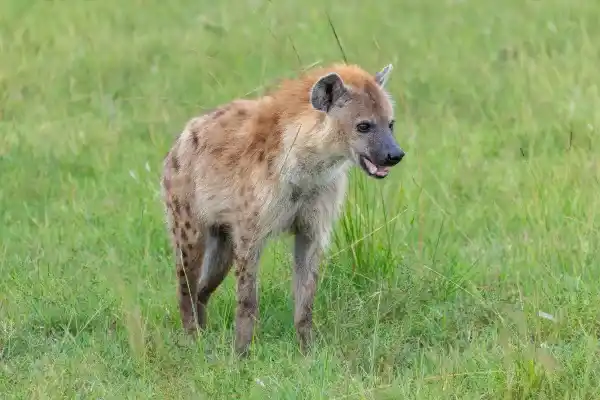
10. Though criticized as "scavengers," they are indispensable "cleaners" of the ecosystem.
Although many people dislike hyenas as "dirty" and "disgusting," calling them "carrion eaters," from an ecological perspective, hyenas play an extremely important functional role in many ecosystems:
Quickly clean up carcasses . They will quickly eat animal carcasses in the wild, reducing:
Opportunities for pathogens to breed and spread;
The stench of decay and the scale of the pest outbreak.
Accelerating Nutrient Cycles <br/>By digesting bones and tough tissues and excreting them in feces, hyenas help return nutrients to the soil , promoting vegetation growth.
They participate in population regulation . As predators and scavengers, they:
They prioritize preying on sick or weak individuals;
To participate in maintaining a reasonable number of herbivores;
It helps the entire food web maintain a dynamic balance.
Without hyenas, many ecosystems would:
The accumulation of large quantities of corpses and organic waste;
The predation pressure structure has been altered;
This leads to a series of chain reactions, affecting the entire network from herbivores to microbes.
In other words, behind their reputation as "terrifying" and "insidious," hyenas are actually one of the "guardians" of the health of the wild environment .
Summary: The Misunderstood "Smiling Hunter"
Based on real scientific research and field observations, hyenas are far more than the sinister villains portrayed in cartoons:
They possess a complex matrilineal social structure ;
They are highly efficient and cooperative group hunters ;
They possess intelligence and memory abilities approaching those of primates ;
At the same time, they are also crucial "ecological cleaners and regulators" on the vast grasslands.
When we set aside stereotypes and try to understand hyenas again, we will find that:
This animal, often disliked by people, is actually a highly charming, powerful, and extremely adaptable "hardcore character" in nature.
The next time I hear that eerie "laughter" in the night on the grassland...
Let's think about it:
Behind that is a group of intelligent, resilient animals that are vital to the ecosystem .
They are protecting the natural world in their own way.
References
Raticelli. (Undated). Interesting facts about hyenas. Scribd. URL: https://es.scribd.com/doc/224367351/CURIOSIDADES-SOBRE-LAS-HIENAS-docx
Bigoc. (2009). Interesting facts about hyenas. Natura Curiosa. URL: https://naturacuriosa.blogspot.com/2009/05/curiosidades-sobre-las-hienas.html
Fun facts about hyenas. (Undateable). Scribd. URL: https://es.scribd.com/doc/206584249/Curiosidades-Sobre-Las-Hienas