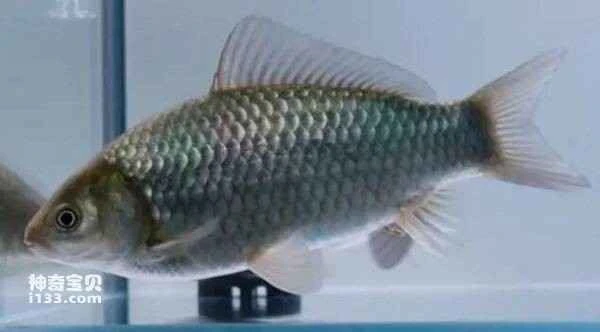
For a long time, the scientific community believed that lobe-finned fish, including coelacanths, had become extinct on Earth as early as the Early Cretaceous period, and that humans could only glimpse these fish-like vertebrates through fossils found in geological strata. In the late 1930s, a young woman named Latimer broke this silence by discovering the first living coelacanth.
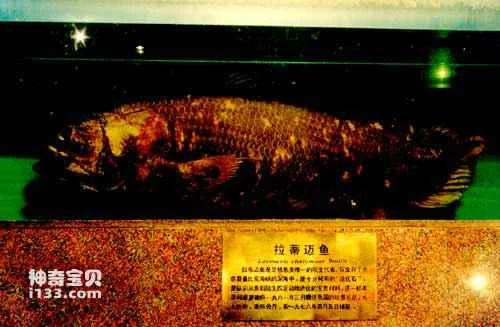
Latima fish
Miss Latimer was then an assistant to a professor of anatomy at the University of Rhodes in South Africa. She frequently visited the fishing port to purchase fish for the professor to prepare specimens. In late December 1938, with Christmas approaching, the professor went home for the holidays, but Miss Latimer did not stop working. On the 22nd, she returned to the fishing port, rummaging through baskets of fish freshly caught from the sea. Suddenly, one fish caught her eye. While most fish (including cartilaginous fish and all previously known bony fish) have fins that grow directly from their bodies, this fish's fins were different. They grew from appendage-like structures resembling arms or legs, which then connected to the body. Miss Latimer immediately realized the fish's unusual nature—wasn't this structure excellent evidence that tetrapod vertebrates originated from fish-like vertebrates? Miss Latimer immediately bought the fish from the fishermen. However, the school was already on holiday, and the laboratory was sealed off, making it impossible to retrieve the formalin and other chemicals used for preserving and protecting the specimens. In desperation, Miss Latimer bought several kilograms of salt and coated the fish inside and out like a salted fish—this was the only method of preservation under the conditions at the time.
After Christmas, the professor returned from his vacation, and Miss Latimer excitedly showed him the fish. By then, due to dehydration and hardening caused by salt, this precious "salted fish" was almost entirely reduced to skin and bones. Even so, the professor immediately recognized the fish's significance and conducted research, concluding that it belonged to the suborder Coelacanthidae within the order Lobefiniformes. The sudden discovery that an animal thought to have been extinct for 120 million years (Early Cretaceous) was still alive on Earth, and that this animal was related to the ancestors of all tetrapod vertebrates, including humans, was incredibly exciting! To commemorate Miss Latimer's significant contribution to science and the treasure trove of human knowledge, the professor named the fish and the species it represented Latimer.
In order to obtain more and better specimens of the latimae, the professor placed an advertisement offering a reward of £100 to anyone who could catch another latimae for his research (a considerable sum at the time). He also posted many posters about the latimae in the local area to attract the attention of fishermen. However, the latimae was so rare that it wasn't until 14 years later, in 1952, that information came that fishermen had caught a second latimae in the waters near Anjuan Island in the Comoros Islands, northwest of Madagascar.
When news reached South Africa, the then-Prime Minister immediately ordered warships and military aircraft to retrieve the precious fish. When the plane carrying the second Latimerius landed at Cape Town Airport, the Prime Minister personally went to the airport to greet it. This demonstrates just how valuable the Latimerius was. His first words were, "Oh, so this is what our ancestors looked like."
Since then, the Latimae has continued to be discovered, but to date, only 200 have been found worldwide, and its distribution area is limited to the waters near Madagascar in southern Africa.
The ratimester is precious not only because of its rarity and narrow distribution, but more importantly because of its scientific significance. From the beginning of this century until the 1980s, the scientific community believed that bony-scaled fishes among lobe-finned fishes were the ancestors of terrestrial tetrapods, and the ratimester was a close relative of bony-scaled fishes. The discovery of its extant species undoubtedly provided important anatomical evidence for the study of vertebrate evolution from water to land. Although Chinese scholars have now refuted the theory that bony-scaled fishes are the ancestors of tetrapods, and the ratimester is no longer a direct relative of tetrapod ancestors, it still holds significant importance for understanding the anatomy, habits, and evolutionary relationships of coelacanths and even lobe-finned fishes. Therefore, the ratimester remains a precious "living fossil" for the study of biological evolution.
In 1982, the Comorian government donated a precious preserved specimen of a Latiema fish to my country. This unique Latiema fish specimen is preserved and displayed in the first-floor exhibition hall of the Paleozoological Museum of China, a science popularization area open to the public by the Institute of Vertebrate Paleontology and Paleoanthropology of the Chinese Academy of Sciences.