We Chinese have long known that turtles and tortoises are long-lived animals, hence the ancient proverb, "A thousand-year-old tortoise, a ten-thousand-year-old turtle." But did you know that turtles and tortoises also have a long history in the evolution of vertebrates?

Protojac
The earliest known turtle fossils are those of *Eriocheir sinensis*, discovered in the Permian strata of South Africa. This small animal, only a few centimeters long, has very fragmented fossils. The well-preserved skeletons show that *Eriocheir sinensis* had small teeth on its jawbone and palate; nine elongated vertebrae between its shoulder and sacrum, but only eight pairs of ribs. However, these eight pairs of ribs are quite unusual; each one is very wide and contacts the adjacent ribs front and back. This characteristic reflects the beginning of the evolutionary specialization of turtles towards developing a shell.
The turtles and tortoises that appeared in the Triassic period had already evolved along a typical adaptive radiation path of modern turtles and tortoises. For example, the number of skull bones in *Protognathus* had decreased, teeth had disappeared from the edges of the palatine bones, and a protective, hard shell had grown on its body. These characteristics represent the most basic adaptive directions of turtles and tortoises; the evolution of later turtles and tortoises was merely a refinement of these characteristics already established in *Protognathus*. For example, later turtles and tortoises lost all their teeth, while *Protognathus* retained teeth inside its palatine bones; more advanced turtles and tortoises developed the ability to retract their heads, limbs, and tails into their shells, something *Protognathus* could not do.
Turtles and tortoises are direct descendants of cupulas. Throughout their evolutionary history, although their skulls have shown secondary openings and a reduction in the number of bones, they have still tended to retain the characteristics of a robust skull like those of primitive reptiles. Furthermore, turtles and tortoises have exhibited many adaptations useful in their long-term struggle for survival. For example, teeth disappeared from the palatine bone very early, but a keratinous beak developed, becoming a powerful cutting tool, highly effective for both carnivorous and herbivorous diets; their limbs are robust, with shorter legs and fewer toes in terrestrial species compared to primitive reptiles, while in sea turtles, the legs have evolved into large, flipper-like feet.
However, the truly specialized structure in turtles and tortoises is the development of their carapace—ribs differentiate and grow to wrap around the limb girdle and the upper segment of the limb bones to support the protective bony carapace, while a bony plastron also develops on the ventral side; both the carapace and plastron are covered by a horny sheath and connect to each other on both sides. In this way, turtles and tortoises evolved into armored reptiles, sacrificing agility and often being seen as slow and clumsy. However, this bulky protective adaptation has stood the test of time, making turtles and tortoises one of the oldest families of extant tetrapod vertebrates.
The Protochelys belongs to the suborder Protochelyda in terms of classification and phylogeny. The suborder Amphipoda, which appeared after them, was widely distributed during the Mesozoic Era and continued into the Cenozoic Era. In the Late Mesozoic Era, the suborders Pleuronectiformes and Curved-necked Turtlediformes diverged from the Amphipoda.
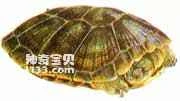
Side-necked turtle
A key characteristic of side-necked turtles is that their necks bend to the sides when their heads are retracted into their shells. They were widely distributed during the Cretaceous and early Tertiary periods, but later became largely confined to the Southern Hemisphere, including South America, Africa, Oceania, and southern Asia.
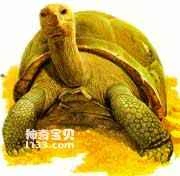
Giant tortoise
Among turtles and tortoises, the most evolutionarily successful and numerous are the crepuscular turtles, which are still found worldwide today. Crepuscular turtles can retract their necks vertically into their shells in an S-shape, with highly specialized cervical vertebrae adapted for this behavior. From the Cretaceous period onwards, crepuscular turtles have held a prominent position among tetrapods and have evolved in many directions of adaptive radiation. Some inhabit rivers and swamps, while others are adapted to terrestrial life; some live in forests, while others can live on plains or even deserts; some turtles have returned to the ocean, only coming ashore to reproduce; some turtles and tortoises are small, while others are enormous (such as modern giant tortoises, land tortoises, and Pleistocene giant tortoises); some turtles and tortoises are entirely carnivorous, some are entirely herbivorous, and some are omnivorous.
It is precisely because turtles and tortoises possess excellent structural adaptability and a wide range of adaptability to Earth's changing environment that they have withstood the test of survival competition for hundreds of millions of years. If humans do not interfere with them, turtles and tortoises can continue to survive on Earth for a long time.