Chinese name: Primitive Archaeopteryx
Latin name: Protarchaeopteryx
Era: Early Cretaceous
Fossil origin: Liaoning, China
Physical characteristics: 70-90 cm in length
Diet: Carnivorous
Type: Theropod
Definition: The original Archaeopteryx
In March 1997, the journal *Geology in China* published a paper by Ji Qiang and Ji Shu'an entitled "Fossils of Early Birds in China." This title alone is highly intriguing to anyone interested in the origins of birds.
As we all know, Archaeopteryx is the world's recognized ancestor of birds. From the moment it was rediscovered, it became the darling of paleontologists, reigning supreme and unparalleled. For over a century, apart from 10 specimens discovered in Solnhofen, Germany, no other fossils in the world have been found to rival it.
The significance of Chinese paleontologists discovering similar fossils outside of Germany for the first time is self-evident. Dr. Ji Qiang and Ji Shu'an described their newly named *Archaeopteryx* in their article as follows: *Archaeopteryx* is similar to the German *Archaeopteryx*, but with stronger bones and a more primitive form; its body had already developed true feathers.
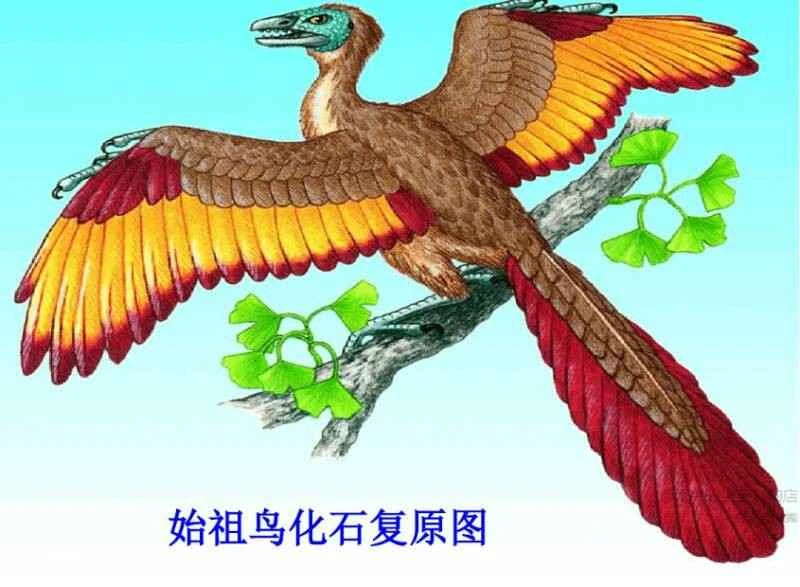
What exactly was Archaeopteryx? The Archaeopteryx specimen was discovered in a ravine near a village called Hengdaozi, a small village very close to Sihetun. Archaeopteryx was about the size of an eagle, with teeth in its beak and long forelimbs and hind limbs. You might remember the small but ferocious Velociraptors in the movie *Jurassic Park*; Archaeopteryx's physical form is very similar to that of the Velociraptors.
From a morphological perspective, Archaeopteryx cannot yet be considered a bird. As we know, birds are a class of feathered vertebrates that can fly, and all birds, including Archaeopteryx, fit this definition. Although some birds, such as ostriches, cannot fly, biologists have sufficient evidence to suggest that ostriches' ancestors were flying animals; they are birds that subsequently lost their ability to fly.
The morphology of Archaeopteryx indicates that it was flightless, and considering its phylogenetic position, its ancestors were also flightless. Therefore, classifying Archaeopteryx as a bird is inappropriate. Of course, if we follow the traditional, simple definition: feathered vertebrates are birds, then Archaeopteryx could be classified as a bird, because it did indeed have tail feathers very similar to those of modern birds.
However, the most important scientific significance of Archaeopteryx lies precisely in the fact that it is not a bird, yet it has feathers. Perhaps not only ordinary people, but even some world-renowned paleontologists cannot accept this fact: a dinosaur with real feathers—it is truly absurd.
In 1998, Ji Qiang and others collaborated with paleontologists in North America to report the discovery of Archaeopteryx internationally. His collaborators included Curie, a world-renowned expert on theropod dinosaurs, and Norell of the American Museum of Natural History in New York. In an article published in *Nature* on June 25, 1998, they corrected errors in Ji Qiang's domestic report, reclassifying *Archaeopteryx robustus*. This time, they classified it as a theropod dinosaur, considering it to represent a group of maniraptors closely related to birds, rather than belonging to birds as initially identified. However, its teeth were not as sharp as those of typical carnivorous dinosaurs, and it lacked the distinctive tail of Velociraptor.