Cervidae is a large family encompassing many different species, with over 50 known species. These deer are distributed worldwide, from forests near the Arctic Circle to tropical grasslands, with varying habitats and habits depending on the region. However, due to habitat destruction and illegal hunting by humans, many wild deer species are endangered, and some are even extinct. So, which wild deer are the rarest? What are some endangered deer species? Below, we've compiled a list of the 10 rarest deer species in the world, including the Eld's deer, Chilean elk, hog deer, Vietnamese muntjac, and northern Pudu deer, among others. Let's learn more about them.
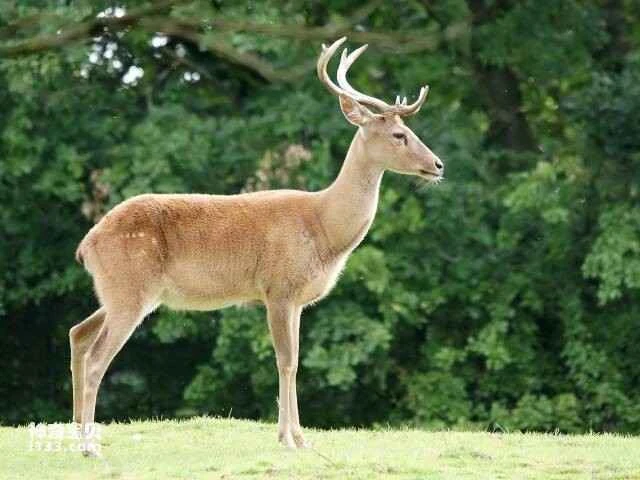
1. Eld's deer
The Eld's deer is a mammal native to Asia, resembling the sika deer in appearance. They are relatively small, typically about 1.2 meters long, with a shoulder height of about 60 centimeters, and weigh between 20 and 30 kilograms. Their fur is reddish-brown, with white spots in summer and none in winter. Their antlers are forked, with the male's antlers being more impressive than the female's, reaching up to about 70 centimeters in length. Eld's deer primarily inhabit forests, mountains, and grasslands, preferring to live near streams or lakes. They are herbivores, feeding on grasses, leaves, shoots, fruits, and nuts. Eld's deer are nocturnal, usually hiding in bushes or grass during the day and foraging at night. Due to human development activities and deforestation, the Eld's deer population has gradually declined, and they are now listed as a Class I protected animal in China.
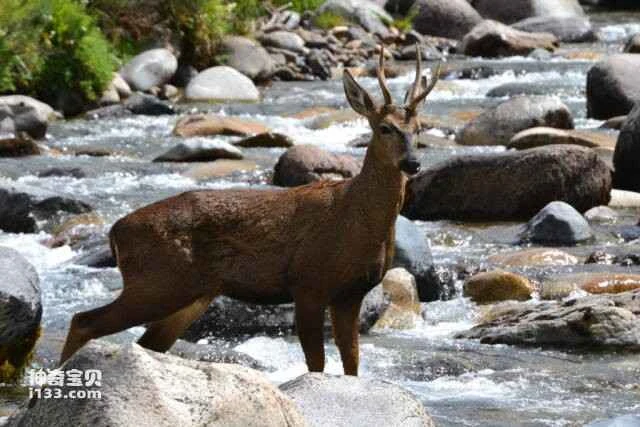
2. Chilean moose
The Chilean red deer, also known as the South American red deer or Andean red deer, is a mammal native to South America. Belonging to the order Artiodactyla and family Cervidae, it is the only deer species found in South America. Chilean red deer are relatively small, measuring approximately 1-1.5 meters in length, with a shoulder height of about 75 centimeters, and weighing between 40-80 kilograms. Their bodies are grayish-brown with black stripes on their backs and heads, which help them blend into their environment in grasslands and mountains, avoiding detection by predators.
Chilean moose are mainly distributed in the Andes Mountains of South America, including countries such as Chile, Argentina, Peru, and Bolivia. They are herbivores that feed on herbaceous plants and are commonly found in open grasslands, hillsides, and high-altitude areas. Due to habitat destruction, hunting, and illegal trade, the Chilean moose population has declined significantly and is listed as an endangered species. Many conservation organizations are taking measures to protect this species, including banning hunting and illegal trade and establishing wildlife sanctuaries.
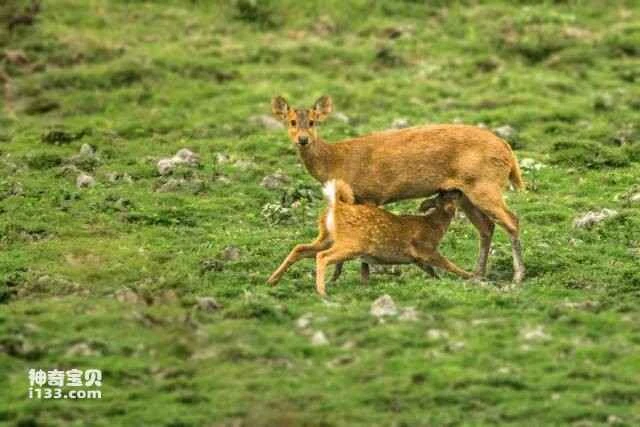
3. Pig Deer
The hog deer, also known as the Indian hog deer, is a small deer species found in South and Southeast Asia. They typically measure 1.2-1.5 meters in length, 60-70 centimeters in shoulder height, and weigh approximately 50-80 kilograms. This deer primarily inhabits open environments such as grasslands, scrublands, and forest edges. They feed on various plants, fruits, and tender shoots, and sometimes also graze on crops. The Indian hog deer is nocturnal, often resting in bushes or grass during the day. Their coat is mostly orange-brown, with a white belly and lower jaw. Males usually possess short, curved antlers, but only a few females develop them. These deer are also hunted and traded, leading to a gradual decline in their numbers.
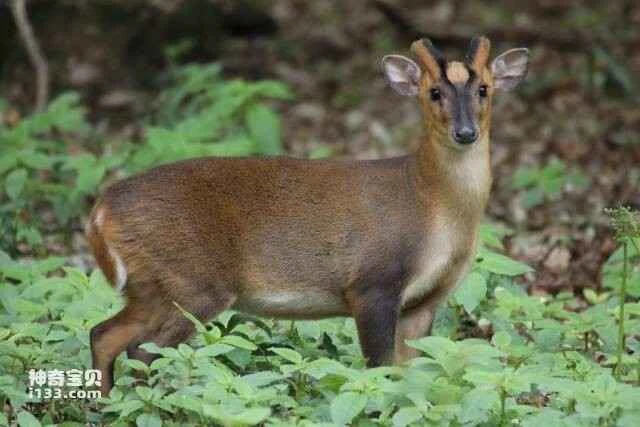
4. Vietnamese muntjac
The Vietnamese musk deer, also known as the Vietnamese musk deer, is a small deer species found in the high-altitude forests of northern Vietnam. It is a relatively new species, discovered only in 1994 by a French hunter. The Vietnamese musk deer is small, about the size of an adult rabbit. They typically measure 50-70 cm in length, about 40 cm in shoulder height, and weigh only 10-15 kg. They have light brown fur, with a lighter belly than back, and large eyes with black and white eye rings. Males are slightly larger than females and have two canine teeth. The Vietnamese musk deer is mainly active at dawn and dusk, feeding on herbs, leaves, and fruits. They are very agile and adept at escaping predators by leaping and crawling. Although their exact population is currently unknown, they face threats such as habitat destruction and illegal hunting, and are listed as an endangered species.
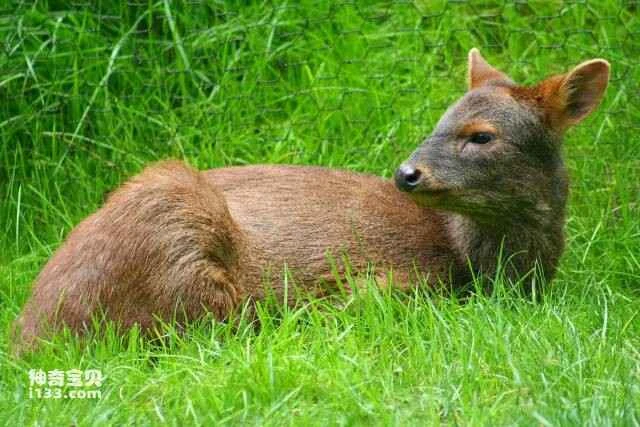
5. Northern Pudu Deer
The Andean Pudu deer, also known as the northern Pudu deer, is a small deer species found in the Andes Mountains of South America. They are among the smallest and rarest deer in the world. The Andean Pudu deer is very small, standing only about 30-40 centimeters tall at the shoulder and weighing less than 10 kilograms. They have brown or reddish-brown fur with white spots and stripes. Both males and females have canines, but these are relatively small compared to other deer species. The Andean Pudu deer is primarily nocturnal, feeding on herbs and leaves. They are adept at hiding in bushes and grasses and can escape predators by leaping and running. Although the current population size is unknown, they face threats such as habitat destruction and illegal hunting, and are listed as an endangered species.
It is important to note that in Spanish, the name of this deer, "Pudu mephistophiles," comes from the demon character Mephistopheles in Johann Wolfgang von Goethe's novel *Faust*. Because this name can be controversial and misunderstood, other names, such as Andean Pudú, are used in some English literature.
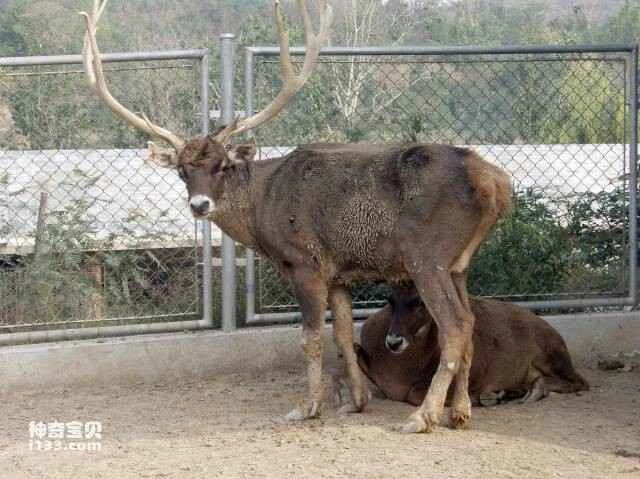
6. White-lipped deer
The white-lipped deer (scientific name: *Cervus aureus*) is a species of deer found in Asia. They are distributed across southwestern China, the Indian subcontinent, and Southeast Asia. Relatively small in size, the white-lipped deer stands about 80-100 cm tall at the shoulder and typically weighs 30-50 kg. Its most distinctive feature is its white lips, hence its name. Its fur is generally dark brown, sometimes with gray or black spots. The white-lipped deer is a herbivore, primarily feeding on grasses, leaves, buds, and fruits. They are usually active at dusk or night, resting in dense bushes during the day. A rare and protected animal, the white-lipped deer currently faces the threat of habitat degradation and is listed as a CITES Appendix I protected species.
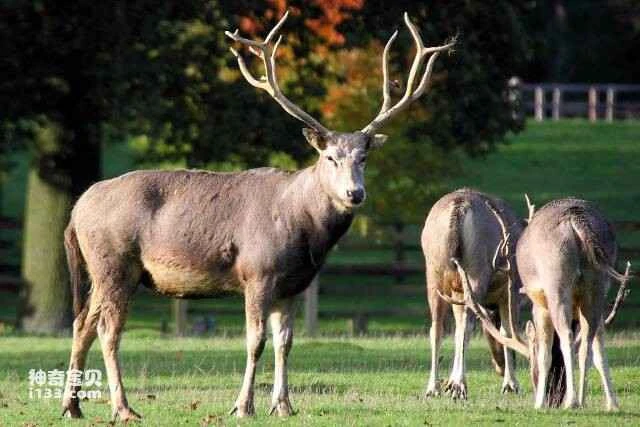
7. Père David's deer
The Père David's deer, also known as the four-unlikes or Chinese water deer, is a rare deer species and one of the mammals endemic to China. Native to Northeast China and the North China Plain, they now exist only in a few wild areas due to historical overhunting and habitat loss. Père David's deer are relatively large, reaching a shoulder height of about 1.4 meters. Males are more imposing than females. Their antlers are flattened and spread out laterally, resembling large lotus leaves, making them highly ornamental and valuable for their appearance. The deer have reddish-brown fur with a white belly and lips.
The Père David's deer is a herbivore that feeds primarily on grass, leaves, buds, and bark. They are typically active at dusk or night, resting in bushes and grasslands during the day. Due to continuous human destruction and impact, the Père David's deer population has declined drastically, and they are listed as a critically endangered species on the IUCN Red List of Threatened Species. Currently, the Chinese government has implemented a series of conservation measures, including establishing nature reserves, conducting monitoring and scientific research, and carrying out educational campaigns, in order to protect this precious species.
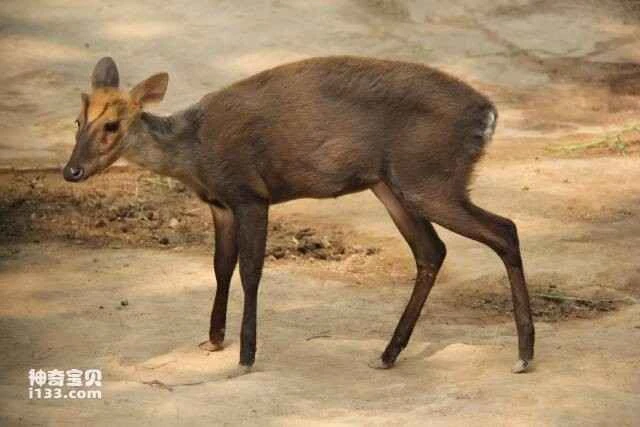
8. Black Muntjac
The Asian black muntjac, also known as the Asian black roe deer, is a small ungulate endemic to China, belonging to the deer family. It measures approximately 1.0-1.3 meters in length, 50-60 centimeters in shoulder height, and weighs around 10-20 kilograms. The Asian black muntjac differs significantly in appearance from other muntjac species; its body is dark brown or black, with white limbs and neck, and males and females are similar in appearance. Asian black muntjacs are mainly distributed in the mountainous regions of Yunnan, Guizhou, and Guangxi in southern China, as well as neighboring countries such as Vietnam and Laos. They live in forests at altitudes of 1500-3800 meters, foraging in woodlands and primarily feeding on herbaceous plants, tree buds, and tree bark. Due to their declining numbers, they are listed as a Class II protected animal in China.
9. Steppe deer
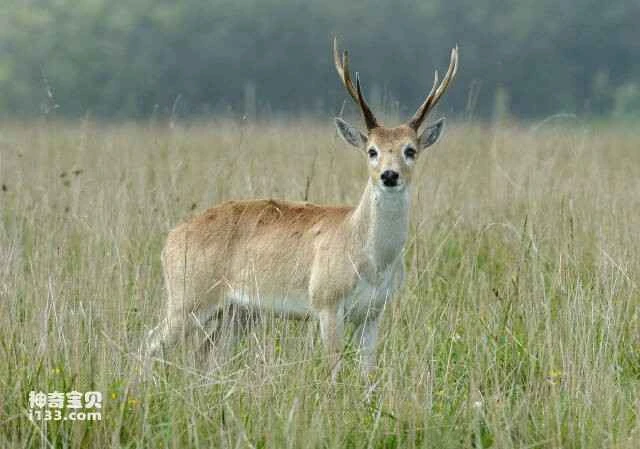
The Paraguayan savanna deer, also known as the Paraguayan savanna deer or the South American antelope, is a small ungulate belonging to the deer family. It measures approximately 1.0-1.3 meters in length, 70-80 centimeters in shoulder height, and weighs around 18-25 kilograms. Its coat is primarily brown with white patches on the throat and lower jaw. Paraguayan savanna deer are mainly distributed in the grassland regions of South American countries such as Brazil, Argentina, Uruguay, Bolivia, and Paraguay. They live in vast open areas and scrublands, feeding on herbaceous plants and low shrubs. Paraguayan savanna deer are docile and usually live in groups, but they can also hunt alone.
Due to overhunting, habitat destruction, and illegal trade, the Paraguayan grassland deer population has declined and has been listed as a near-threatened species. Governments around the world have implemented various conservation measures to protect this species, including establishing nature reserves, banning illegal hunting, and strengthening management.
10. Sika deer
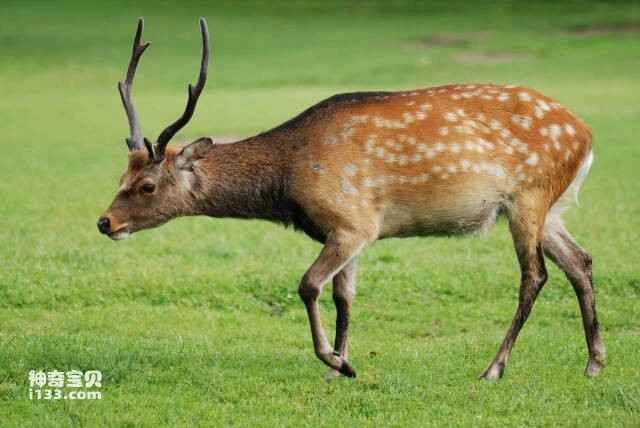
The sika deer is a medium-sized ungulate belonging to the deer family. It measures approximately 1.0-1.7 meters in length, 70-110 centimeters in shoulder height, and weighs between 30-150 kilograms. Its coat is primarily brown, displaying distinct white and black spots in summer and turning completely dark brown in winter. Native to Japan, the sika deer has been introduced worldwide as a pet and for hunting. They inhabit mountainous and forested areas, feeding on herbs, bark, and twigs. Sika deer typically live in herds but can also hunt alone.
Due to factors such as overhunting, habitat destruction, and illegal trade, the sika deer population has gradually declined in its native range and has been listed as an endangered species. However, in other parts of the world, the sika deer population remains relatively stable. Therefore, in many countries and regions, various conservation measures have been implemented to protect this species, including establishing nature reserves, banning illegal hunting, and strengthening management.
This article primarily lists all existing deer species in the world, based on their endangered status in the wild, and combines this information with relevant online rankings. It is for entertainment and reference only. (Important Notice: Hunting, killing, eating, or trading wild animals and their products are all illegal and criminal acts! Wild animals belong to nature. For the sake of the ecological environment and your health, please refuse to buy, keep, or eat wild animals!)