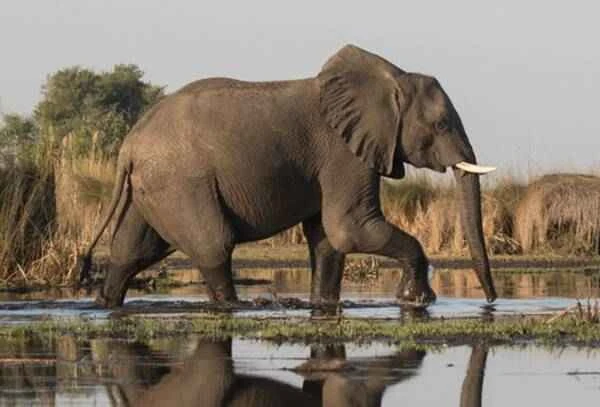
The largest land animal on Earth is the African elephant. African elephants are over 3.5 meters tall, with some reaching as high as 4.1 meters. They weigh approximately 2.7 to 6 tons; the largest known individual is a male African elephant in Angola weighing 13.5 tons. Their tusks have a record weight of 102.7 kilograms, and their ears are enormous, reaching up to 1.5 meters in length. They are the largest living land mammals.

African elephants use their long trunks not only for smelling, breathing, blowing horns, and drinking water, but also for grasping things, especially food. The trunk alone has approximately 100,000 muscles. At the end of the African elephant's trunk are two highly sensitive and dexterous finger-like projections used to grasp small objects; Asian elephants only have one. Both male and female African elephants have tusks used to find food and water and to tear bark from tree trunks.
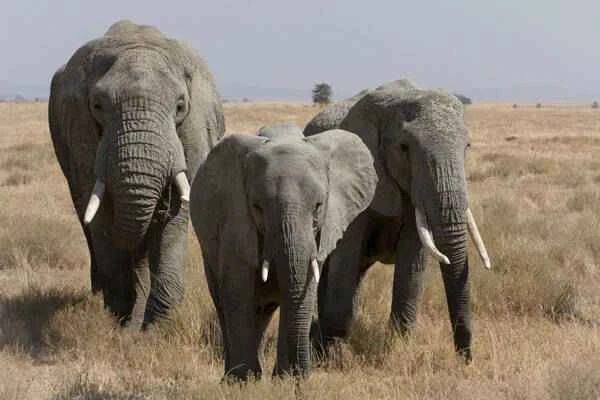
African elephants are virtually invincible on the savanna, but they mostly compete with other animals in a gentle manner. They only harm other animals when they are angry or fearful, at which point even a strong rhinoceros will give them a wide berth.
In the early 1970s, countless African elephants were killed for their ivory. 80% of the ivory exported from Africa comes from poached elephants. The international ivory ban of 1990 alleviated the situation but did not eradicate it. Poaching for the black market continues in countries with inadequate wildlife management. Most of Africa's ivory is exported to Asia.
The UN Convention on International Trade in Endangered Species of Wild Fauna and Flora (CITES) implemented a comprehensive ban on international trade involving elephants in 1989. To protect endangered elephants, countries like Kenya have called on this conference to impose a 20-year ban on the ivory trade, curb illegal ivory trafficking, severely punish poaching, and prevent elephant extinction.