Deinonychus was an extinct group of proboscis, characterized by its tall and robust build. Males stood nearly five meters tall at the shoulder, reached eight meters in length, and weighed over 15.6 tons. They lived from the Middle Miocene to the Early Pleistocene, and based on their fossil distribution, Deinonychus were mainly found in Africa, Europe, and Southwest Asia.
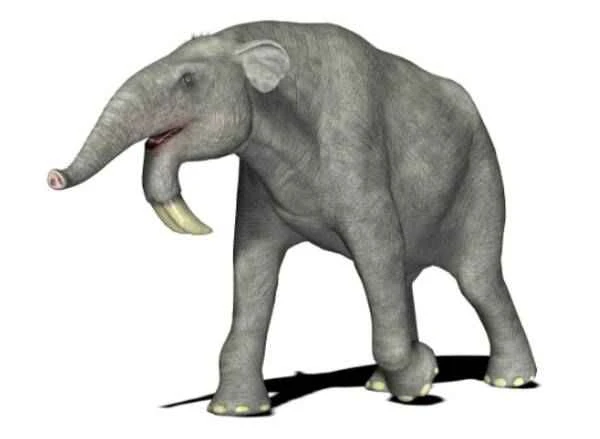
They use their white teeth to cut objects, their tusks to poke soil or dig bark, and they have a pair of large, backward-curving tusks in their lower jaw. They are vertebrate mammals.
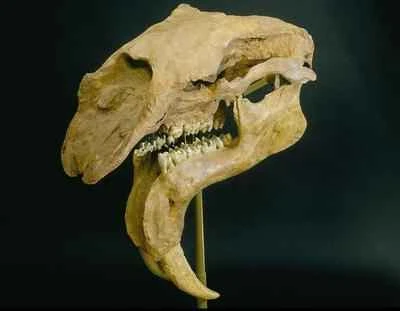
Although many people believe that Deinotherium was a forest animal with teeth well-suited for chewing leaves, its tall, long-legged body was well-suited for long-distance travel across open areas, and its wide distribution and rapid spread also prove its migratory nature. Compared with other ancient elephants of the same period, Deinotherium fossils are scarce, indicating that they belonged to a relatively peripheral ecological location and did not form large herds.
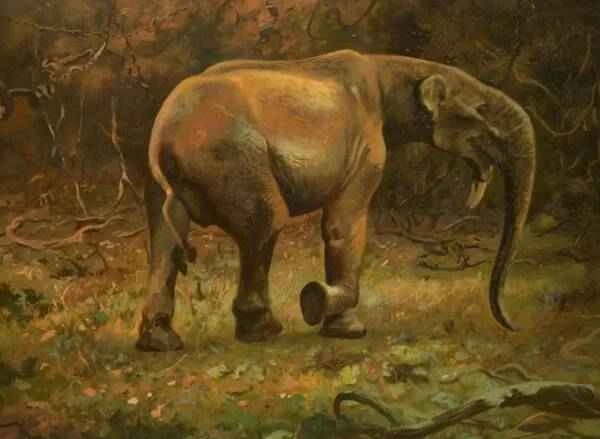
There are three known species in the genus *Dinodon*, all of which are very large: *Dinodon giganteum*, *Dinodon nigra*, and *Dinodon davidii*.
*Dinothes megalodon* is the type species of the genus *Dinothes*. It primarily inhabited Europe during the Late Miocene and was the only species found in the Mediterranean region. Its last known habitat was in Romania during the Middle Pliocene. In 1836, the entire skull of *Dinothes megalodon* was discovered in the Pliocene strata of Hesse-Darmstadt. The skull was approximately 1.2 meters long and 0.9 meters wide, much larger than that of modern elephants.
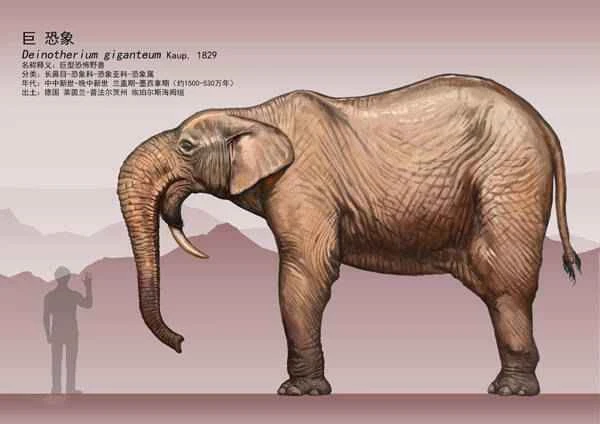
The Indian Deinotherium was a small species of deinotherium found primarily in India and Pakistan. It was characterized by its massive rows of teeth and the nodules within its cavities. The Indian Deinotherium appeared in the Middle Miocene and became more widespread towards the end of the Miocene. It disappeared about 7 million years ago.
Beauvoir's Deinotherium was an African species. It was characterized by a narrow snout, a small but high nasal cavity, and a high and narrow skull. Compared to the other two Deinotherium species, it had a shorter chin. Beauvoir's Deinotherium appeared at the end of the Miocene and survived after the other species went extinct. Fossils were discovered in Kenya and are approximately 1 million years old.
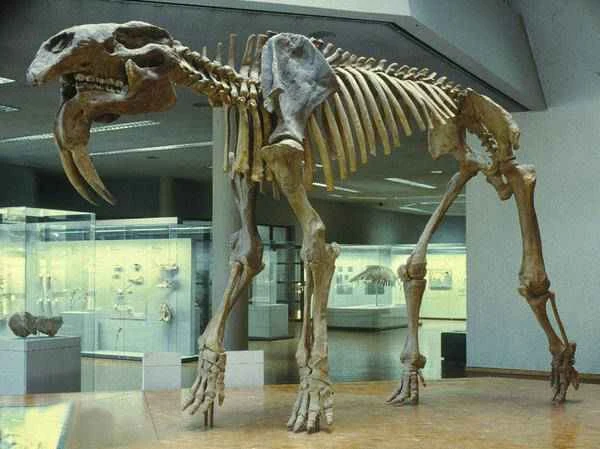
How the deinnocent elephant used its unique tusks has been a focus of discussion. Deinnocent elephant skeletal fossils suggest it may have used them to burrow into the soil to find plant roots and tubers, to knock down branches to eat leaves, or to dig out bark for food. Hominoid remains have also been found at several deinnocent elephant fossil sites in Africa. Bernard Heuvelmans believes the deinnocent elephant still exists in Central Africa and was responsible for several mysterious hippopotamus killings in early 20th-century Africa. However, no one has ever seen a deinnocent elephant.