Throughout Earth's long evolutionary history, many species have gradually gone extinct due to environmental changes, but some have survived tenaciously thanks to their unique survival advantages, becoming "living fossils." Lungfish are a prime example. These ancient aquatic species can breathe not only through gills in the water but also through lungs at the surface, allowing them to adapt to ever-changing environments. Below are six extant lungfish species that have survived from ancient waters millions of years ago, making them among the most evolutionarily significant organisms on Earth.
1. Queensland lungfish (Neoceratodus forsteri)
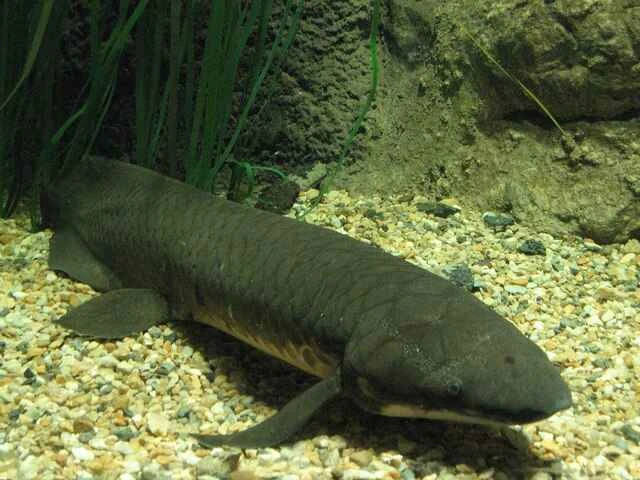
The Queensland lungfish, also known as the Australian lungfish (Neoceratodus forsteri), Burnett salmon, and Australian lungfish, is a species endemic to Australia, inhabiting freshwater rivers and lakes in Queensland. They have a cylindrical body, reaching up to 4 feet in length, and possess an ancient and typical appearance. Queensland lungfish have strong, limb-like pectoral and pelvic fins. They breathe oxygen from the water through gills and also possess a separate lung for breathing air in oxygen-deficient environments.
The unique morphology and adaptations of the Queensland lungfish suggest that they have undergone minimal changes over millions of years of evolution. Their ability to survive in water, combined with their capacity to breathe air, provides valuable clues for scientists studying the evolution of early vertebrates.
2. South American lungfish (Lepidosiren paradoxa)
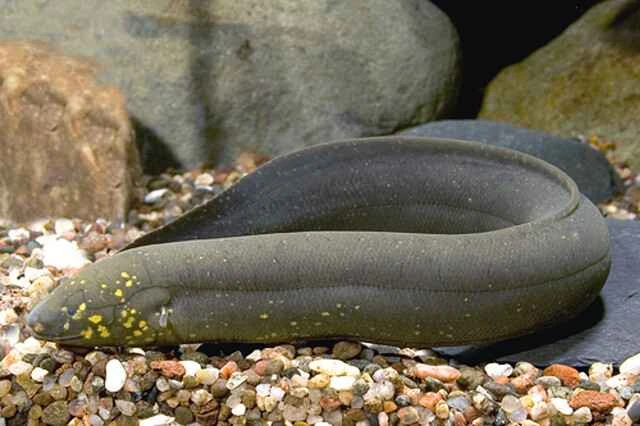
South American lungfish primarily inhabit the swamps and slow-flowing rivers of the Amazon basin. These lungfish have slender, eel-like bodies, reaching up to 4 feet in length. They have smooth, scaleless skin and long, slender fins that resemble the limbs of terrestrial animals rather than typical fish fins.
South American lungfish can breathe air using two powerful lungs. During the dry season, when water levels drop, they enter a state known as "hibernation." They bury themselves in the mud and secrete a layer of mucus to protect themselves from drought. This survival strategy allows them to survive in extreme environmental changes.
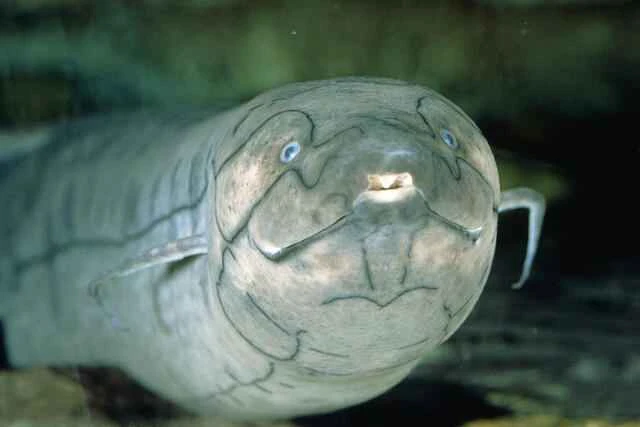
3. Marble lungfish (Protopterus aethiopicus)
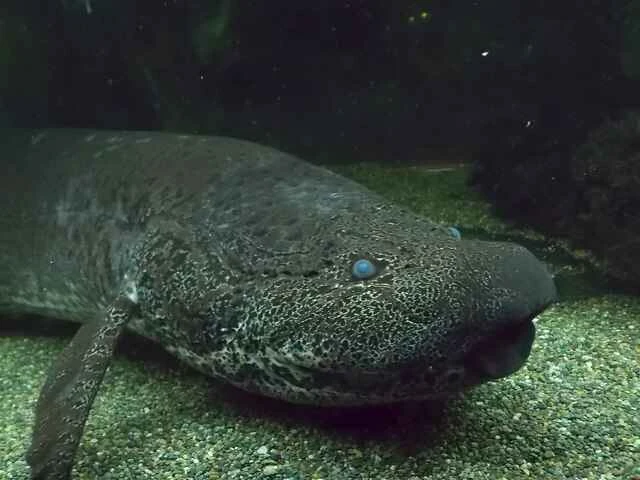
Marble lungfish are native to freshwater systems in East and Central Africa. They are slender, reaching up to 6 feet in length, and possess distinctive marbled patterns that allow them to blend effectively into their environment and avoid predators. Marble lungfish also have two powerful lungs, which help them breathe air when water levels are low.
When water levels drop, marbled lungfish enter a dormant state. Like other lungfish, they secrete mucus to coat themselves and remain dormant until water levels rise or oxygen levels recover. This adaptation allows marbled lungfish to survive in areas with drastic environmental changes.
4. Lungfish (Protopterus amphibius)
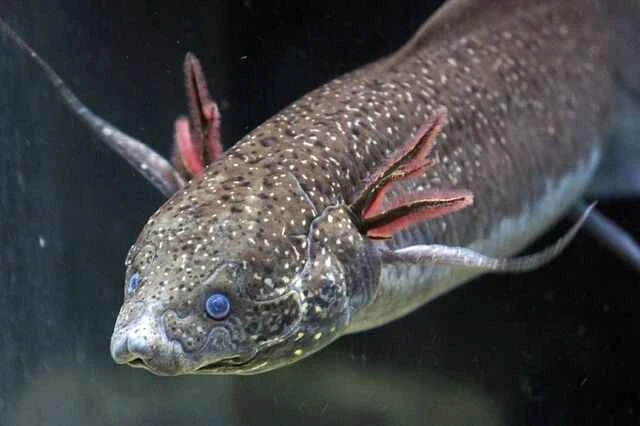
The shortfin lungfish, also known as the East African lungfish, is one of the smaller members of the lungfish family, reaching up to 2 feet in length. They are found in freshwater rivers and lakes of East Africa, with slender bodies and very delicate fins. These fish exhibit typical lungfish characteristics, breathing through gills and lungs.
Like other lungfish, lungfish can enter a dormant state during the dry season. When water sources dry up, they bury themselves in the mud, forming a protective mucus sac to survive the harsh drought. This survival strategy allows them to remain alive even in environments with drastically fluctuating water levels.
5. West African lungfish (Protopterus annectens)
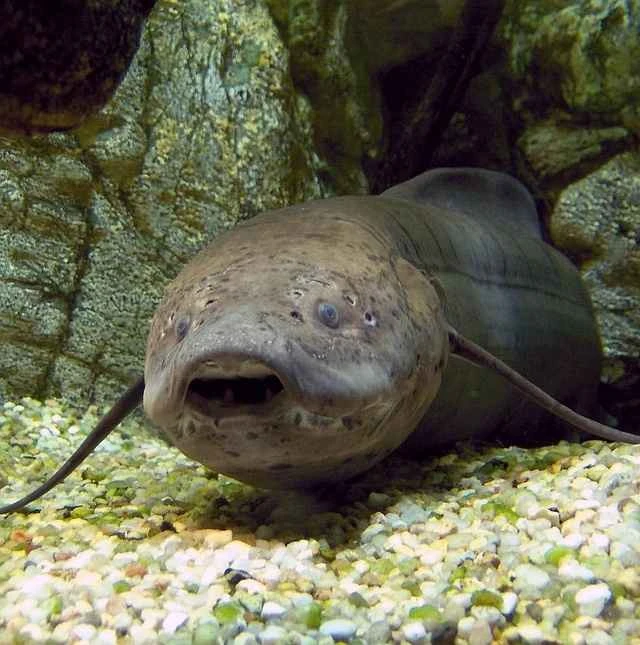
West African lungfish are widely distributed in rivers and wetlands south of the Sahara, and can grow up to 3 feet long. They are robust and highly adaptable. Possessing gills and a pair of lungs, they can survive in low-oxygen environments, especially in slow-moving or oxygen-deficient waters.
Like other lungfish, West African lungfish can enter a dormant state, sometimes for up to a year. They bury themselves in the mud, forming protective mucus sacs to protect themselves from the effects of drought. This adaptation not only helps them survive dry periods but also makes them one of the oldest organisms on Earth.
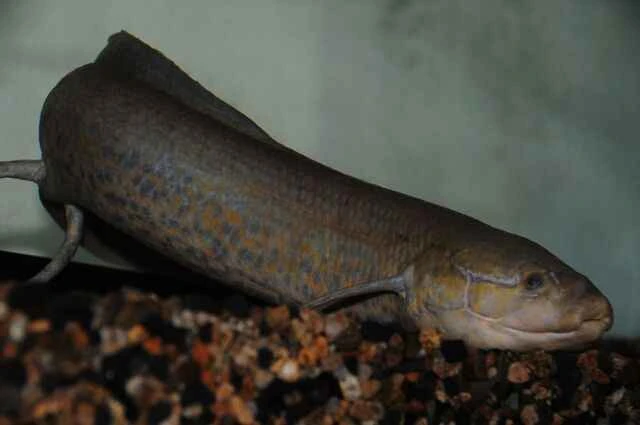
6. Spotted lungfish (Protopterus dolloi)
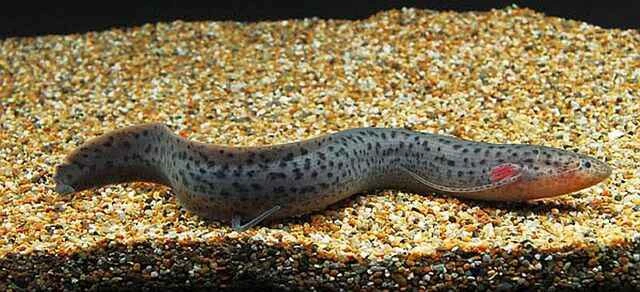
Spotted lungfish inhabit the Congo River basin in Central Africa and possess unique spotted patterns that allow them to blend effectively into their surrounding aquatic environment. These lungfish are relatively long, reaching up to 4 feet in length, and are highly adaptable.
Like other lungfish, the spotted lungfish possesses lungs capable of breathing air, and it can also enter a dormant state. When water levels drop, the spotted lungfish secretes mucus to form a protective shell, burying itself in the mud and waiting for the water level to rise again. This adaptation allows them to survive for extended periods in arid environments.
The evolutionary significance of lungfish
Lungfish, hailed as "living fossils," have maintained virtually no significant changes in their physiological structure. Their gills and lungs make them among the most evolutionarily significant organisms on Earth. Scientists believe that lungfish may be one of the earliest species to evolve from aquatic to terrestrial vertebrates. Their flippers and ability to breathe both aquatic and air simultaneously have enabled them to adapt to extremely diverse environments. This biological characteristic not only reveals how lungfish survive in different environments but also provides important clues for studying the evolution of vertebrates to land.
Lungfish, as an ancient aquatic species, have successfully survived millions of years of evolution thanks to their unique respiratory mechanisms and survival strategies. They are not only witnesses to the biodiversity of nature but also active fossils representing the transition of vertebrates from aquatic to terrestrial life. Studying these "living fossils" not only helps us better understand the evolutionary history of life but also provides important references for future ecological conservation and species research.