International Iberian Lynx Day is observed annually on December 12th . This day was established to raise awareness of the current status of the Iberian lynx ( Lynx pardinus ) and to emphasize the crucial role of protecting this species in the biodiversity of the Iberian Peninsula.
At the beginning of the 21st century, the Iberian lynx was once known as "the world's most endangered feline." After decades of conservation efforts, its population has recovered somewhat, but it is still far from being "safe." This anniversary serves as a reminder:
This species was once on the verge of extinction, and its future still depends on our continued attention and action.
Below, we will systematically understand International Iberian Lynx Day from four perspectives: when it was established, why it was established, how it is celebrated, and what we can do.
1. What is International Iberian Lynx Day? What is its origin?
International Iberian Lynx Day: December 12th each year.
This day was established to remind the public:
The Iberian lynx is one of the most iconic and once most threatened wild animals of the Iberian Peninsula (Spain and Portugal), requiring long-term and stable protection.
1. Who is the "Iberian Lynx"?
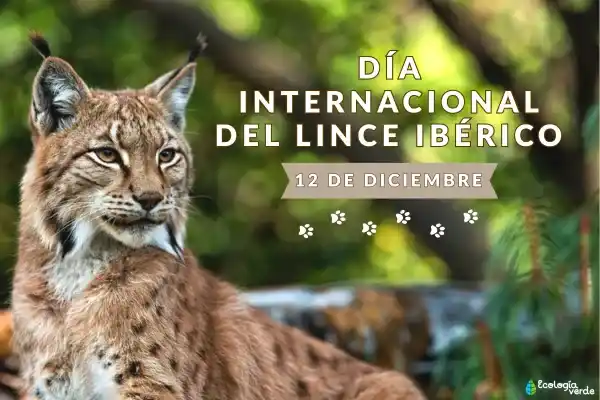
The Iberian lynx is a medium-sized wild cat with very distinctive physical characteristics:
Yellowish-brown fur covered with black spots
There are black tufts of hair on the tips of the ears (ear tufts)
It has exaggerated "beard-like mane" on both sides of its lower jaw.
The tail is short and thick, with a black "truncated" end.
It is a species endemic to the Iberian Peninsula , mainly inhabiting Mediterranean scrub, forest and Maqi scrub habitats, and is highly dependent on small mammals such as the European hare.
2. From the brink of extreme danger to slow recovery
Around 2000, the Iberian lynx faced an extremely dire situation:
Its distribution range has shrunk drastically, leaving only a few isolated small populations in southern Spain;
Their numbers in the wild once plummeted to a few hundred .
Due to habitat fragmentation, a sharp decline in the number of European hares, road traffic fatalities, and illegal hunting, it is widely considered one of the "most endangered felines on Earth."
The establishment of International Iberian Lynx Day is a response to this crisis.
It was jointly promoted by the following parties:
Various nature conservation organizations and NGOs
Public management departments and environmental agencies in Spain, Portugal, and other countries
Several EU life conservation projects targeting lynxes, etc.
By setting a fixed date to centrally disseminate information, drive decision-making, and attract public participation , the plight of this species will not be forgotten.
3. What is the core objective for this day?
The core purpose of International Iberian Lynx Day can be summarized as follows:
Raise public awareness and attention to this species and its habitat;
Promote and support various lynx conservation and restoration projects;
A salute to the frontline personnel and organizations that have long been involved in conservation efforts.
Every year on December 12th, awareness campaigns, educational programs, and monitoring activities are conducted in lynx habitats to convey the following message to the public:
Only by protecting their habitat, maintaining a complete ecosystem, and committing to long-term investment can the Iberian lynx truly "return to safety."
II. Why celebrate International Iberian Lynx Day?
The International Iberian Lynx Day was established and celebrated to remind everyone:
This feline is one of the symbols of the natural heritage of Spain and Portugal ;
It was once nearly extinct, and its current recovery is the result of hard work ;
Even so, it is still classified as a "Vulnerable" species , far from being "safe".
1. A reminder to the public: This is a "barometer" of the Mediterranean ecosystem.
The Iberian lynx holds significant indicative value in Mediterranean ecosystems:
It is highly dependent on a healthy population of European rabbits ;
It requires well-structured shrublands, forest edges, and open areas ;
They are highly sensitive to environmental damage and prey depletion.
In other words, wherever the Iberian lynx can still exist stably, the ecological conditions are usually relatively healthy .
Protecting the lynx is actually protecting the entire Mediterranean ecosystem.
2. Thumbs up for the long-term conservation efforts!
International Iberian Lynx Day is also a collective tribute to decades of conservation efforts:
Captive breeding program : Establishing a genetic "safety bank" to provide individuals for reintroduction into the wild;
Wild reintroduction project : Releasing individuals in areas where lynxes have disappeared to restore their historical distribution;
Long-term monitoring and scientific research : Using technologies such as GPS collars and infrared cameras to monitor their activities, causes of death, and reproductive status;
Threat mitigation measures include improving road design, adding warning signs and animal passageways, restoring habitats, and controlling canine diseases.
It is these long-term efforts that have enabled the Iberian lynx to move from "endangered" to "gradual recovery".
3. Let the public know that they too can participate in change.
This anniversary also aims to convey a key message:
The future of the lynx is not just a matter for "experts" and "government".
Local residents in hunting areas and villages can help report problems and accept eco-friendly management;
Drivers can reduce the risk of hitting and killing wild animals by slowing down and paying attention to signs;
Farmers and landowners can adopt land management methods that are more respectful of biodiversity;
Schools and educational institutions can turn the Iberian lynx into a highly educational case study;
Nature lovers and tourists can support truly responsible ecotourism through their spending choices.
Without such broad social participation, the recovery we have today would not have been possible.
III. How is International Iberian Lynx Day celebrated?
During International Iberian Lynx Day, various activities are organized to raise awareness of this unique feline and its conservation history. Specific arrangements may vary by year and region, but the overall goal remains the same:
To let more people "know about it, like it, and be willing to do something for it".
Common forms of celebration and events include:
1. Education Day, Public Lectures and Popular Science Activities
These events are typically held in conservation centers, schools, universities, and environmental organizations.
Popular science lecture : Introducing the physical characteristics, living habits, and reproductive features of the Iberian lynx;
Threat and Protection Work Sharing Session : To let the public know what difficulties it has experienced and what dangers it still faces;
Campus activities and themed courses : Through drawing, storytelling, interactive games, and other forms, children are introduced to "lynx stories" from a young age.
This helps to transform the "Iberian lynx" from an abstract noun into a vivid, concrete, and precious living image .
2. Guided tours and eco-interpretive trails
In areas where lynxes are distributed, for example:
Sierra Morena, Andalusia
Doñana National Park
Parts of Extremadura and the Portuguese region
We will organize some nature tours and guided tours:
Understanding Mediterranean shrub and forest ecology;
Learn to identify footprints, feces, and other traces in the wild ;
Understanding what an "ecological corridor" is and why connectivity between plots is crucial for lynxes.
Although the chances of actually seeing a lynx in the wild are not high, people can gain a more intuitive understanding of what a lynx's "home" looks like and what kind of environment it needs to survive.
3. Public Open Days at Breeding Centers and Nature Reserves
Many captive breeding centers and nature reserves arrange special activities on this day, such as:
Showcasing the history and progress of Iberian lynx conservation;
Arrange exchanges with veterinarians, breeders, and researchers , and explain the workflow of breeding, release, and monitoring;
With the help of display boards, videos, models and other materials, the complex process of "from an individual to a stable population" is explained to the public.
To ensure animal welfare, visitors typically do not directly "visit" the lynx itself, but gain a deeper understanding of the rigorous and complex conservation system behind it.
4. Media and social network promotion
Around International Iberian Lynx Day, conservation organizations and official agencies launch a series of online campaigns:
Publish photos and videos collected during field monitoring ;
Telling the "life stories" of some lynx individuals that have been released back into the wild;
Use charts to present population size trends, major threat data, and conservation achievements ;
Use hashtags to create a concentrated dissemination effect on social media platforms.
Even if you are not in Spain or Portugal, you can still participate in spreading awareness and advocating for this species online.
5. Community Actions and Volunteer Service Activities
In some areas, more hands-on activities are also organized, such as:
Habitat cleanup
Planting trees or restoring native shrub vegetation can improve the ecological environment.
Install or inspect infrared cameras under the guidance of a scientific team.
Participating in wildlife recording and monitoring as a citizen volunteer
These activities allow participants to go beyond being mere "bystanders" and become truly part of the conservation effort.
IV. How can we help the Iberian lynx and prevent it from returning to the brink of extinction?
Protecting the Iberian lynx requires not only large-scale policies and projects, but also the choices made by each individual in their daily lives.
Although its numbers have increased in recent years, it remains a vulnerable species and its recovery foundation remains fragile.
Here are some practical action directions.
1. Protect and restore their natural habitats.
Iberian lynx need:
Extensive and interconnected Mediterranean scrubland and forests ;
A stable population of European rabbits serves as a food source;
Ecological corridors that can be safely traversed to avoid excessive isolation of populations.
you can:
Support projects and organizations dedicated to the construction of nature reserves, the restoration of ecological corridors, and land reclamation ;
In consumption and investment, try to choose products and services that respect the land and the environment ;
If you own land or are engaged in rural businesses in the relevant area, you can learn about the local "coexistence with wildlife" management plan and actively participate.
2. Reduce road traffic fatalities
In many areas where lynxes roam, vehicle collisions are a significant cause of death in the wild, especially on secondary roads that traverse rural areas.
As a driver, you can do the following:
Slow down in areas with wildlife warning signs;
Pay extra attention to peak wildlife activity times such as sunrise and sunset;
If you find injured or dead wild animals by the roadside, please notify the local environmental protection or transportation authorities immediately.
From a macro perspective, supporting plans that promote wildlife corridors, roadside fencing, and road realignment also helps reduce traffic injuries and deaths of lynxes and other animals.
3. Report illegal hunting and poisoning activities.
Illegal hunting, unauthorized trapping, and the use of poison bait not only harm lynxes, but also a large number of protected species, including birds of prey and scavengers.
If you discover or suspect such behavior:
Do not engage in conflict rashly; if there is danger, ensure your own safety first.
Record the location and circumstances as much as possible, and report to environmental enforcement agencies, forestry or police departments as soon as possible;
Actively spread awareness of the dangers of poisoned bait and illegal traps within the local community to help change outdated perceptions.
Only by making these behaviors visible and punishable can we reduce their occurrence at the root.
4. Support relevant conservation organizations and projects.
Currently, numerous organizations and projects are dedicated to the Iberian lynx:
Field monitoring
Captive breeding
Habitat management
Communicating and training with the community
You can support us in the following ways:
Donate money or become a member of a wildlife conservation organization ;
Follow and share the latest achievements and information from long-term initiatives such as the LIFE project ;
Actively share the story of the Iberian lynx with those around you, encouraging more people to pay attention.
Funding and public support are key to ensuring the long-term sustainability of projects.
5. Promoting sustainable practices in rural areas and agriculture.
Farmers, ranchers, and estate owners have a crucial impact on lynx conservation:
They control how the land is used;
Decide whether to preserve the shrubs, whether to over-cultivate, or whether to use chemical agents;
Attitudes toward issues such as hunting, herding, and rabbit management all affect the lynx's survival conditions.
you can:
Choose agricultural products that respect biodiversity and minimize pesticide use ;
Support the development of organic agriculture, ecological farms, and land management models that take into account wildlife ;
Give a thumbs up and promote the farms and estates that are willing to cooperate with conservation projects.
Only when rural economy and ecological protection can achieve a "win-win" situation can lynx and other wild animals truly exist in the long term.
6. Visit lynx habitats as a "responsible tourist".
If you have the opportunity to travel to lynx habitats in Spain or Portugal and hope to see wild lynxes, please remember:
Choose travel agencies and tour guides that explicitly support nature conservation and animal welfare ;
Comply with the regulations of the nature reserve and do not leave the trail or enter the restricted area without authorization;
Observe quietly from a distance, without feeding, chasing, or making strange noises to attract wild animals;
Respect local communities and land users, and avoid creating conflict and litter.
Good wildlife viewing can positively incentivize the local economy and allow more landowners to see the value of protecting the lynx.
7. Support scientific research and "citizen science"
Monitoring and research on the Iberian lynx does not rely entirely on professional teams; " citizen science " is becoming increasingly important.
Participate in footprint recording, camera deployment and retrieval under the guidance of experts;
Report wildlife records through designated platforms;
Participate in local biodiversity survey activities ;
Follow the latest research findings published by scientific research institutions and help translate them into easy-to-understand content.
Scientific research provides the basic data for doing things right and avoiding detours , while public participation expands the scope of observation and the amount of data.
V. Conclusion: A story worth celebrating, and also a promise yet to be fulfilled.
After understanding the date, origin, and significance of International Iberian Lynx Day (December 12th) , it is not difficult to see that:
The Iberian lynx is a highly representative case in the history of contemporary nature conservation;
Its gradual shift from "one of the world's most endangered cat species" to "population recovery" is the result of decades of efforts by countless organizations and individuals.
However, it is not yet completely out of danger and still needs long-term, stable and broad support.
You can join this protection chain in many ways:
Learn more about the Iberian lynx and the Mediterranean ecosystem;
Share the story of this species with others on social media or in your immediate surroundings;
Support frontline organizations that are truly committed to protecting the project;
When shopping, investing, or traveling, try to choose options that are more beneficial to nature and wildlife.
Every small decision can subtly influence the future of the Iberian lynx.
May the Mediterranean sun shine brightly in the future.
People can still find it among the bushes and forest edges
See this "spotted ghost of Spain and Portugal"
Quietly wander through its hometown, which has been passed down through generations.
References
World Iberian Lynx Day: Monitoring efforts in Portugal. El Click Verde. Website: https://elclickverde.com/blog/dia-mundial-del-lince-iberico-inmerso-en-el-seguimiento-en-portugal
Spanish Ministry of Ecological Transition and Population Challenges. Dognana National Park: Iberian Lynx (Lynx pardinus), a giant Mediterranean cat. Website: https://www.miteco.gob.es/es/parques-nacionales-oapn/red-parques-nacionales/parques-nacionales/donana/valores-naturales/lince.html
Spanish Ministry of Ecological Transition and Population Challenges. Iberian Lynx Conservation Strategy. Available at: https://www.miteco.gob.es/es/biodiversidad/publicaciones/pbl-fauna-flora-estrategias-lince.html
The recovery of the Iberian lynx: a conservation achievement in Spain. (July 9, 2024). International Union for Conservation of Nature (IUCN). Available at: https://iucn.org/es/noticias/202407/recuperacion-del-lince-iberico-un-exito-de-conservacion-en-espana