International Cheetah Day is observed annually on December 4th . This day was established to raise awareness of the cheetah ( Acinonyx jubatus ) – the fastest land animal on Earth and an endangered species facing a survival crisis.
Let's learn together about: When is International Cheetah Day, why we commemorate cheetahs, how to participate in the activities on this day, and what we can do in our daily lives to help cheetahs avoid extinction.

1. What is International Cheetah Day?
International Cheetah Day: December 4th every year.
This day is dedicated to the cheetah—a carnivorous mammal belonging to the Felidae family, renowned for its extreme speed and graceful physique .
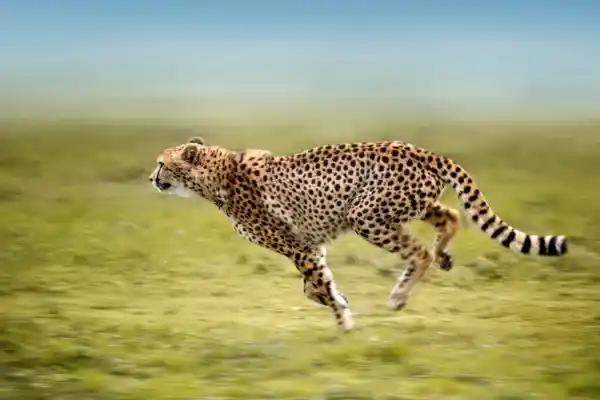
The cheetah is currently known as the fastest land animal .
In short sprints, they can reach speeds of approximately 29 meters per second (about 104 kilometers per hour) . This astonishing speed is thanks to a series of special body structures designed for "running":
A slender build and long limbs allow for large strides.
An extremely flexible spine bends and stretches like a spring while running, increasing stride length.
Well-developed lungs and nasal cavity ensure a large intake of oxygen in a short period of time.
The semi-unretractable claws , similar to the "studs" on running shoes, increase ground grip.
The long, powerful tail helps maintain balance during high-speed turns and acts like a rudder to control direction.
However, despite their extraordinary abilities, cheetahs are declining in numbers in the wild.
Due to multiple threats such as habitat loss, human-wildlife conflict, and illegal trade, cheetahs are now listed as a "vulnerable species" by the International Union for Conservation of Nature (IUCN) , with some local populations even more endangered.
II. Why was "International Cheetah Day" established?
The birth of International Cheetah Day is closely related to the story of a woman and a cheetah.
This woman is Laurie Marker , one of the world's most renowned cheetah conservation experts and the founder of the Cheetah Conservation Fund (CCF).
1. A cheetah named Khayam changed his life.
The story begins in 1977 :
Laurie Marker was working at Wildlife Safari in Winston, Oregon at the time.
There, she met and raised a cheetah cub named "Khayam" by hand;
Khayam is a female cheetah born in a German zoo and later sent to the United States for behavioral research and breeding programs.
Laurie's daily interactions with Khayam forged a deep emotional bond between her and the cheetah, and also made her truly realize:
If no action is taken, cheetahs may disappear from the wild forever.
This cheetah became the starting point and spiritual symbol of her lifelong dedication to cheetah conservation.
2. From captive rearing and reintroduction to "in-situ conservation"
In 1990, Khayam was sent to Namibia to participate in a project that attempted to reintroduce captive cheetahs into the wild.
Practice has shown that this process is fraught with difficulties : it is far more difficult for captive cheetahs to learn to hunt, avoid threats, and adapt to complex environments in the wild than imagined.
This experience made Laurie realize:
Instead of focusing on "returning captive individuals to the wild," we should devote more energy to "in situ conservation" —that is, directly protecting the existing wild cheetah population and its habitat .
In the same year, she founded the Cheetah Conservation Foundation (CCF) in Namibia.
Namibia has one of the largest wild cheetah populations in the world, making it a key region for global cheetah conservation efforts.
3. Why December 4th of all dates?
Laurie Marker's designation of December 4th as International Cheetah Day was not random.
This day was Khayam's birthday .
From then on, Khayam's birthday became a day for the world to commemorate cheetahs and call for conservation efforts, symbolizing that the bond between humans and animals can be transformed into a real force for conservation .
III. Major Threats Facing Cheetahs
To understand the significance of International Cheetah Day, we must first understand what problems cheetahs are actually facing:
1. Habitat loss and fragmentation
Farmland expansion, urbanization, and road construction are constantly encroaching on grasslands and open areas;
The once contiguous habitat has been fragmented into small, isolated areas.
Cheetahs need to migrate and hunt over long distances, and the fragmentation of their habitats makes them more susceptible to conflict with humans.
2. Decrease in natural prey
Overhunting, illegal hunting, and ecological degradation have led to a decline in the numbers of many herbivores, such as antelopes.
With fewer wild prey available, cheetahs are more likely to turn their attention to livestock, potentially leading to conflicts with herders.
3. Conflicts with farmers and herders
In some areas, cheetahs occasionally prey on sheep, goats, or calves.
For farmers who rely on livestock for their livelihood, this is a direct economic loss, therefore:
Some people may choose to retaliate by shooting, setting traps, or poisoning .
Over time, many cheetahs died as a result of retaliatory hunting.
4. Illegal poaching and the exotic pet trade
Cheetah cubs are illegally captured because they have an appearance that is "as cute as big cats."
They are smuggled to some countries and become illegal "pets" or status symbols .
The cubs are extremely vulnerable to illness, injury, or starvation during capture and transportation;
It is estimated that a significant proportion of smuggled cheetah cubs die before reaching their buyers.
5. Low genetic diversity
Cheetahs have historically experienced a severe population bottleneck.
This results in their low genetic diversity and a relatively homogeneous overall gene pool.
This raises several issues:
Some diseases are more likely to spread within a population;
The ability to adapt to environmental changes is reduced;
Species' "resistance to risks" has weakened over long-term evolution.
6. Climate Change and Environmental Change
Climate change can affect precipitation, vegetation, and prey distribution, among other things.
Furthermore, coupled with changes in human land use patterns,
This makes the ecosystem on which cheetahs depend for survival more unstable.
IV. How to celebrate International Cheetah Day (December 4th)?
International Cheetah Day is not just a day to "look at photos and give a like".
It is also an opportunity to turn attention into action .
1. Actively learn about cheetahs and their ecological value.
Watch programs about cheetahs and the ecology of the African savanna using video platforms or documentaries;
Read popular science books and articles about cheetahs to learn about their physical characteristics, behavioral habits, and ecological roles;
Introduce to children, friends, or students:
Why are cheetahs important to the entire ecosystem, and not just "fast cats"?
Knowledge is the starting point for all conservation efforts.
2. Pay attention to information released by authoritative childcare organizations.
Take a moment to browse the websites or reports of the following organizations:
Cheetah Conservation Fund (CCF)
The International Union for Conservation of Nature (IUCN) and its Feline Specialist Group
Wildlife conservation NGOs operating in Africa and West Asia
Key points to understand:
The latest cheetah population estimates;
Main distribution areas and protected areas;
Ongoing conservation projects and the challenges they face.
When you have more accurate information, you can influence more people when you share and discuss it.
3. Utilize social media to spread information
On social media, you can speak up for cheetahs:
Publish popular science information, photos, illustrations, or short videos related to cheetahs;
Use hashtags, for example:
#InternationalCheetahDay, #DíaInternacionalDelGuepardo, #InternationalCheetahDay ;Not only share "cute photos," but also let people see the crisis that cheetahs are facing:
Habitat loss, conflicts with farmers, illegal trade in cubs, etc.
If you speak multiple languages, you can publish in both Chinese and English, which will reach a wider audience.
4. Donate money or participate in "symbolic adoption"
For many frontline conservation organizations, funding is key to sustaining operations .
you can:
Make one-time or periodic donations to reputable cheetah conservation organizations;
Participate in the " Symbolic Adoption of a Cheetah " project:
Although you won't actually bring the animal home, your fees will go towards monitoring, feeding, medical care, or research.
The amount doesn't have to be large; consistent small donations can sustain the operation of patrol, education, and research projects.
5. Support local communities through "responsible consumption"
Some childcare organizations partner with local communities to sell:
handicrafts
Clothing, textiles, wood carving
Unique cultural and creative products, etc.
These products are made by residents of communities living near cheetah habitats, and they generate economic income for:
Helping locals improve their lives;
This will motivate them to protect wildlife, rather than to gain short-term benefits through killing or poaching.
When you make a purchase, you're not just "buying a souvenir," you're supporting a lifestyle that coexists with wildlife .
6. Choose responsible wildlife tourism
If you have the opportunity to travel to Africa or other areas where cheetahs are found ...
Do your research before you go and choose a truly responsible way to travel:
Choose tour companies and guides that do not participate in trophy hunting ;
Priority will be given to operators who will return a portion of their profits to the community and conservation projects;
We refuse any activities that allow tourists to touch, take photos with, or hold cheetah cubs .
These activities are often linked to illegal capture and captivity, which is detrimental to species conservation.
Your travel spending may be unknowingly determining the fate of local wildlife.
V. How can we help cheetahs avoid extinction?
International Cheetah Day is a key occasion of the year.
However, the conservation of cheetahs requires our long-term and continuous attention and support.
1. Support key conservation organizations and projects
For example:
Cheetah Conservation Foundation (CCF)
IUCN/SSC Feline Specialist Group
Regional or international organizations such as the Wildlife Conservation Society
Their work in countries where cheetahs are found includes:
Rescue injured or confiscated cheetahs, provide rehabilitation and timely release;
To study cheetah behavior, genetic diversity, and habitat requirements in order to develop scientific plans for conservation.
Promote the establishment or expansion of protected areas;
Collaborate with local communities to carry out education and sustainability projects.
Supporting these organizations is equivalent to directly supporting frontline conservation workers and scientists .
2. Donations: Every small amount of money can have an impact.
Your donation can be used for:
Anti-poaching patrol vehicles and fuel;
Monitoring equipment, such as GPS collars and infrared cameras;
Food, medicine, and care for injured or orphaned cheetahs;
Provide rural schools with teaching materials and activity funds related to wildlife conservation.
For many conservation projects, stable and predictable funding can determine whether a project can continue or even survive .
3. Consider "symbolic adoption".
Through the adoption program, you can:
Regularly receive pictures, stories, or monitoring updates about the cheetahs that have been "adopted";
To more intuitively feel the effect of one's support;
Give the adoption certificate as a gift to relatives and friends to let more people know about this species.
For childcare organizations, this format not only enhances public participation but also increases long-term support.
4. Promote non-lethal "human-wildlife conflict solutions".
Many farmers and herders hunt cheetahs because they fear their livestock will be preyed upon.
The key to solving this problem is to enable farmers to protect their livestock without killing cheetahs .
The Cheetah Conservation Foundation's "Livestock Protection Dog Project" is one such success story:
Choose a large guard dog such as the Anatolian Shepherd Dog ;
They grow up with flocks of sheep or cattle and regard livestock as "their own group";
When a cheetah or other predator approaches, guard dogs will warn and drive them away by barking or charging.
In this way:
Livestock losses for farmers have decreased significantly;
There is no longer a need to solve the problem by shooting or poisoning;
Cheetahs are thus spared from retaliatory hunting.
If you are involved in agricultural extension, rural development, or have collaborations with rural Africa
Similar non-lethal solutions can be actively introduced and promoted.
5. Promote community education and ecotourism
The long-term success or failure of cheetah conservation largely depends on how local residents perceive them .
The areas you can support or participate in include:
Provide local schools with educational resources about cheetahs, ecosystems, and sustainable use;
Encourage the development of ecotourism projects so that communities can generate income through wildlife conservation;
Helping locals understand the value of living cheetahs to tourism and the ecosystem.
It far outweighs the short-term gains obtained through hunting or illegal trade.
Cheetah's future will only truly be hopeful when the community transforms from "victims" to "guardians".
6. Oppose poaching and illegal wildlife trade
For cheetah cubs, the illegal trade is a deadly disaster :
Poachers steal cubs from the wild;
The long-distance smuggling process is characterized by harsh conditions and lack of care.
Many cubs died before reaching the buyers.
What you can do includes:
We explicitly refuse to keep or purchase any wild big cats or other illegal exotic pets;
Report any information about selling cheetahs or other protected animals on online platforms immediately.
Share with family and friends:
The pursuit of exotic pets directly fuels poaching and smuggling, ultimately accelerating the extinction of a species.
Reducing demand is one of the most effective ways to combat illicit trade.
7. Practice "wildlife-friendly consumption" in daily life.
Even if you're not in Africa or involved in conservation work, you can indirectly help cheetahs through everyday choices:
Do not purchase any animal fur, bones, or ornaments of unknown origin;
When traveling, choose travel agencies or scenic spots that prioritize animal welfare and nature conservation;
Focus on environmental protection, support sustainable products, and reduce pressure on natural habitats.
Every act of rational consumption is a vote to protect nature.
VI. Conclusion: Preserving the Cheetah's Image Through Action
International Cheetah Day (December 4th) is more than just a "commemorative day".
It is also a reminder to the whole world:
Cheetahs are a unique life form on Earth;
Their fate is not solely in the hands of scientists and governments.
It also lies in the hands of every ordinary person who is willing to understand, think, and take action.
Starting today, you can:
Learn more about cheetahs;
Share something about cheetahs and conservation on social media;
Donate the price of a cup of coffee to frontline conservation projects;
Or make more wildlife-friendly choices in future travel and consumption.
Every small change, when accumulated, can potentially determine:
Will future generations still be able to see cheetahs running freely on the grasslands?