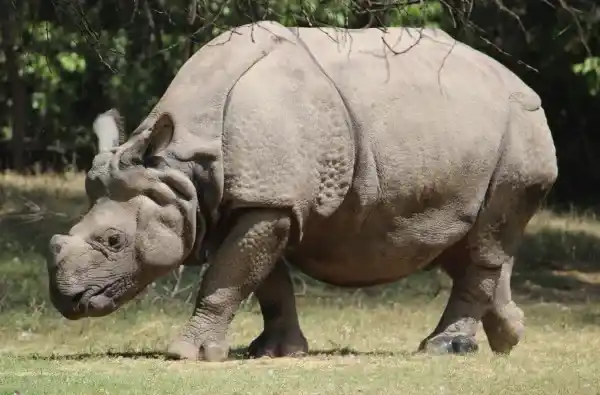
Rhinoceroses are among the largest land mammals on Earth, known for their thick skin, powerful bodies, and horns made of keratin. While Africa and Asia once had more rhinoceros species, habitat loss and increased poaching have reduced the number of extant rhinoceros species to only five worldwide. Most of these species face varying degrees of threat to their survival.
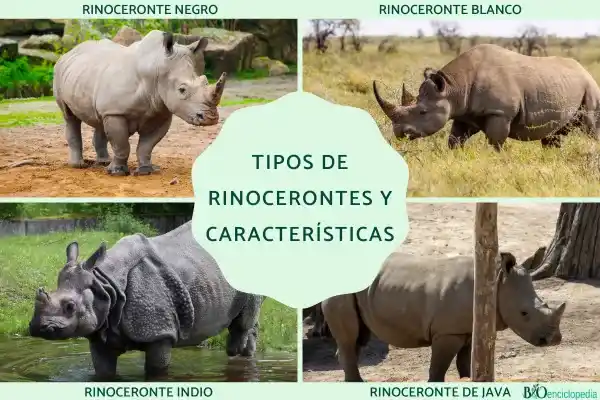
A list of the five extant species of rhinoceros
Black rhinoceros ( Diceros bicornis )
White rhinoceros ( Ceratotherium simum )
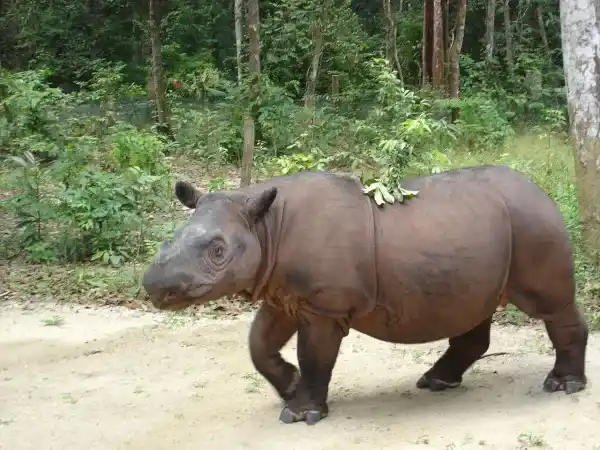
Sumatran rhinoceros ( Dicerorhinus sumatrensis )
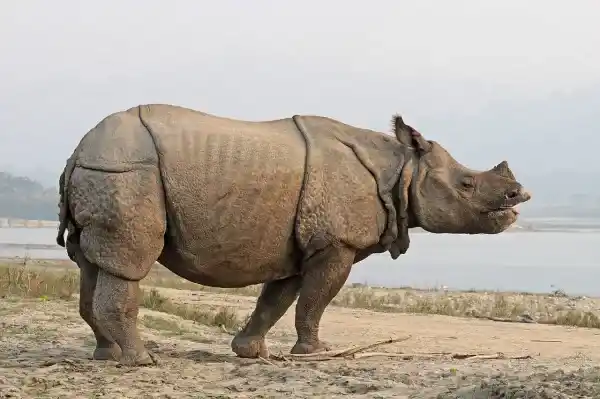
Indian rhinoceros / Great one-horned rhinoceros ( Rhinoceros unicornis )
Javan rhinoceros ( Rhinoceros sondaicus )
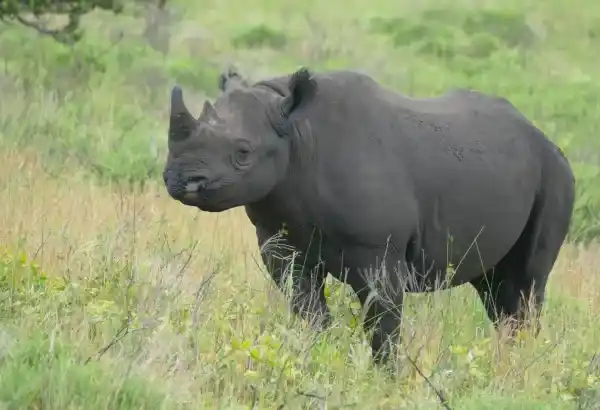
Black rhinoceros ( Diceros bicornis )
Key points for shape recognition
It usually has two horns .
Its most distinctive feature is its hooked upper lip, which allows it to grasp things easily , making it suitable for tearing off leaves and twigs.
It has a sturdy build and is more of a "shrub-feeding" type, unlike the white rhinoceros, which mainly eats grass.
Habitat and Distribution
Black rhinoceroses can live in a variety of environments, including savannahs , semi-arid scrublands , woodlands , and wetland edges . Historically, they had a wider distribution, but their population declined sharply in the 20th century due to intense hunting and poaching, and today they only survive in protected areas and the wild in some African countries.
feeding habits
It primarily feeds on leaves, twigs, and shrubs , and is a typical large herbivore that grazes on branches and leaves . Its hooked upper lip helps it grasp plants more accurately.
Described subspecies (or regional types)
Black rhinoceroses have been classified into several subspecies (or regional types) in different regions, some of which have disappeared or become extremely rare.
Commonly mentioned subspecies/regional examples
Southern black rhinoceros ( D. b. bicornis ): Historically found in southern Africa, it is generally considered extinct.
Southwestern black rhinoceros ( D. b. occidentalis ): Associated with Namibia, Angola and other regions, its population is now mainly maintained in protected areas.
Central and Southern Black Rhinoceros ( D. b. minor ): has a relatively wider distribution, with important populations still existing in some areas of southern and East Africa.
Western black rhinoceros ( D. b. longipes ): Once found in many parts of Central and West Africa, it has been declared extinct.
Eastern black rhinoceros ( D. b. michaeli ): now mainly associated with Kenya and Tanzania.
Southeastern black rhinoceros ( D. b. brucii ): often listed as extinct.
Chobe Black Rhinoceros ( D. b. chobiensis ): Associated with the Chobe Valley region, extremely rare.
Ugandan black rhinoceros ( D. b. ladoensis ): Historically described as being in the Uganda/South Sudan region, its current status is unclear in many sources.
White rhinoceros ( Ceratotherium simum )
Key points for shape recognition
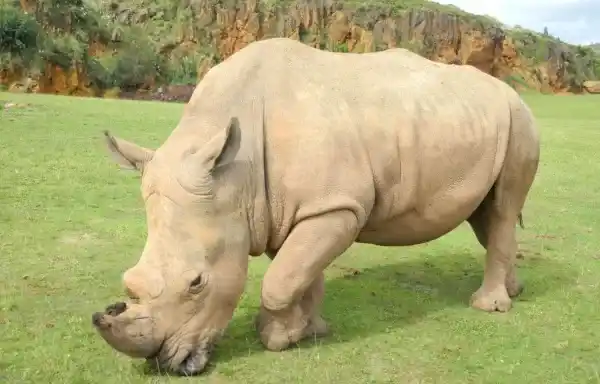
It usually has two horns .
The upper lip is wide and nearly square , making it suitable for grazing on the ground.
It is enormous in size and is one of the largest living rhinoceros species.
Behavior and Sociality
White rhinoceroses are generally more social than black rhinoceroses and can form small groups; adult males often have a strong sense of territory and will actively defend their territory.
Habitat and Diet
Habitat: Open grasslands and savannas, with varying grass heights.
Diet: Primarily herbaceous , belonging to the pasture-type (grazing) rhinoceros.
Two subspecies
Southern white rhinoceros ( C. s. simum )
Their numbers are relatively larger, and they have established relatively stable populations mainly in the south and some East African countries, but they continue to be affected by poaching pressure.
Northern white rhinoceros ( C. s. cottoni )
One of the most critically endangered rhinoceros groups. Wild populations have almost disappeared, with very few individuals remaining, and their survival is highly dependent on strict artificial protection and special conservation measures.
Sumatran rhinoceros ( Dicerorhinus sumatrensis )
Key points for shape recognition
It is the only species of rhinoceros in Asia that has two horns .
It is generally considered to be the smallest living rhinoceros, with a shoulder height of about 1 meter.
Compared to other rhinoceroses, it has a more prominent coat of fur , giving it a more "hairy" appearance.
Distribution and Habitat
Historically, the Sumatran rhinoceros was distributed over a large area of Southeast Asia. Today, it only survives scattered in Sumatra and Borneo , with highly fragmented populations and isolation making reproduction and recovery extremely difficult.
feeding habits
They mainly feed on leaves, twigs, and understory plants , and are herbivores that feed on branches and leaves.
Commonly mentioned subspecies/regional types
North Sumatran rhinoceros ( D. s. lasiotis ): often considered extinct, but was once associated with parts of the continent.
West Sumatran rhinoceros ( D. s. sumatrensis ): Now mostly found on the island of Sumatra.
Borneo Sumatran rhinoceros ( D. s. harrissoni ): usually smaller in size.
Indian rhinoceros / Great one-horned rhinoceros ( Rhinoceros unicornis )
Key points for shape recognition
It has only one horn , and its length typically ranges from about 20 centimeters to over 50 centimeters.
The skin has obvious wrinkles, and the shoulders and hindquarters form a "segmented" appearance, making it look like it is wearing armor .
It is a very large animal and one of the most representative rhinoceros species in Asia.
Habitat and Distribution
The Indian rhinoceros was once widely distributed across the northern plains of the Indian subcontinent, but now it is mainly concentrated in northeastern India and parts of southern Nepal . It prefers floodplain grasslands , wetlands , riparian forests , and surrounding shrubland environments.
feeding habits
Completely herbivorous , feeding on herbs, aquatic plants, leaves, etc., depending on the season and environment.
Survival Threats and Conservation Status
The main risks come from habitat degradation, wetland destruction, invasive alien plants, and poaching. Nevertheless, due to the long-term management and strong enforcement of key protected areas, it is one of the Asian rhinoceros species with relatively "significant recovery effects".
Javan rhinoceros ( Rhinoceros sondaicus )
Key points for shape recognition
It is usually a corner (the corner is often small and not obvious from a distance).
Their gray, wrinkled skin also has an "armor-like" appearance, but it is usually not as exaggerated as that of the Indian rhinoceros.
The head is relatively smaller and more compact.
Current distribution status
The Javan rhinoceros is widely considered the most endangered rhinoceros species. It was once widely distributed throughout Southeast Asia, but now survives only in a protected area on the island of Java in Indonesia , a "single-site" survival pattern that makes it extremely vulnerable.
Why is the risk extremely high?
If a population is concentrated in a single area , the consequences of a disease or disaster could be unbearable.
Their numbers are extremely small , and long-term isolation may pose a risk to genetic diversity.
Habitat pressure and the threat of poaching remain constant.