Geckos resemble lizards in appearance because they belong to the same large group of reptiles and both belong to the order Squamata. Common reasons geckos are particularly attractive include their large eyes, varied body colors (from bright to highly camouflaged), and the toe pads (with fine lamellae under their toes) that allow many species to "adhere" to walls and glass, giving them excellent climbing abilities.
There are currently many known gecko species, distributed across all continents except Antarctica, and classified into several major families. Below, we will use a structure of "What is a gecko—Characteristics of each family—Representative species" to help you quickly understand the main types of geckos.
What is a gecko?
Geckos belong to the phylum Chordata, class Reptilia/Sauropsida, and order Squamata. Different species vary greatly in size, but most geckos share some commonalities in their habits and morphology.
Common characteristics of geckos
The colors and patterns are highly diverse : some are eye-catching, while others blend seamlessly with the environment.
Body structure : It usually consists of a head, torso, and a relatively long tail.
Diet : Many feed mainly on insects (typical insectivorous), while a few also consume fruits or nectar.
Widely distributed : It can be found almost all over the world except Antarctica.
Lifespan : There are significant differences among different species, with many species able to live for more than ten years under favorable conditions.
Carphodactylidae (Southern Hemisphere Toeless Gecko)
This family is often summarized as "Australian geckos without attached toe pads," and most are endemic to Australia . Unlike common house geckos that rely on toe pads for climbing, they rely more on their curved claws to grip surfaces.
Main features
Most live in the humid forests of northeastern Australia , but some species have adapted to drier regions.
It uses curved claws to assist in movement and climbing.
Most are nocturnal .
Oviparous , typically laying 1–2 eggs per clutch.
Overall, it belongs to one of the larger gecko families and has a variety of behaviors.
Representative species
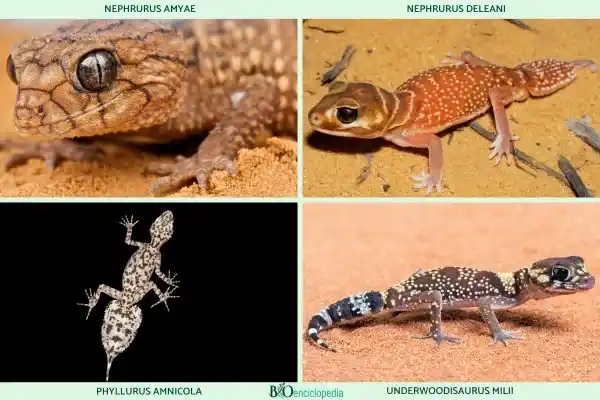
Nephrurus amyae
Nephrurus asper
Nephrurus deleani
Phyllurus amnicola
Phyllurus caudiannulatus
Phyllurus championae
Saltuarius cornutus
Saltuarius eximius
Underwoodisaurus milii
Underwoodisaurus seorsus
Diplodactylidae (family Diplodactylidae)
This family is mainly distributed in Oceania, including Australia, New Zealand, and New Caledonia. It has a rich variety of species and a wide range of habitats, from tropical rainforests to relatively cool regions.
Main features
Many species prefer arboreal life and are commonly found in densely vegetated tropical or subtropical areas.
Many species are adapted to warm environments of around 24–29°C , but there are also more cold-resistant types.
Some species have adhesive toe pads , giving them strong climbing abilities.
Reproduction methods vary among different taxa, with some types described as having viviparous/ovoviviparous characteristics.
Representative species
Amalosia jacovae
Amalosia lesueurii
Amalosia obscura
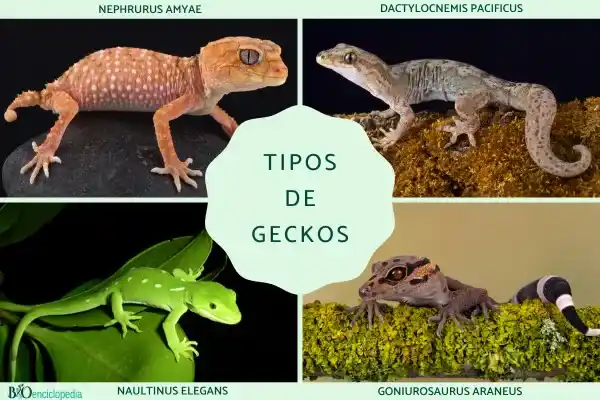
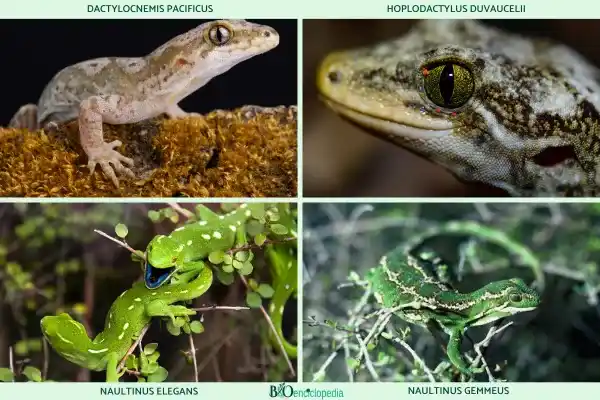
Dactylocnemis pacificus
Hoplodactylus delcourti
Hoplodactylus duvaucelii
Hoplodactylus tohu
Naultinus elegans
Naultinus gemmeus
Naultinus grayii
Eublepharidae (family Eublepharidae)
The most easily identifiable characteristic of geckos in the family Geckoidae is that they possess movable eyelids . This differs from many geckos that lack movable eyelids and have an eye surface that appears to be covered by a transparent membrane. This family is distributed in parts of North America, Asia, and Africa .
Main features
They typically lack adhesive toe pads , making them unsuitable for climbing smooth walls or glass.
The ability to open and close the eyelids is a very important identifying feature of this department.
A female typically lays about two eggs per clutch.
In some species, incubation temperature affects sex : lower temperatures are more likely to produce females, while higher temperatures are more likely to produce males.
Representative species
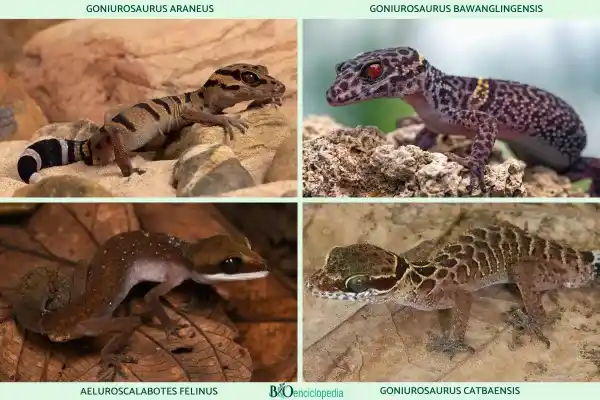
Aeluroscalabotes felinus
Goniurosaurus araneus
Goniurosaurus bawanglingensis
Goniurosaurus catbaensis
Goniurosaurus chengzheng
Holodactylus africanus
Holodactylus cornii
Hemitheconyx caudicinctus
Hemitheconyx taylori
Coleonyx brevis
Gekkonidae (Gecko family: the most typical and common family)
This is one of the most familiar and largest groups of geckos, widely distributed in warm regions with relatively abundant rainfall . Many species are also well adapted to human habitation, moving around houses.
Main features
Many species communicate by making loud calls before courtship or territorial disputes.
They often play the role of "biological controllers" among insects and spiders in the ecosystem.
Many species have adhesive toe pads that allow them to move on walls, tree trunks, and even ceilings.
Some types are commonly found near residences , especially in areas with lights and where insects congregate.
Representative species
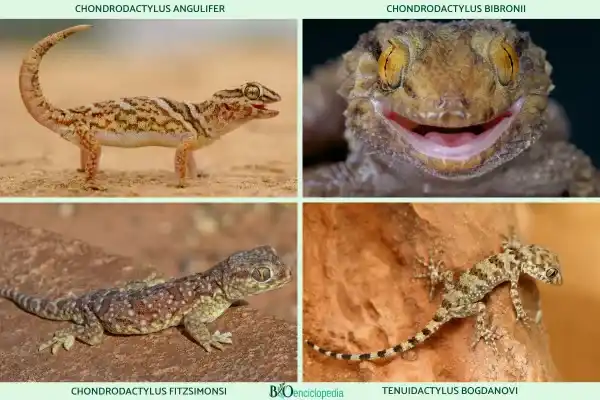
Chondrodactylus angulifer
Chondrodactylus bibronii
Chondrodactylus fitzsimonsi
Perochirus ateles
Perochirus guentheri
Perochirus scutellatus
Tenuidactylus bogdanovi
Tenuidactylus caspius
Tenuidactylus dadunensis
Ailuronyx seychellensis
Phyllodactylidae (Leaf-toed Gecko Family)
This family, often called "leaf-toed geckos," has a wide distribution, found in Africa, Europe, the Americas, and the Middle East . They are known for their relatively small size and diverse patterns.
Main features
They are generally small in size , with a wide variety of patterns, and often have good camouflage capabilities.
The toe tips of many species have a "leaf-like" shape, which is one of the sources of the family's name.
They inhabit diverse environments, ranging from rocky cliffs and deserts to coastal areas.
Representative species
Asaccus andersoni
Asaccus caudivolvulus
Haemodracon riebeckii
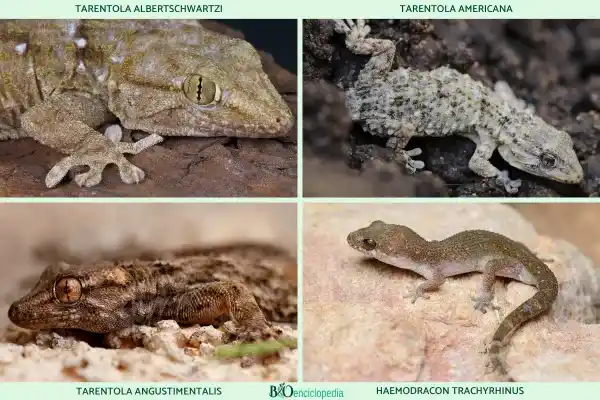
Haemodracon trachyrhinus
Phyllopezus lutzae
Phyllopezus maranjonensis
Tarentola albertschwartzi
Tarentola americana
Tarentola angustimentalis
Phyllodactylus angelensis
Pygopodidae (Gecko family)
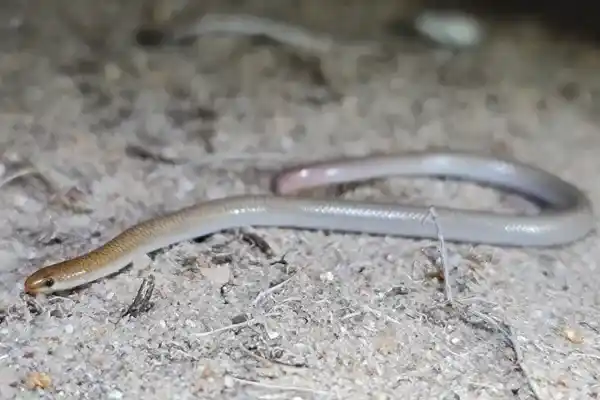
This is one of the most "unusual" groups of geckos because they appear to have almost no legs and resemble snakes more in shape. They are mainly distributed in Oceania regions such as Australia and New Guinea .
Main features
Their limbs are degenerate or almost invisible, and they move more like snakes.
A flat tongue is common.
Many types do not have movable eyelids .
They are often found in grass, leaf litter, or crevices in the ground.
Representative species
Aprasia aurita
Aprasia clairae
Aprasia haroldi
Aprasia inaurita
Aprasia litorea
Aprasia repens
Aprasia rostrata
Aprasia smithi
Aprasia striolata
Aprasia wicherina
Sphaerodactylidae (Gecko family and closely related groups)
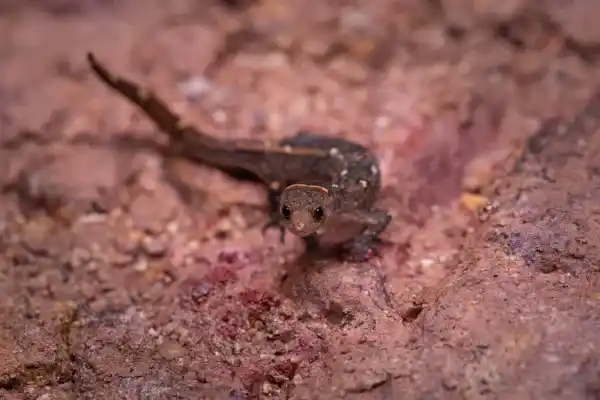
This family is also widely distributed, mainly found in the Americas, Africa, Europe, and parts of Asia . Many members are small in size, and many species do not rely on adhesive toe pads for climbing.
Main features
Many species are diurnal (more active during the day).
Pupils are usually round .
The eyelids usually do not have obvious movable structures (unlike the blepharocleidomastoides).
Most lack a subdigital plate/adhesive toe pad and rely more on the friction between their claws and the ground for movement.
Representative species
Aristelliger barbouri
Aristelliger cochranae
Aristelliger expectatus
Coleodactylus brachystoma
Coleodactylus elizae
Gonatodes albogularis
Gonatodes alexandermendesi
Quedenfeldtia moerens
Quedenfeldtia trachyblepharus
Teratoscincus bedriagai
Why should we understand geckos by their "science"?
The differences in toe pads, eyelids, body size, and habitat among different gecko families can explain many phenomena you observe in the wild or at home: why some geckos can climb glass, why some are better at running on the ground, and why some can even glide without legs like snakes. By categorizing geckos by family, you will more easily understand their survival strategies and diversity in different environments.