Armadillos are a group of mammals with a very distinctive appearance, most notably their bodies covered with a "armor" made of bony plates. They are widely distributed throughout the Americas, with different species found in everything from rainforests to grasslands, scrublands, semi-deserts, and even around farmland. Most armadillos are skilled diggers, using their strong forelimbs and claws to burrow and forage for food, typically consisting of invertebrates such as ants and termites. Below is a list of 10 common or representative armadillo species to help you quickly understand their size, habits, and distribution.
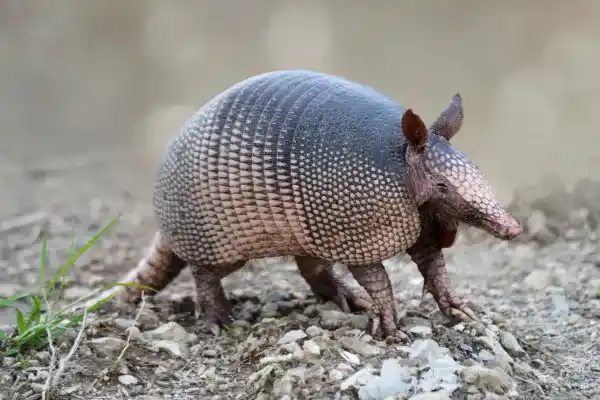
1) Nine-banded armadillo (Dasypus novemcinctus)
The nine-banded armadillo is the most well-known and widely distributed species, with a habitat ranging from the southern United States to central and northern Argentina. It is highly adaptable and can live in a variety of environments, including forests, savannas, scrublands, and agricultural and pastoral areas, and is often found near human settlements.
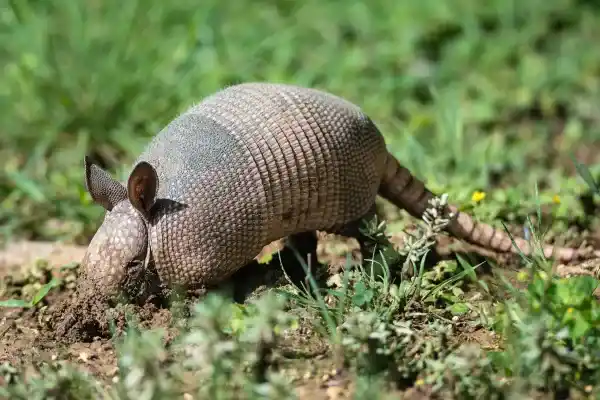
Appearance and body shape
Body length: Approximately 60–80 cm (excluding tail)
Tail length: up to approximately 40 centimeters
Weight: Approximately 3–6 kg
Armor: Grayish-brown, usually with multiple movable "band-like" plates (commonly about nine bands).
Diet and Behavior
They primarily feed on insects, especially ants and termites, but also consume other invertebrates, small vertebrates, and small amounts of plant matter. They are mostly nocturnal and solitary, relying on burrowing and their sense of smell to find food.
2) Hairy Armadillo (Chaetophractus villosus)
These armadillos are often called "hairy armadillos" and are mainly distributed in Argentina, Uruguay, Paraguay, and southern Bolivia. They can adapt to grasslands, open fields, semi-arid areas, and even the edges of deserts, and they dig deep burrows to escape high temperatures and predators.
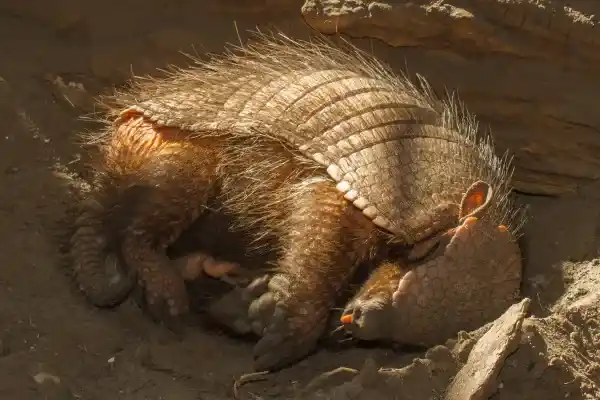
Main features
Hair: The hair on the sides and abdomen is longer and coarser, which is a key feature for identification.
Color: Mostly yellowish-brown to brownish-brown
Diet: Omnivorous and opportunistic
They eat insects, as well as roots, eggs, small vertebrates, and carrion. In some areas, they are under pressure due to conflicts with agricultural production or being preyed upon.
3) Small Hairy Armadillo (Chaetophractus vellerosus)
The lesser armadillo is smaller and commonly found in arid and semi-arid regions of Argentina, Bolivia, and Paraguay. It prefers soft, sandy soil, which facilitates burrowing. Due to habitat fragmentation, its distribution is discontinuous in some areas.
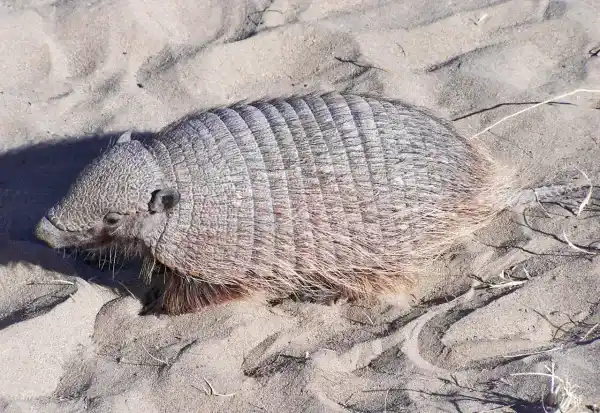
Appearance and Habits
Body length: Approximately 40 centimeters
Armor and hair: The armor is relatively light in color, and light-colored hair is commonly seen on the abdomen and sides of the body.
Activities: Mostly nocturnal, spending long periods underground.
They primarily feed on invertebrates such as insects and larvae, but also supplement their diet with roots, stems, and other plant-based foods.
4) Southern long-nosed armadillo (Dasypus hybridus)
In some parts of South America, it is often called "mulita," and is mainly distributed in the natural grasslands and open areas of southern Brazil, Uruguay, Paraguay, and central and eastern Argentina. Agricultural expansion has reduced some of its suitable habitat, but it has managed to maintain stable populations in some areas.

Key points for identification
Body length: Approximately 45 cm
Weight: Approximately 1.5–3 kg
Snout: Long and narrow, with a distinct "long nose" appearance.
They mainly eat insects, earthworms, and small invertebrates, and also consume small amounts of plant debris. They are mostly solitary and nocturnal.
5) Giant armadillo (Priodontes maximus)
The giant armadillo is one of the largest living armadillos, primarily found in the tropical rainforests and humid forests of South America, especially in the Amazon basin. Due to factors such as low population density, habitat fragmentation, and poaching, it is considered to face high risk in many conservation assessments.
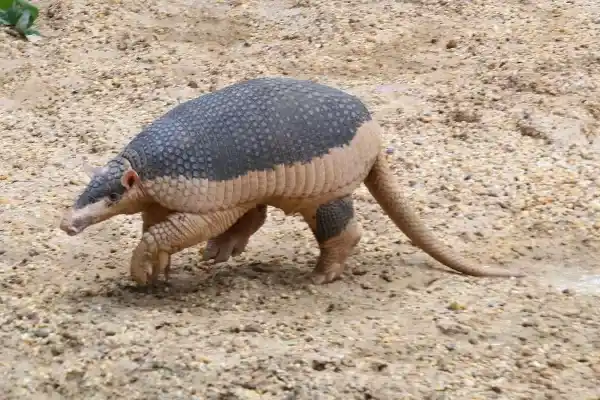
Why special
Size: Total length can exceed 1 meter
Weight: Can exceed 60 kg
Forelegs: Extremely large, used for digging and destroying termite mounds.
Their diet consists almost entirely of ants and termites. They are mostly nocturnal and solitary, making them extremely difficult to observe in the wild.
6) Southern Triad Armadillo (Tolypeutes matacus)
It is distributed in arid to semi-arid regions of northern Argentina, Bolivia, Paraguay, and Brazil, and is commonly found in dry forests, savannas, and scrublands. Like the Brazilian three-banded armadillo, it is one of the few armadillos that can completely curl its body into a "ball".
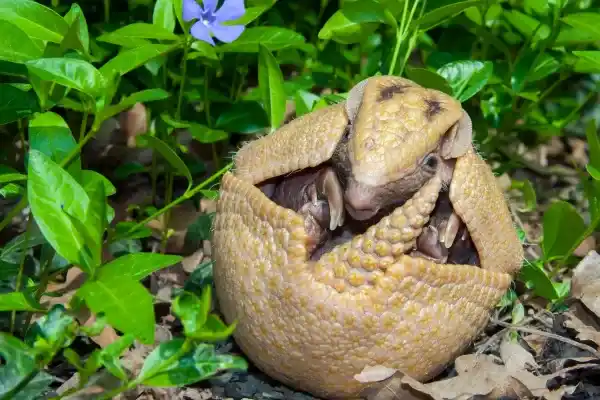
Key features
Defense: Can be completely curled into a ball to protect the soft abdomen.
Cave dwellers: They are not necessarily good at digging deep, and often utilize burrows abandoned by other animals.
Feeding: Its long, thin, and sticky tongue is well-suited for catching ants and termites.
7) Brazilian Three-banded Armadillo (Tolypeutes tricinctus)
The Brazilian three-banded armadillo is endemic to Brazil, primarily inhabiting the dry savanna and thorny scrubland of the northeast. Due to its narrower distribution range, it is more susceptible to deforestation and farmland expansion.
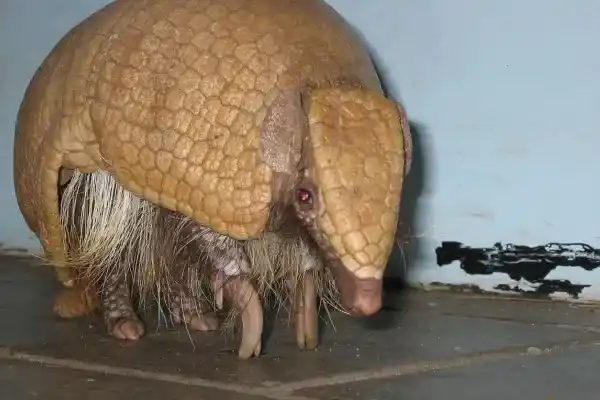
Behavioral characteristics
They also possess the ability to "completely roll up a ball". They mostly live alone and are nocturnal, and generally do not rely on digging deep caves as their primary way of life.
8) Large-tailed Armadillo (Cabassous tatouay)
This armadillo is found in a variety of environments in South America, including forests and savannas. It resembles closely related species in appearance, but is usually larger and has more prominent ears.
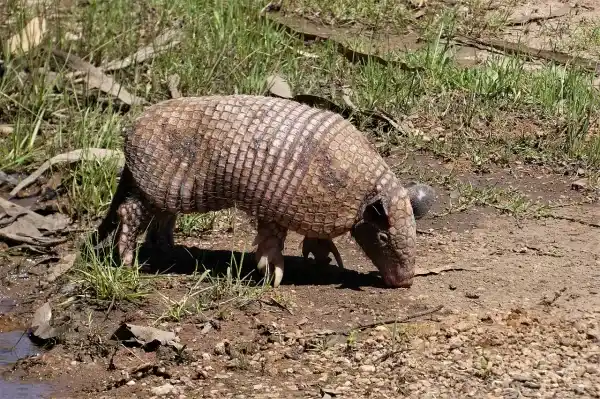
Ecology and Habits
Body length: approximately 50 centimeters
Weight: Approximately 3.4–6.4 kg
Lifestyle: Strongly burrowing and digging habits, nocturnal and solitary.
They are adept at digging deep tunnels, so they are not easy to encounter in the wild.
9) Andean armadillo (Chaetophractus nationi)
Locally known as "quirquincho," it primarily inhabits high-altitude areas of the Andes Mountains, particularly in Bolivia and northern Argentina. Adapted to the cold, dry climate, its abundant body hair helps with insulation.
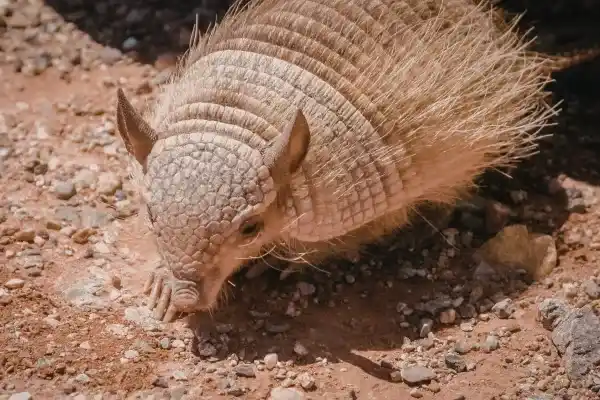
Food and Threats
Their diet consists mainly of insects, roots, and other plant matter. In some areas, they are hunted for their meat and shells, which may have led to a decline in local populations.
10) Pink Fairy Armadillo (Chlamyphorus truncatus)
The pink fairy armadillo is often considered one of the smallest armadillos, mainly found in sandy grasslands or soft soil areas in central Argentina. Due to its underground lifestyle, sensitivity to environmental changes, and extremely low sighting rate, it is also regarded as one of the most mysterious armadillos.
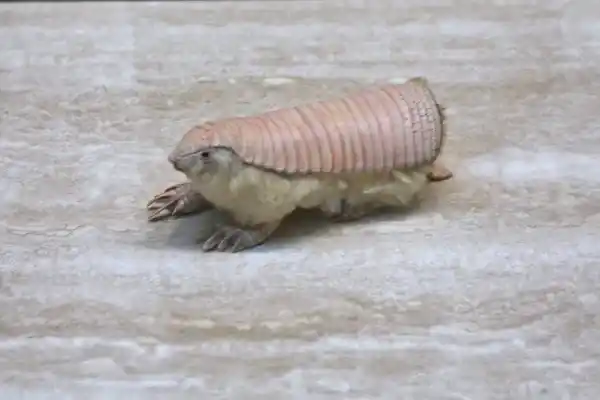
Unique features
Body length: Approximately 15 cm
Armor: Pink and relatively flexible, suitable for underground travel.
Escape: When threatened, it can quickly "burrow" into the soil and be completely buried underground.
They mainly eat ants and their larvae, but may also consume underground food such as worms, snails, and roots.
How to quickly identify common characteristics of armadillos
Armor protection: Composed of bony plates, many types have movable "band-like" plates.
Strong forelimbs and sharp claws: suitable for digging, turning over soil, destroying ant mounds, or searching for underground food.
They are mostly nocturnal and solitary: they often rest in caves during the day and go out to forage for food from dusk to night.
Their diet is predominantly insect-based: Ants and termites are a core food source for many armadillos.