Cranes are slender birds with long legs and necks, renowned for their loud calls, elegant flight, and courtship dances. Most cranes rely on open environments such as wetlands, floodplains, grasslands, or farmlands for foraging and breeding. Below is a list of 15 representative crane species, including their scientific names, distribution, physical characteristics, diet, and major threats they face.
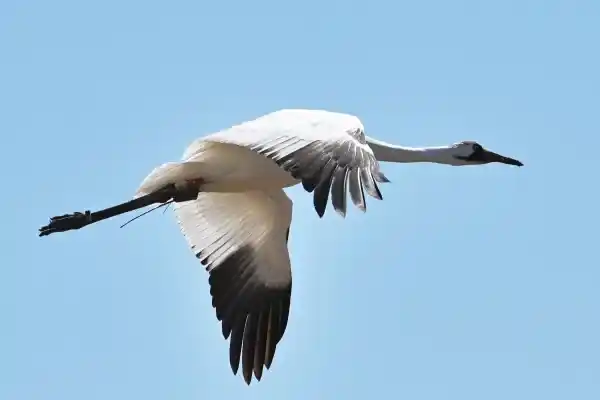
1) American Crane (Grus americana)
The Siberian Crane is one of the tallest flying birds in North America, reaching a height of about 1.5 meters and a wingspan often exceeding 2 meters. Adults are predominantly bright white with striking black wingtips when in flight.
Habitat and food
They prefer shallow wetlands, swamps, peatlands, and other similar environments, and mainly feed on aquatic plants, invertebrates, small fish, and amphibians.
Behavioral characteristics
They mostly form stable pairs, and their calls are high-pitched and horn-like, hence their name. Wetland degradation and habitat loss remain significant threats.
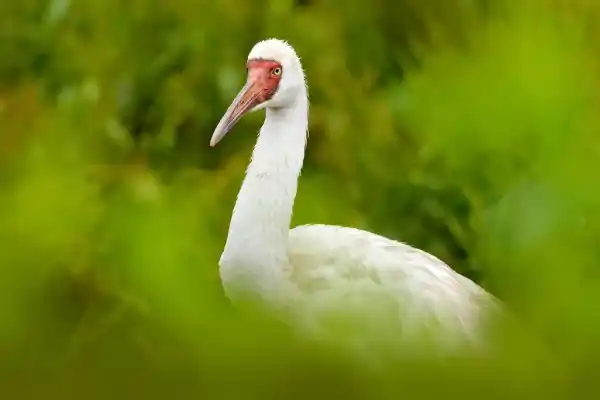
2) Siberian Crane (Leucogeranus leucogeranus)
Typical long-distance migratory cranes, they breed in Russia and Siberia and are highly dependent on migration routes and wintering wetlands.
Key points for identification
Adult birds are mostly white, with a distinct red bare skin "mask" extending from the base of the beak to behind the eye, and often have a pale yellow iris and reddish legs.
feeding habits
Their diet consists mainly of plant-based foods such as roots and tubers, supplemented by small invertebrates. Wetland changes and human activities significantly impact their survival.
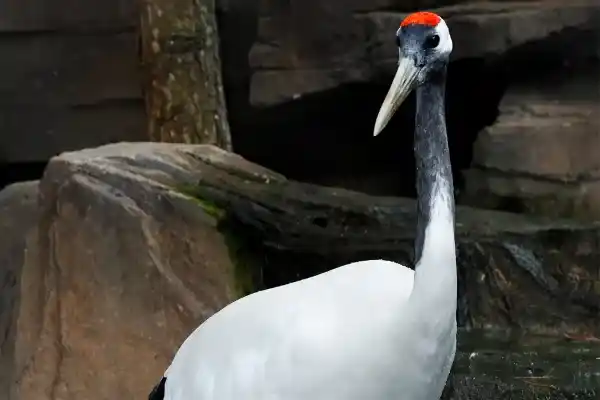
3) Red-crowned crane (Grus japonensis)
Also known as the Japanese crane or Manchurian crane, it has white body feathers, a black neck and face, and a bright red crown, making it highly recognizable.
Distribution and Habitat
It is mainly found in wetlands, floodplains, and rice paddies in parts of East Asia.
Typical behavior
They are known for strengthening mate relationships through "dance"; they feed on fish, insects, small vertebrates, and aquatic plants.
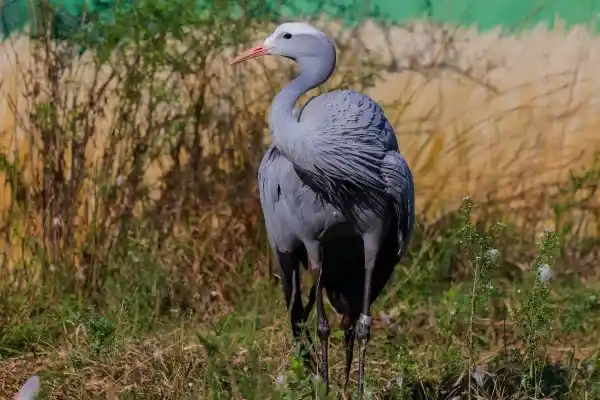
4) Blue Crane (Anthropoides paradiseus)
It is of medium size, with bluish-grey plumage and long wing feathers, giving it an elegant and unique silhouette when standing.
Habitat and food
Unlike many cranes that prefer wetlands, it makes more use of the drier grasslands and farmlands of southern Africa, and mainly eats seeds, insects and small reptiles.
Main threats
Accidental ingestion of pesticides or poisoned bait, collisions with electrical wires, and illegal capture of fledglings can all cause population stress.
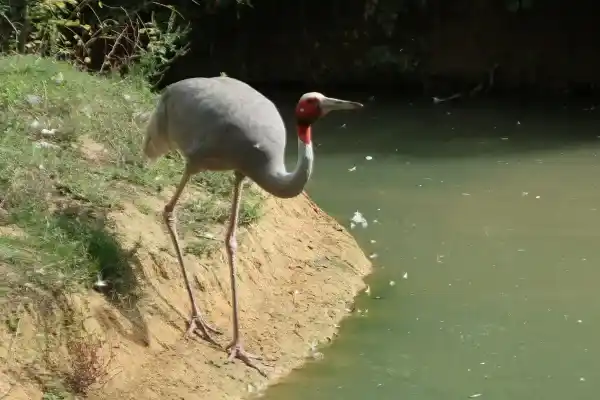
5) Saurus Crane (Antigone antigone)
One of the tallest crane species in the world, reaching nearly 1.8 meters in height. Its head and upper neck have strikingly bright red bare skin.
Distribution and Habitat
It is distributed in South Asia, Southeast Asia and northern Australia, and is commonly found in wetlands, rice paddies and shallow floodplains.
Diet and Reproduction
They feed on roots, mollusks, insects, and small vertebrates; they usually nest and breed in open, shallow water areas.
6) Grey Crane (Grus grus)
It has a large and slender body, with gray plumage overall, obvious light-colored stripes on the neck, and red patches often seen on the top of the head; some adult birds have long rump feathers, resembling a "tail".
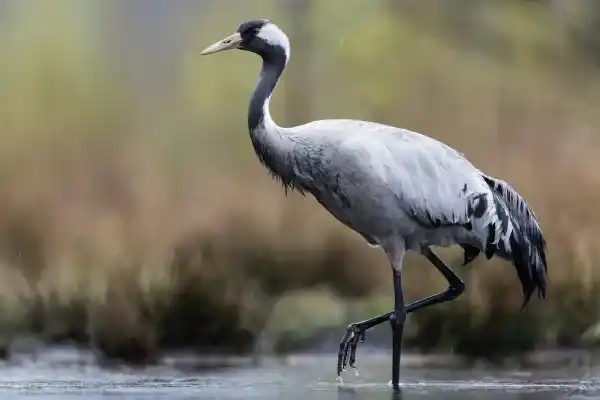
Migration and foraging
They are highly migratory and can form large herds in winter; their diet consists mainly of diverse plant matter, but they also prey on invertebrates and small vertebrates.
7) Sandhill Crane (Antigone canadensis)
One of the common species in North America, with light gray plumage and a small red bare skin area on the crown. Males and females look similar, and are mostly distinguished by behavioral differences.
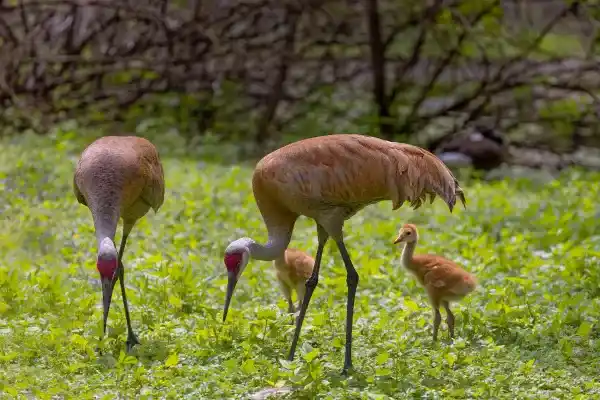
adaptability
They prefer shallow freshwater wetlands and marshes, but are highly adaptable and can utilize a variety of habitats.
Diet and Migration
Their diet consists mainly of seeds, grains, invertebrates, and small vertebrates; many populations travel back and forth along fixed migration routes year after year.
8) White-naped Crane (Grus monacha)
It is relatively small in size, with an overall dark gray color and reddish bare skin areas on its face.
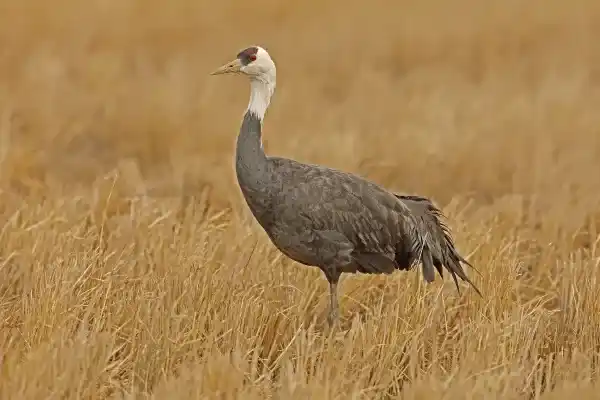
Reproduction and overwintering
They breed in some forest wetlands of Siberia, and their range extends to parts of Mongolia and China. In winter, they migrate to warmer areas of Asia.
Main threats
The destruction and degradation of wintering wetlands is often a key issue.
9) Flesh-crowned Crane (Bugeranus carunculatus)
One of the largest crane species in Africa, it is highly dependent on intact wetland ecosystems. Its most distinctive feature is the red wattle hanging below its beak.
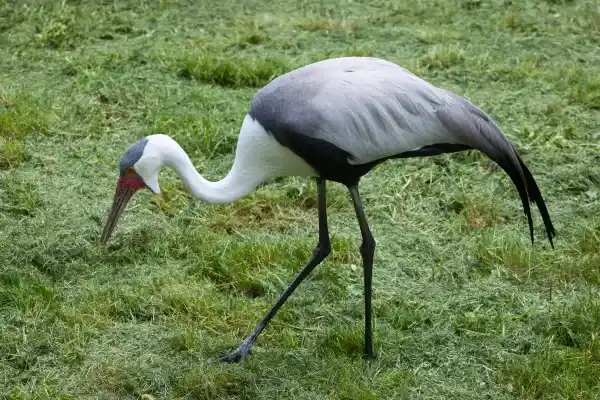
Appearance Overview
It is mostly gray, with darker gray wings, a slightly lighter chest and abdomen, a long and uniform gray neck, and an slender flight posture.
Main threats
Wetland drainage, habitat modification, and degradation are the core reasons for their continued threat.
10) Black-necked Crane (Grus nigricollis)
Living in the high-altitude regions of Central Asia, its black neck contrasts sharply with its light gray body feathers, and its darker tail also makes it easy to distinguish from some similar gray cranes.
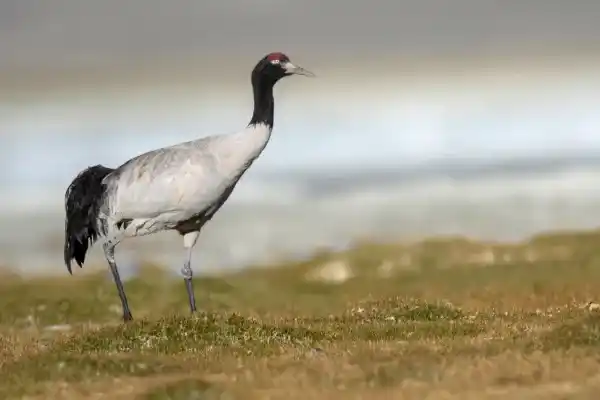
Adaptation and breeding grounds
They adapt to low-oxygen and cold environments and often breed and nest in high-altitude mountain wetlands.
11) Demoiselle Crane (Anthropoides virgo)
Widely distributed across Asia and Africa, with some populations also found in Europe. Small in size and slender in line, it is one of the "lightest" crane species.
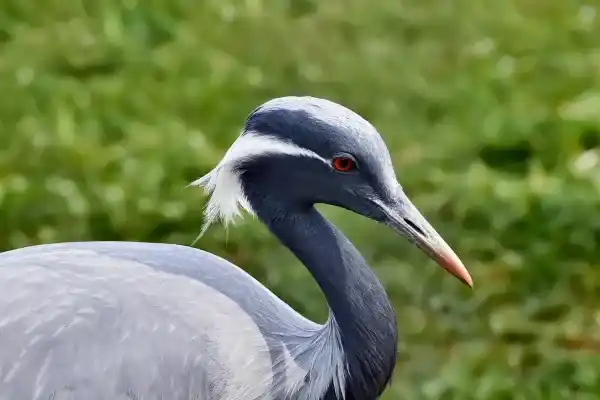
Migration ability
Some populations migrate long distances, sometimes even crossing high mountain terrain.
feeding habits
They feed on plant matter, earthworms, insects, and snails, and also prey on small reptiles, amphibians, and small mammals, and occasionally feed on other bird larvae.
12) White-necked Crane (Antigone vipio)
The neck has a distinct white area, which contrasts sharply with the gray body feathers.
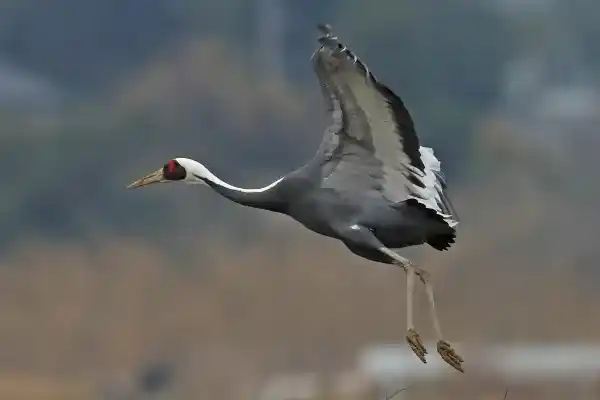
Habitat and Sensitivity
They mainly live in wetlands and grasslands in Northeast Asia and have migratory habits; they are more sensitive to changes in the open environment at the edge of wetlands.
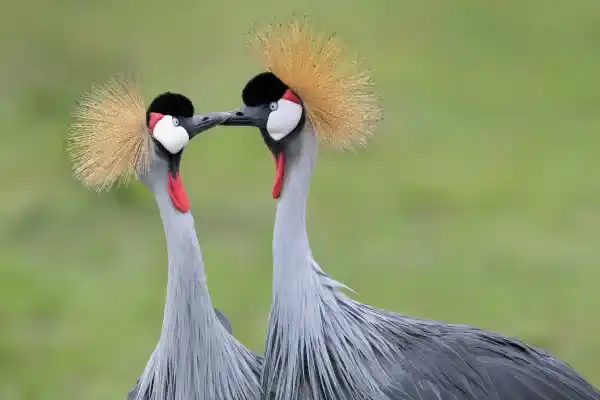
13) Gray crowned crane (Balearica regulorum)
Its most striking feature is the golden crest on its head. Unlike most cranes, it has the ability to perch in trees due to a special structure in its toes.
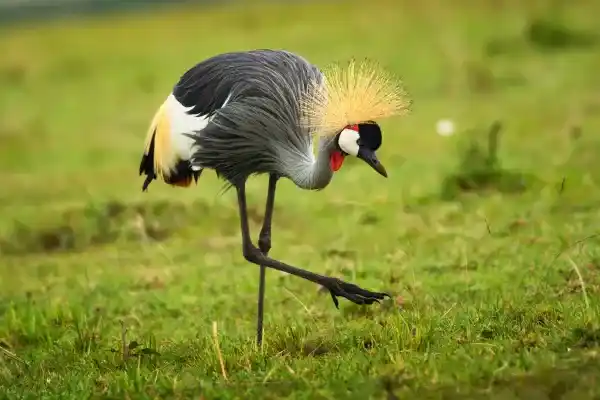
distributed
They are commonly found in the savanna and wetland areas of sub-Saharan Africa, and are also frequently used in agricultural landscapes.
14) Black-crowned Crane (Balearica pavonina)
They are mainly distributed in grasslands, wetlands, and savannas in West Africa. Like the grey crowned crane, they possess crested feathers and arboreal abilities.
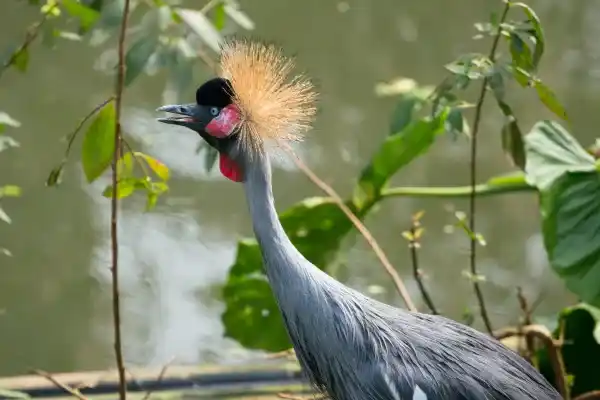
Characteristics of the sound
Its call is often described as similar to a goose's "clucking/hissing," and it also makes sounds while flying.
15) Australian Crane (Brolga, Antigone rubicunda)
A large crane species endemic to Australia, with a reddish head and grey plumage. Its courtship dance is renowned, often featuring synchronized movements, bowing, and leaping.
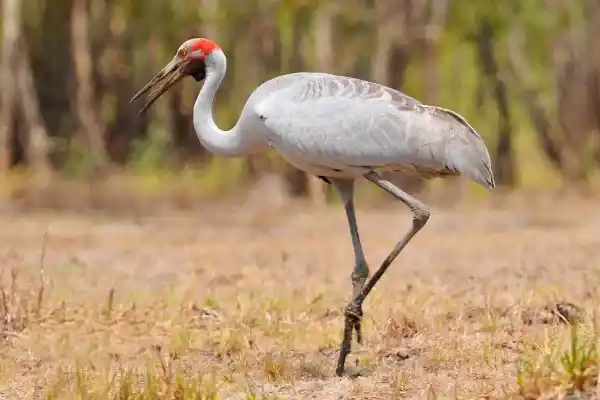
Habitat and Status
They make extensive use of seasonal wetlands and floodplains. While not among the most endangered crane species overall, their population is declining in some areas, prompting targeted conservation projects.