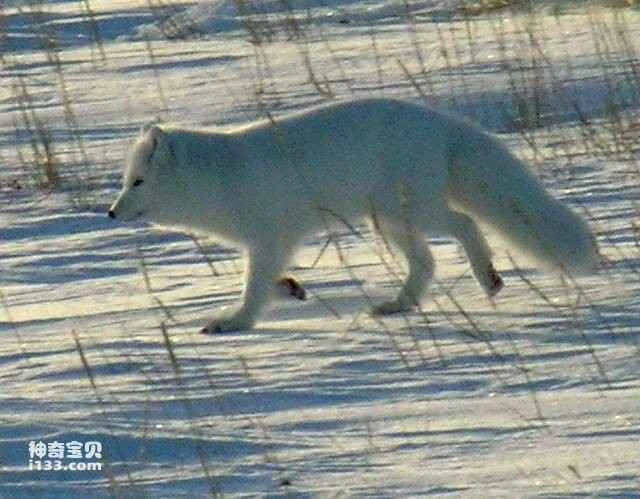
After 15 years of field research and investigation, the Chinese Academy of Sciences has provided fossil evidence showing that the Arctic fox originated from the Tibetan Plateau 5 million years ago. This research has been published online in the latest issue of the Royal Society B: Biological Sciences.
The Qinghai-Tibet Plateau possesses the largest area of permafrost and glaciers outside the Arctic and Antarctic Circles. Mammals living in the frigid regions of the Qinghai-Tibet Plateau, like Arctic and Antarctic animals, possess thick fur adapted to the low temperatures. It was previously generally believed that extant Arctic mammals originated in the vast Holarctic region, that is, most of the Northern Hemisphere north of the Tropic of Cancer. However, Wang Xiaoming and his colleagues, through 15 years of field investigation and research, have revealed the animal characteristics of the Pliocene glacial period on the Qinghai-Tibet Plateau and demonstrated the kinship between these animals and Arctic fauna.
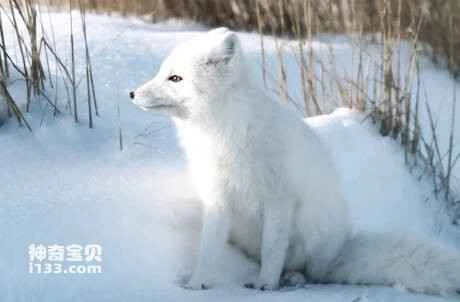
Scientists have discovered a new species of canid, *Fox churnii*, in Pliocene sediments dating back 5 to 3 million years in the Zanda Basin of the Tibetan Plateau. Unlike modern Arctic foxes, *Fox churnii* possesses a lower carnassial tooth with a developed cutting function, a characteristic found in other more omnivorous modern fox species. Furthermore, *Fox churnii* is larger than the Arctic fox and better adapted to colder climates.
The discovery of the Qiu's fox indicates that the fossil assemblage on the Tibetan Plateau not only includes relatives of woolly rhinoceros, blue sheep, and snow leopard, but also early types of the Arctic fox, a representative of Arctic animals located more than 2,000 kilometers away from the Himalayas. This discovery proves that the uplift of the Tibetan Plateau has not only had a significant impact on global climate, but also that the ancient fauna of the plateau is inextricably linked to the global geographical distribution of extant animals.