Frogs are fascinating amphibians, capable of surviving both on land and underwater thanks to their unique respiratory adaptations. Have you ever wondered how long a frog can hold its breath underwater? This article explores the amazing underwater survival abilities of frogs and reveals the scientific secrets behind them.
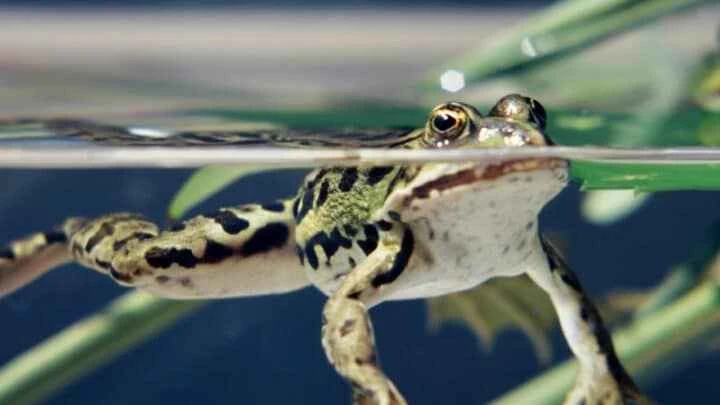
Quick answer : Most frogs can hold their breath underwater for hours, and some species can even hold their breath for a whole day.
How do frogs breathe underwater?
Frogs obtain oxygen underwater primarily through two methods: gas exchange through their skin and oral pumping .
| Way | describe | Example |
|---|---|---|
| Skin gas exchange | Frogs absorb oxygen through their skin, and the oxygen permeates into the blood vessel network beneath the skin. | The thin skin and abundant blood vessels of the American bullfrog ( Lithobates catesbeianus ) greatly enhance its oxygen absorption efficiency. |
| Oral pump suction | Frogs draw oxygen-rich water into their mouths and absorb it through their blood vessels by expanding the muscles in their mouths and throats. | American bullfrogs supplement about 60% of their metabolic oxygen needs in this way (DeJongh & Gans, 1969). |
Skin gas exchange
Frogs have highly permeable skin that allows them to directly absorb oxygen from the water. This method of respiration can meet up to 40% of the oxygen requirements underwater (Wells, 2007). To optimize their skin's oxygen absorption capacity, frogs have evolved the following characteristics:
Thinner skin : For example, the skin of the American bullfrog is thinner and more vascularized.
Regular shedding : The newly formed skin layer can absorb oxygen more effectively (Duellman & Trueb, 1994).
Oral pump suction
By expanding the muscles of their mouth and throat, frogs draw water into the oxygen-absorbing areas of their mouths and extract oxygen from them. This process is an efficient way to replenish oxygen, allowing frogs to avoid surfacing frequently.
Factors affecting a frog's ability to hold its breath
The length of time a frog can hold its breath underwater is affected by several factors:
| factor | Effects on breath-holding ability |
|---|---|
| Species | For example, the African clawed frog can hold its breath for up to 210 minutes, while the northern leopard frog usually needs to surface for air every 15-25 minutes. |
| water temperature | Cold water can prolong the time it takes to hold your breath, while warm water will accelerate the rate at which oxygen is consumed. |
| Activity level | Active frogs consume more oxygen than stationary frogs and can hold their breath for a shorter time. |
Differences in abilities among different species
Different frog species have varying abilities to survive underwater:
| Frog species | Longest time holding your breath |
|---|---|
| African clawed toad | 210 minutes |
| Northern Leopard Frog | 15-25 minutes (typical case) |
| Forest frog | 15-25 minutes (typical case) |
The role of water temperature
Water temperature plays a crucial role in the survival time of frogs underwater. For example:
The northern leopard frog can hold its breath for up to 300 minutes in near-freezing water, but can only maintain this for 25 minutes in water at 20°C (68°F).
Cold water slows down a frog's metabolism, thus prolonging the time it can hold its breath.
Impact of activity level
A stationary frog uses less oxygen, while an active frog quickly depletes its oxygen reserves.
Example : A still northern leopard frog can hold its breath for 170 minutes, while at a moderate level of activity it can only hold it for 85 minutes.
Record-breaking amphibians
Australian desert frog
It can store a large amount of water in its body and survive for several years under arid conditions.
Records show that desert frogs can survive for up to 7 years in arid environments, relying on their special skin and body structure to absorb and store small amounts of rainfall.
Surinamese toad
They possess one of the world's most unique reproductive methods: the female toad embeds her eggs into the skin on her back, where they develop into tadpoles and eventually hatch.
This reproductive process does not require a still water environment, allowing it to reproduce successfully under arid conditions.
Frog's diving adaptation
| Adaptive characteristics | describe |
|---|---|
| webbed feet | Webbed feet increase the paddling surface area and improve underwater propulsion efficiency. |
| Waterproof skin | The natural oils on the skin prevent the feathers from getting wet and maintain their insulating properties. |
| Dense skeleton | Increasing body weight helps the frog descend smoothly. |
| Larger respiratory surface area | The increased respiratory surface area of the skin and lungs allows for the extraction of more oxygen with each breath. |
in conclusion
Frogs demonstrate astonishing underwater survival abilities through their unique respiratory systems, such as skin gas exchange and oral pumping. Some species can even hold their breath for up to a day. These adaptations showcase the frogs' flexibility in amphibious environments and give us a deeper understanding of the wondrous mechanisms of evolution in nature.