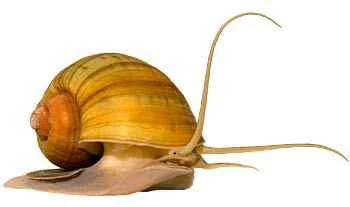
The golden apple snail (scientific name: *Pomacea canaliculata*) is native to South America and has become an invasive species in many parts of the world in recent years, especially in China, where its population has increased dramatically, causing significant negative impacts on the ecological environment, agricultural production, and human health. So, what are the harms caused by the golden apple snail? This article will provide a detailed analysis of the harms caused by the golden apple snail in different areas, including its damage to aquatic ecosystems and crops, as well as its potential threat to human health, and will offer scientific countermeasures and control methods.
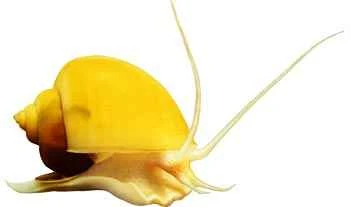
Ecological hazards of the golden apple snail: damage to aquatic ecosystems.
Golden apple snails are omnivorous animals that can consume large amounts of aquatic plants and plankton, causing serious damage to aquatic ecosystems.
1. Golden apple snails destroy aquatic plant communities.
Golden apple snails primarily feed on aquatic plants, especially water hyacinth, duckweed, and cattails. Zhang Chenhui (2020) points out in *Aquatic Ecology Research* that the rapid proliferation of golden apple snails can quickly deplete aquatic plants, leading to severe damage to aquatic plant resources. Aquatic plants are not only habitats for aquatic organisms but also important oxygen producers in water bodies; their reduction leads to deteriorating water quality, further impacting the survival of aquatic species.
2. Golden apple snails cause water quality deterioration.
Due to the large amount of food consumed by golden apple snails, they release more organic waste into the water, leading to the accumulation of organic matter and increasing eutrophication, which in turn exacerbates water quality deterioration. Li Xiaoming (2019) points out in "Water Pollution Control" that the presence of golden apple snails increases the concentration of nutrients such as nitrates and phosphates in the water, promotes the reproduction of harmful algae such as cyanobacteria, causes eutrophication, and ultimately affects the growth of aquatic species.
The harm of golden apple snails to agriculture: damage to rice and other crops.
The invasion of golden apple snails poses a great threat to agricultural production, especially damaging crops such as rice.
1. Damage caused by golden apple snails to rice.
Golden apple snails primarily feed on rice seedlings and organic matter in paddy fields. They gnaw on the rice roots, severely impacting rice growth. Yang Jianhua (2021) pointed out in the *Chinese Journal of Agroecology* that large-scale reproduction of golden apple snails can severely damage rice seedlings in paddy fields, leading to reduced yields. The damage caused by golden apple snails is particularly pronounced during the rice seedling stage.
2. Golden apple snails spread diseases.
Golden apple snails not only consume rice but also transmit various rice diseases, especially some rice pathogens. For example, golden apple snails are intermediate hosts for certain parasites in rice paddies and can transmit rice diseases (Wang Wei, 2022). These diseases further affect crop yield and quality, causing a double blow to agriculture.
Potential health hazards of golden apple snails to humans: transmission of parasites and diseases.
Golden apple snails not only pose a threat to ecology and agriculture, but also have the potential to harm human health.
1. Paragonimiasis transmitted by Pomacea canaliculata
Golden apple snails are one of the intermediate hosts of Paragonimus westermani. If humans accidentally ingest golden apple snails infected with Paragonimus, they may develop paragonimiasis, a serious parasitic disease that often manifests as cough, fever, chest pain, and can even lead to lung infection. Deng Lili (2018) pointed out in the *Journal of Parasitology and Infectious Diseases* that golden apple snails are one of the important transmission routes for Paragonimus westermani, especially in Fujian and Guangdong provinces, where this problem is particularly prominent.
2. Golden apple snails transmit other aquatic pathogens.
Besides lung flukes, golden apple snails may also carry other aquatic pathogens, such as various bacteria and viruses. Humans who come into contact with golden apple snails or their contaminated water sources may become infected with these pathogens, leading to the spread of waterborne diseases.
How to effectively control Pomacea canaliculata: Scientific countermeasures
The harm caused by golden apple snails should not be underestimated, therefore taking effective prevention and control measures is crucial.
1. Biological control methods
Biological control is an effective method for controlling the population of golden apple snails. Utilizing the natural enemies of golden apple snails, such as certain aquatic fish (e.g., snail-eating fish) and snail-eating insects, can effectively inhibit the reproduction of golden apple snails. Wang Lei (2020) mentioned in his book "Biological Control Technology" that biological control methods can reduce the number of golden apple snails while having a relatively small impact on the ecological environment.
2. Chemical control methods
Chemical agents are a traditional means of controlling golden apple snails. Specific molluscicides, such as cypermethrin and dichlorothiazolium, can effectively kill golden apple snails. However, it is important to note that chemical control should follow scientific usage guidelines to avoid secondary pollution of water bodies and other organisms. Li Junjie (2021) emphasizes in "Research on the Use of Agricultural Chemicals" that the use of chemical agents should be controlled in dosage and combined with other control methods to avoid overuse.
3. Physical prevention and control methods
Physical control methods include regularly cleaning up golden apple snail egg masses in water bodies and setting up filters. Liu Feng (2022) pointed out in "Agricultural Environmental Protection" that physical methods do not involve the use of chemicals, are relatively safe, and can be used in conjunction with other control methods to achieve the best results.
Summary: Harmful Effects and Control Measures of Pomacea canaliculata
As an invasive species, the golden apple snail poses a significant threat to the ecological environment, agricultural production, and human health. Through scientific ecological management and control measures, we can effectively control its reproduction and reduce its negative impacts. The combination of biological, chemical, and physical control methods is currently the most effective solution. By strengthening the monitoring and control of golden apple snails, we can protect aquatic ecosystems, ensure crop growth, and effectively reduce the threat to human health posed by golden apple snails.
References:
Zhang Chenhui (2020). Research in Aquatic Ecology. Aquatic Biology Press.
Li Xiaoming (2019). Water Pollution Control. Environmental Science Press.
Yang Jianhua (2021). Journal of Agroecology.
Wang Wei (2022). Research on Agricultural Diseases. Agricultural Science and Technology Press.
Deng Lili (2018). Journal of Parasitology and Infectious Diseases. Medical Press.