Recently, Researcher Xu Guanghui and his graduate students Ma Xinying and Ren Yi from the Institute of Vertebrate Paleontology and Paleoanthropology published their latest research findings on Triassic fishes from Yunnan and Guizhou in the American journal *PeerJ*. The paper details a new type of conical fish that coexisted with the Guizhou dragon and named it *Fuyuanichthys wongii*. This is the first discovery of conical fish fossils in the Middle Triassic Ladinian strata of my country.
As early as 1957, Mr. Hu Chengzhi of the Geological Museum of China conducted a field geological survey in Guizhou Province from Yunnan. In a small mountain village called Luyin Village in Dingxiao Town, Xingyi City, he discovered a fossil of a marine reptile. In 1958, after research by Academician Yang Zhongjian of the Institute of Vertebrate Paleontology and Paleoanthropology, it was named *Hu's Guizhou Dragon*. Over the next sixty years, a large number of marine reptile fossils were collected in this area, along with many fish fossils. In addition to vertebrates, arthropods, ammonites, bivalves, and other invertebrates were also discovered. Researchers collectively refer to them as the Guizhou Dragon Fauna or the Xingyi Biota. Biostratigraphic studies determined the age of the Guizhou Dragon Fauna to be the Middle Triassic Ladinian, with an absolute age of approximately 240 million years. The Guizhou Dragon Fauna is widely distributed along the border of Yunnan and Guizhou, and has been found in Xingyi and Anlong in Guizhou, and Fuyuan and Luoping in Yunnan. The *Hemiptera* species named by Xu Guanghui's research group is mainly based on 22 complete fossil specimens, mostly found in the Shibalian Mountains of Fuyuan, Yunnan. Therefore, the genus name is *Fuyuanichthys*, named after the geographical location. The species name is dedicated to Mr. Wang Kuan in gratitude for his donation of two exquisite fish fossils from his personal collection to the Institute of Vertebrate Paleontology and Paleoanthropology.
The discovery of *Fuyuanichthys wangi* fills a gap in the fossil record of Ladinian conical fishes from the Middle Triassic in my country, providing more information for the study of the skeletal morphology and ecology of early conical fishes. Gar, living in freshwater environments in Central and North America and Cuba, is considered a living fossil and is a extant representative of conical fishes. Conical fishes, as an important branch of holosteans, began rapid development in the Triassic. Their earliest fossil record comes from the Luoping and Panxian biota of the Early Middle Triassic (Anisian), represented by *Gorgosaurus griseus* and *Saint Georges suii*. *Xingyi Asian Scale-toothed Fish* was previously classified as a conical fish, but according to the latest research from Xu Guanghui's research group, it belongs to another branch of holosteans, the near-cluboids. Wang's *Fuyuania* exhibits typical characteristics of conical fishes, such as two infraorbital bones in front of the eye socket, a relatively short lower jaw, and prominent spines on the dorsal scales before the dorsal fin. It also possesses a glottis, a short, toothless maxilla, and lacks a supplementary maxilla and supraorbital bone. These features distinguish it from other conical fishes. Phylogenetic studies show that it forms a sister group with *Gesellus glesne*, both located at the base of the conical fish group. Wang's *Fuyuania* is relatively small, one of the smallest holoostrid fishes. Its discovery further supports the hypothesis that conical fishes were generally smaller than near-cluboids in the Middle Triassic marine environment of South China.
This research was supported by the National Natural Science Foundation of China, the Strategic Priority Research Program of the Chinese Academy of Sciences, the Key Project of Frontier Science of the Chinese Academy of Sciences, and the Project on Paleontological Fossil Excavation and Repair.
Paper link: https://peerj.com/articles/6054
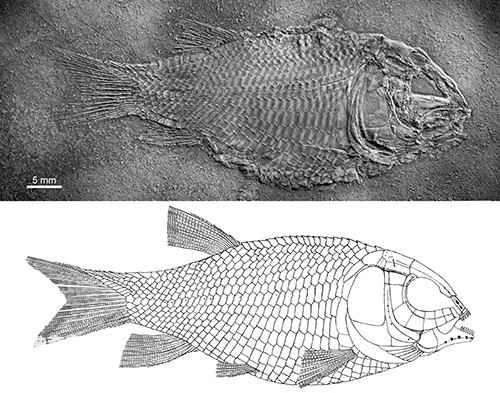
Figure 1: Homotype specimen and reconstruction of *Fuyuan fish* (Photo provided by Xu Guanghui)
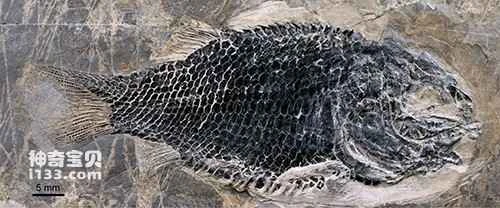
Figure 2: Another complete specimen of *Fish wangi* (Photo provided by Xu Guanghui)