The giant panda, commonly known simply as the panda, is a mammal belonging to the family Ursidae in the order Carnivora. Its scientific name is *Ailuropoda melanoleuca*. The panda enjoys global fame, especially as a rare animal unique to China and a symbol of Chinese intangible cultural heritage. It is also the logo of the World Wildlife Fund (WWF).
Basic features
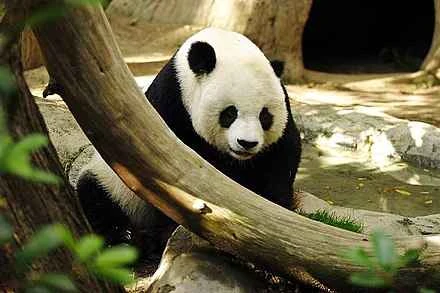
Physical characteristics : Pandas have unique black and white fur, a chubby body, and a round face. This color contrast is very rare in the animal kingdom, making them easily recognizable.
Weight and length : Adult pandas typically weigh between 75 and 160 kilograms and can reach 1.2 to 1.9 meters in length.
Skull and Teeth : Pandas have a strong skull and teeth that are particularly well-suited for chewing hard objects, with a tooth structure especially well-suited for crushing bamboo.
Lifestyle
Diet : Although classified as a carnivore, pandas primarily eat bamboo, which makes up 99% of their diet. Pandas also eat other plants and occasionally prey on rodents or consume small mammals and birds.
Habitat : Pandas mainly live in the mountainous areas of Sichuan, Shaanxi and Gansu provinces in China, especially in the high-altitude areas and bamboo forests at altitudes of 1,200 to 3,300 meters.
Habitat : Pandas are solitary animals and usually live alone except during the breeding season. They have a relatively fixed range of activity and forage for food within this area.
Reproduction : Pandas have a very low reproduction rate, with female pandas having only one chance to give birth every two years. The gestation period is approximately 135 to 160 days, and they usually give birth to only one cub at a time.
Current situation and protection
Due to habitat loss and fragmentation, coupled with its low reproductive rate, the giant panda was listed as an "endangered" species. However, thanks to sustained conservation efforts in recent years, its situation has improved.
Conservation status : The panda's status has now been upgraded from "endangered" to "vulnerable".
Conservation measures : The Chinese government has established a series of giant panda nature reserves and implemented several laws and policies to protect pandas.
Reproductive research : Wild conservation and breeding were carried out simultaneously, and artificial breeding projects also achieved remarkable success.
International cooperation : Cooperation between the International Union for Conservation of Nature (IUCN), the World Wildlife Fund (WWF), and zoos around the world has promoted international research and conservation of giant pandas.
Pandas are not only an important part of biodiversity but also a landmark achievement in global conservation efforts. Efforts to protect pandas have yielded valuable experience and insights that can help advance conservation efforts for other endangered species.