Animals possess a variety of different modes of locomotion, which provide them with significant advantages for survival in their environment. For example, birds are known for their flight, while fish breathe freely in water using gills. Bipedalism is another rare form of locomotion, possessed by only a few animals, with humans being a prime example. This article will introduce the definition and characteristics of bipeds, along with 20 typical examples of bipedal animals.
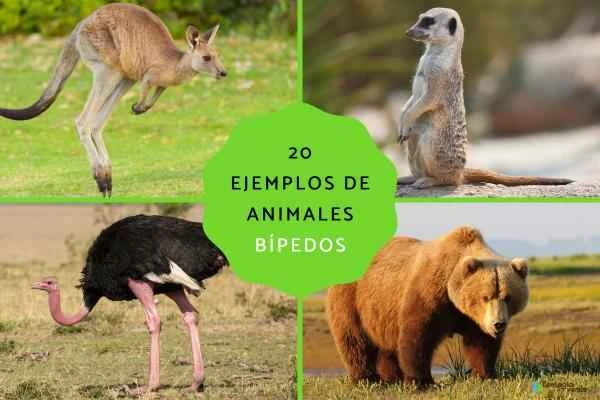
Table of contents
What are bipedal animals and what are their characteristics?
Examples of typical bipedal animals
Kangaroo (Macropodidae family)
Tyrannosaurus rex
Penguins (family Spheniscidae)
Honey badger (Suricata suricatta)
Canary (Serinus canaria)
Domestic chicken (Gallus gallus domesticus)
Ostrich (Struthio camelus)
Brown bear (Ursus arctos)
Chimpanzee (Pan troglodytes)
Human beings (Homo sapiens sapiens)
Brief list of other bipedal animals
What are bipedal animals and what are their characteristics?
Bipeds are animals that primarily walk on their hind limbs. To support their upright posture, their skeletal structures have evolved specifically to allow them to walk on two legs. Bipedalism can be broadly divided into two categories:
Forced bipedalism : Animals must stand and walk entirely on two legs.
Selective bipedalism : Animals are able to switch flexibly between two and four legs.
The development of bipedalism requires the coordinated evolution of structures such as the pelvis, knees, hind limbs, tail, and spine. Its main characteristics include:
Strong hind limbs
A broader perspective
Some animals have more flexible forelimbs
More effective weight distribution and coordinated movement
Although most animals walk on four legs, bipedal animals have a unique advantage in survival thanks to these adaptations.
20 typical examples of bipedal animals
Kangaroo (Macropodidae family)
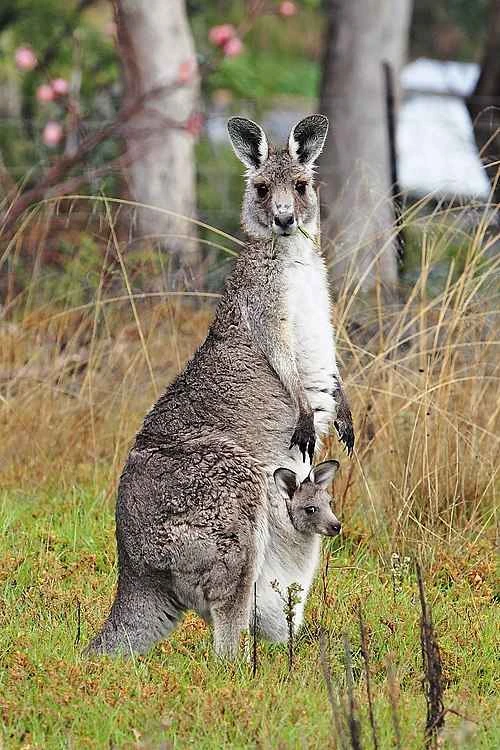
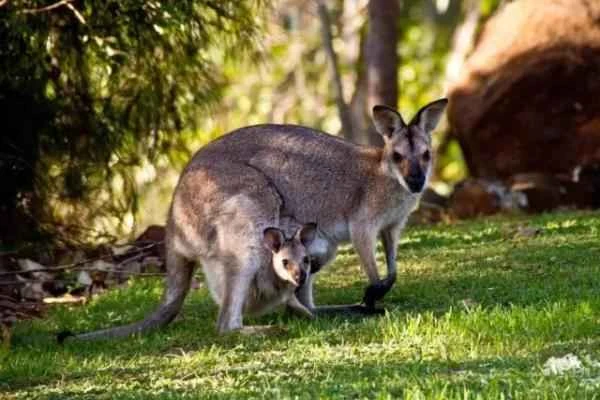
Kangaroos possess strong, long hind legs and move by hopping, never primarily walking. Their long tails act as a support and balancing pole, preventing falls. Their forelimbs are extremely short. This bipedal hopping capability allows kangaroos to move at high speeds while conserving energy.
Tyrannosaurus rex
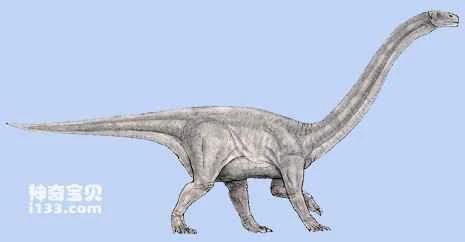
Tyrannosaurus Rex belongs to the theropod suborder and is the most typical known bipedal dinosaur. It had strong hind limbs, short but powerful forelimbs, and its body was horizontal and parallel to the ground, with its tail acting as a balancer. As a top predator, it relied on its agile bipeds to hunt.

Penguins (family Spheniscidae)
Penguins walk on two legs, and their forelimbs have evolved into flippers suitable for swimming. Although clumsy on land, they are extremely agile in the cold waters of the Southern Hemisphere, primarily moving on land by walking on two legs.
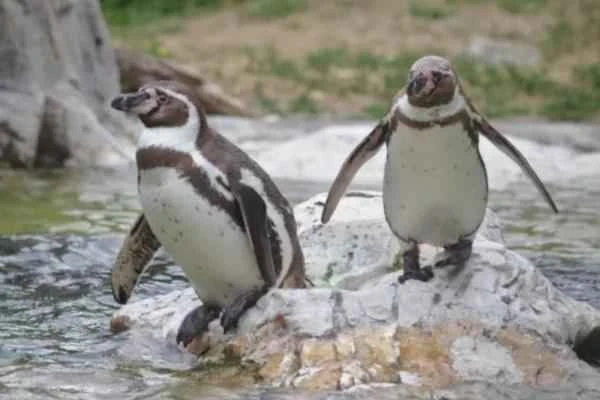
Honey badger (Suricata suricatta)
Honey badgers are small carnivorous animals found in arid regions of Africa, capable of selective bipedal locomotion. They often stand on two legs to observe their surroundings, serving a vigilant role and increasing their alertness.

Canary (Serinus canaria)
Canaries are typical bipedal birds with strong hind limbs. They mainly rely on flight, but also primarily walk on two legs.
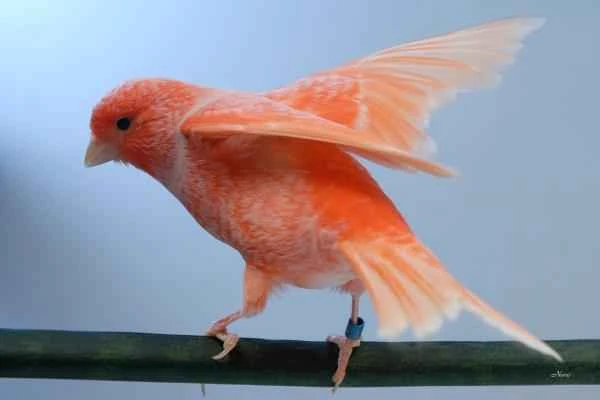
Domestic chicken (Gallus gallus domesticus)
Although domestic chickens have lost their ability to fly through domestication, they retain the habit of walking on two legs and rely on their hind legs to complete daily movement.
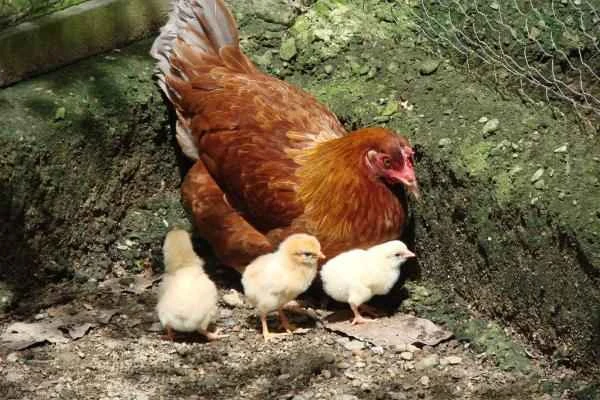
Ostrich (Struthio camelus)
Ostriches are the largest bipedal birds and cannot fly. Their strong hind limbs support them in high-speed running, reaching speeds of up to 70 kilometers per hour.
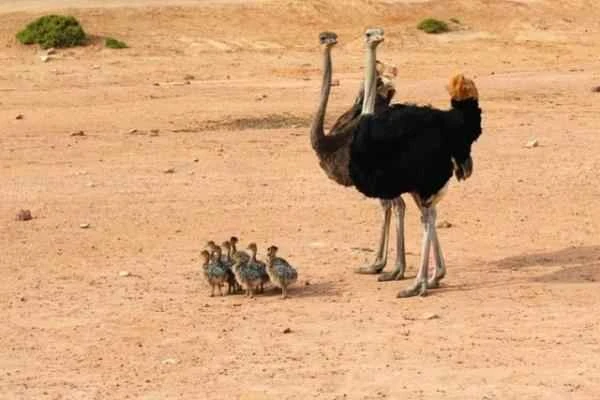
Brown bear (Ursus arctos)
Brown bears can walk on all fours or stand on two legs. When walking on two legs, they can free their forelimbs to hunt, climb, or forage.

Chimpanzee (Pan troglodytes)
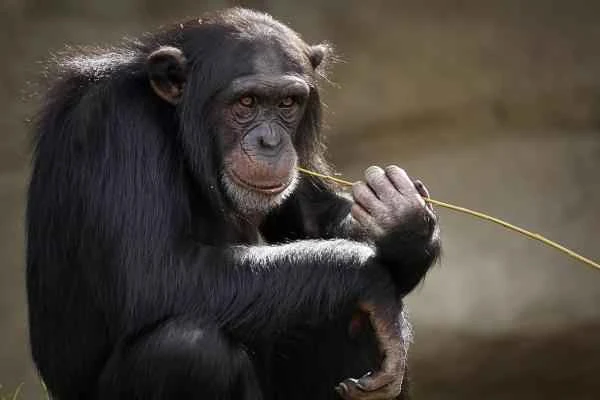
Chimpanzees are selectively bipedal, commonly walking on four legs, but can also walk upright for short distances. Their pelvic and thoracic structures are similar to those of humans, revealing their evolutionary roots.
Human beings (Homo sapiens sapiens)
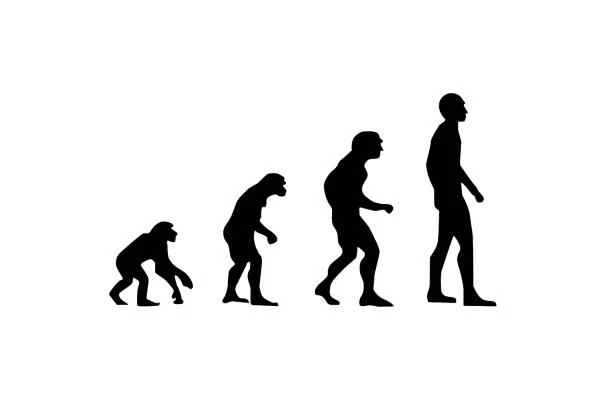
Humans are typical bipedal animals, with their skeletal structure having undergone complex evolution to adapt to upright walking. Bipedalism promoted the development of the human brain and spurred the advancement of civilization, art, and technology.
Brief list of other bipedal animals
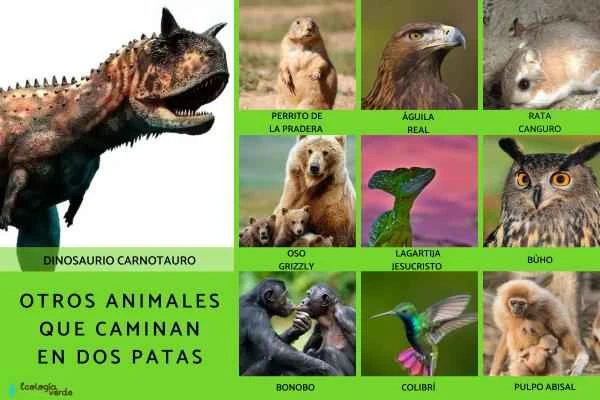
Carnivorous dinosaur Carnotaurus sastrei
Prairie dog (Cynomys spp.)
Golden Eagle (Aquila chrysaetos)
Jerboa (Dipodomys spp.)
Grizzly bear (Ursus arctos horribilis)
Christ Lizard (Basiliscus spp.)
Owl (Strigidae family)
Bonobo (Pan paniscus)
Hummingbird (Colibrí spp.)
Gibbons (family Hylobatidae)
Although bipedal animals are few in number, they play an irreplaceable role in the ecosystem. Their locomotion, morphology, and adaptability reflect the wonder and diversity of natural selection.
For more information on bipedal animals and other wildlife, please visit our [Wildlife] section.
bibliography
Beatty, R., Beer, A., and Deeming, C. (2010). The Book of Nature. Doreen Kindersley, UK.