Animals have diverse diets, including omnivores and herbivores. But in the eyes of humans, the most mysterious and fascinating are undoubtedly the carnivorous predators with their immense strength and agile hunting skills. Did you know that the concept of "carnivores" doesn't only refer to those that eat large, warm-blooded animals? This article will take you deeper into the definition, classification, representative animals, and important ecological roles of carnivores.
Table of contents
What are carnivores and what are their characteristics?
Classification of carnivores
Representative examples of carnivores
Ecological importance of carnivores
What are carnivores and what are their characteristics?
Carnivores are organisms that feed on the muscle, fat, or other tissues of other animals. It's important to note that "carnivorous" is both a dietary classification and the name of the order Carnivora within the class Mammalia, which includes:
Bear family
Canid
felines
Seals
Raccoon family animals
Not all carnivores are strictly carnivorous; this article focuses on animals that feed on meat. Carnivores typically possess the following characteristics:
Its short digestive system is well-suited for digesting meat.
Great strength and agile movement
Advanced hunting weapons, such as canine teeth and claws.
The eyes are located at the front of the head, which facilitates precise hunting.
Diverse hunting strategies
To learn more about the relationship between predators and prey and related cases, you can read "Predators and Prey: Examples and Characteristics".
Classification of carnivores
Carnivores can be further classified according to their diet:
Strict carnivores : must consume other animals, and their digestive systems cannot process plant fiber.
Insectivorous animals : animals that feed exclusively on insects, such as anteaters (anteaters, etc.). Recommended reading: *The Complete Guide to Insectivorous Animals and Examples*.
Invertebrate carnivores : those who feed on invertebrates such as earthworms.
Fish predators: animals that exclusively eat fish.
Top predator : The apex predator in the food chain with no natural enemies.
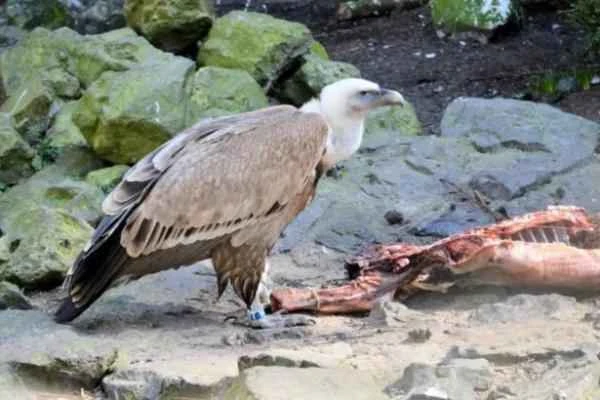
Scavengers : animals that feed on carcasses. See "Examples of Scavengers" for details.
Cannibalistic animals : Animals that feed on individuals of the same species.
Carnivores among omnivores : They eat both plants and animals, with meat making up a certain proportion of their diet.
Based on the proportion of meat consumed, it can be divided into:
Hypermeat eaters: Meat accounts for more than 70% of their diet.
Meat-eaters: Meat accounts for 30%-70% of their diet.
Low-meat diet: Meat accounts for less than 30% of diet, supplemented with plant-based foods, etc.
Representative examples of carnivores
Mammal carnivores
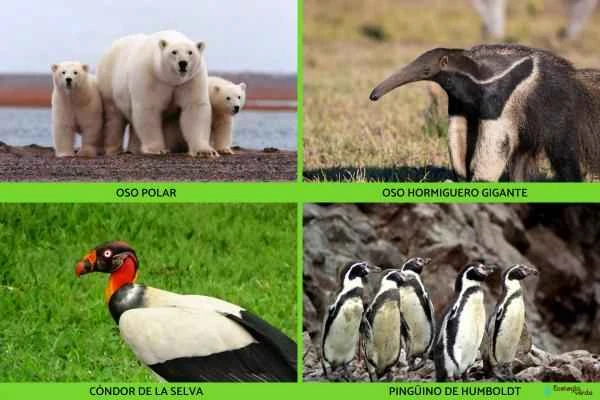
Polar bear ( Ursus maritimus ) : The only strictly carnivorous member of the bear family, a apex predator that primarily preys on seals. It obtains water through its blood and does not drink from water sources.
Giant anteater ( Myrmecophaga tridactyla ) : It feeds on ants and termites, has a long tongue, no teeth, and a keen sense of smell.
Carnivorous birds
Jungle vulture ( Sarcoramphus papa ) : a scavenger, the first to peck at carcasses, with no feathers on its head and strong stomach acid.
Penguins ( Aptenodytes , Megadyptes , etc.) : Marine carnivores that prey on fish and other marine life.
Carnivorous fish
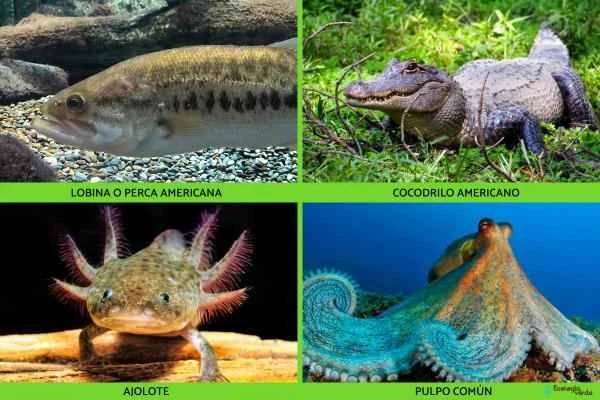
Black bass ( Micropterus salmoides ) : a freshwater carnivorous fish that hunts in groups of fish, crustaceans, insects, and small vertebrates.
Carnivorous reptiles
American crocodile ( Crocodylus acutus ) : Top predator, ambush prey, with a wide range of prey including fish, amphibians, birds and mammals.
Carnivorous amphibians
The Mexican axolotl ( Ambystoma mexicanum ) : It feeds on small aquatic invertebrates and fish, has poor eyesight, and relies on movement and shadows to hunt.
Carnivorous invertebrates
Common octopus ( Octopus vulgaris ) : A nocturnal predator that uses its suckers to hold onto its prey. Its saliva contains neurotoxins that can dissolve hard shells and crustaceans.
Important ecological role of carnivores
Carnivores occupy the top of the food chain, regulating the number of their prey, maintaining ecological balance, and preventing excessive competition for resources and environmental degradation. Their existence is crucial to the health of the ecosystem.
For more fascinating content about carnivores, please visit our Wildlife section.
bibliography
Beatty, R., Beer, A., and Deeming, C. (2010). The Book of Nature. Doreen Kindersley, UK.