The grizzly bear (scientific name: *Ursus arctos horribilis *) is one of the most well-known bear subspecies, beloved by many and even serving as inspiration for animated characters and plush toys. But do you really know this forest behemoth? While seemingly cute, the grizzly bear is actually extremely wild. In this article, we will detail the grizzly bear's biological characteristics, diet, reproduction, and why it is considered one of the "most dangerous bears in the world."
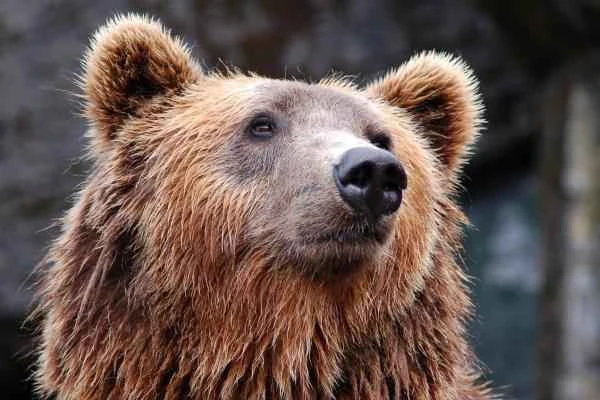
Table of contents
Characteristics of grizzly bears
Grizzly bear habitat
Grizzly bear food
Grizzly Bear Reproductive Habits
Grizzly bear hibernation
Characteristics of grizzly bears
The grizzly bear is a subspecies of brown bear. Its fur is brown with white tips on the hairs on its back and shoulders, hence the name "grizzly," which means "grey" or "white-spotted."
Small and round ears
They have prominent acromions that become more pronounced with age, which distinguishes them from other bears.
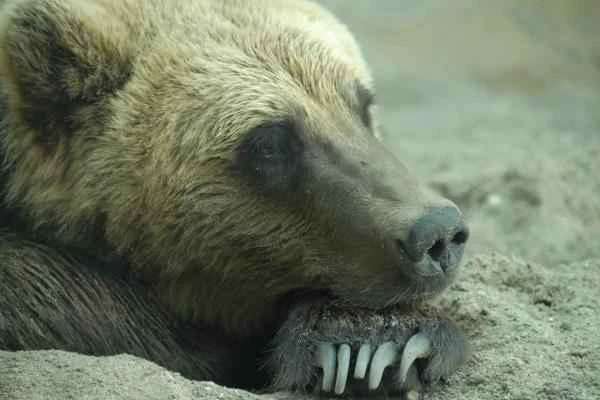
Their claws can reach 10 centimeters in length, much longer than those of other brown bears, and are used for digging and hunting.
It is about 2 meters long and has a huge body.
Aloof and with a strong sense of territory.
It possesses the ability to climb trees and run at top speed (up to approximately 50 km/h).
Lifespan can reach 26 years, with females typically having a longer lifespan.
Despite their strength, they are not the most dangerous bears in the world; the polar bear is the true apex predator.
Grizzly bears' attacks on humans are mostly due to territorial defense, and with increased human activity, they have become more accessible to humans, increasing the potential danger.
Grizzly bear habitat
Grizzly bears are primarily distributed in the near-Arctic and Palearctic regions of North America, encompassing diverse environments including forests, glaciers, tundra, alpine meadows, and coastal zones. Today, they are mainly found in Canada, Alaska, and parts of the United States. Historically, they were widespread in northern Mexico, but disappeared from that region after the 1960s.
Grizzly bear food
Although grizzly bears are carnivorous, they are omnivorous and highly opportunistic in their diet. They prey on animals, as well as eat plant fruits, nuts, and insects, and even consume bird eggs and honey.
Common foods include:
Large mammals such as moose and white-tailed deer
Mountain animals such as goats and antelopes
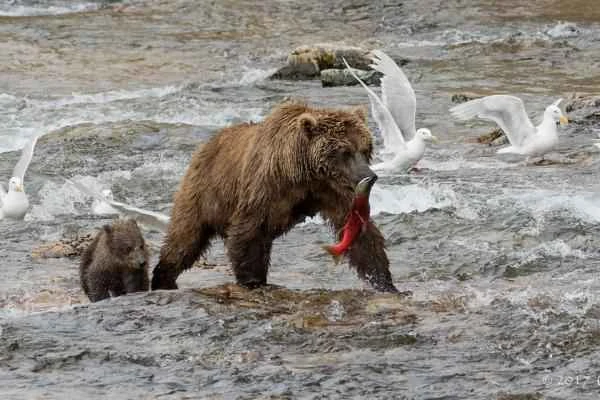
Salmon and trout near rivers and coastlines, especially during the salmon migration spawning season, prey on them in large numbers.
Small prey such as insects, larvae and earthworms
Food diversity is closely related to geographical environment; grizzly bears are larger when food is abundant.
Grizzly Bear Reproductive Habits
Grizzly bears are solitary animals, only gathering during the summer breeding season. They generally reach sexual maturity around 5 years of age. Fertilization is internal, with a gestation period of approximately 3 to 8 months.
Cubs are mostly born during hibernation, and the mother bear nurses them in her den until she awakens in the spring. Cubs are usually twins, and the mother bear is extremely protective of her cubs. The cubs will live with their mother for up to two years, and can only leave after they have learned to survive independently.
Female bears do not seek mating during the nursing period, and their breeding cycle is usually once every three years.
Grizzly bear hibernation
Grizzly bears hibernate to survive the harsh winter when food is scarce, and the hibernation period can last from 5 to 7 months. They eat a lot before hibernation to store up energy.
Once inside the cave, the grizzly bear enters a light sleep state, neither eating nor defecating. Unlike other animals, the grizzly bear retains some level of consciousness during hibernation.
Mother bears give birth during hibernation and care for their cubs until hibernation ends. Malnutrition can lead to failed pregnancies or miscarriages.
During hibernation, grizzly bears significantly reduce their body temperature and heart rate to conserve energy.

If you would like to learn more about hibernating animals, please read our related articles.
Conclusion
Grizzly bears are not only important predators in North American ecosystems, but also remarkable for their strength and adaptability. Understanding the ecological characteristics of grizzly bears can help protect this magnificent species and promote harmonious coexistence between humans and nature.
For more information about wildlife, please visit our "Wildlife" section.
bibliography
Barenger, L. (2002). Ursus Arctos. URL: https://animaldiversity.org/accounts/Ursus_arctos/