Monkeys are an important member of the order Primates, distributed in tropical and subtropical regions worldwide. As close relatives of humans, monkeys are renowned for their high intelligence, agile limbs, and complex social behaviors. Whether it's the chirping in the jungle or the playful figures in city parks, monkeys always fill humans with curiosity and interest.
Classification and characteristics of monkeys
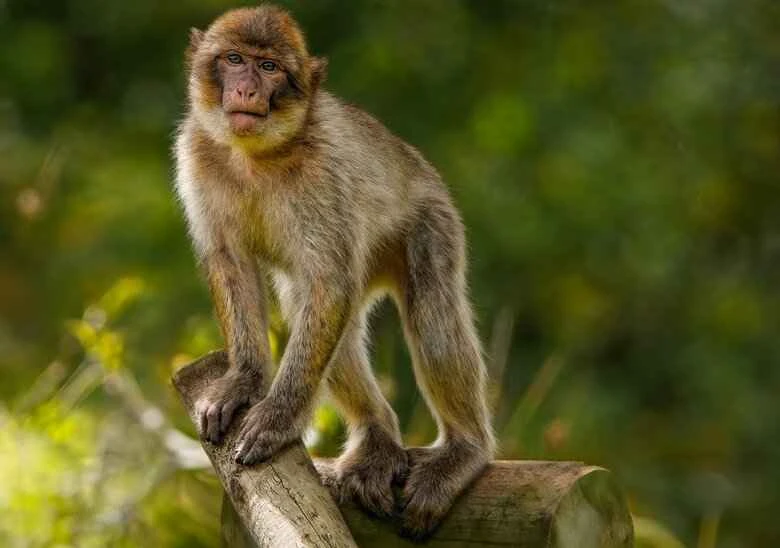
Scientific classification of monkeys
Monkeys occupy an important position among primates, and their classification is as follows:
Kingdom : Animalia
Phylum : Chordata
Class : Mammalia
Order : Primates
Suborder : Haplorhines
Lower order : Simiiformes
Divided into two main categories :
New World monkeys ( Platyrrhines ): mainly live in Central and South America.
Old World monkeys ( Catarrhines ): distributed in Africa and Asia.
physical characteristics
Diverse body types :
Monkeys vary greatly in size depending on the species, ranging from pygmy marmosets weighing less than 1 kilogram to baboons weighing nearly 30 kilograms.
Facial features :
Monkeys have a wide range of facial expressions, and their eyes are usually positioned forward to facilitate stereoscopic vision.
Flexible limbs :
Most monkeys have strong limbs, especially strong fingers and tails, which facilitate climbing and movement.
Behavioral characteristics
Monkeys are social animals, typically living in groups with complex social structures. These groups are hierarchical, and members communicate through vocalizations, facial expressions, and physical contact.
Monkey distribution and habitat
main habitat
Monkeys are mainly distributed in tropical rainforests, savannas, and mountainous areas, with specific habitats as follows:
Tropical rainforest :
New World monkeys, such as capuchin monkeys and howler monkeys, mainly live in the Amazon rainforest of South America.
Grasslands and savannas :
Baboons and other Old World monkeys have adapted to the savanna and arid environment of Africa.
Mountainous and hilly areas :
Tibetan macaques and other species live in the mountains and forests of Asia.
Global distribution
New World Monkeys :
They are distributed in Central and South America, including species such as spider monkeys and howler monkeys.
Old World monkeys :
They are found in Africa and Asia, such as long-tailed macaques, rhesus macaques, and baboons.
Environmental adaptability
Monkeys demonstrate an amazing ability to adapt to their environment, and can be found from rainforests to high plateaus. Even in cities, "urban dwellers" like rhesus monkeys can be observed.
Monkeys' eating and foraging behavior
Dietary habits
Monkeys are omnivores, and their diet includes:
fruit :
Fruit is the most important food source for monkeys, providing abundant sugars and vitamins.
Insects and small animals :
Some monkeys hunt insects, bird eggs, and small animals to supplement their protein intake.
Leaves and flowers :
For monkeys that live in trees, tender leaves and flowers are a common food source.
Nuts and seeds :
Monkeys are adept at using tools to obtain nuts or crack open seed shells.
Foraging behavior
Teamwork :
Monkey groups often cooperate in foraging to reduce the risk of being preyed upon.
Tool usage :
Some monkeys, such as capuchin monkeys, use stones to crack open nuts, making them representative of tool use in the animal kingdom.
Storing food :
Some monkeys store food for use when food is scarce.
Social structure and reproductive behavior of monkeys
social behavior
Group life :
Monkeys are social animals, and there is usually a clear hierarchy among group members, with the leader responsible for maintaining order and making decisions.
Communication methods :
Monkeys communicate in a variety of ways, including vocalizations, facial expressions, and body language, such as hugging and grooming.
Struggle and Cooperation :
Although there may be fighting within monkey groups, they also exhibit a high degree of cooperation, such as jointly raising offspring and defending against predators.
Reproductive habits
Breeding season :
Monkeys do not usually breed in a fixed season, but some species may be affected by the season.
Pregnancy and childbirth :
The gestation period for monkeys is generally 4-7 months, and they usually give birth to one offspring per litter.
Cubs grow :
After birth, the cubs rely on their mothers for breastfeeding and protection, and gradually learn foraging and social skills.
life
The average lifespan of wild monkeys is 10-25 years, depending on the species. In protected environments such as zoos, some monkeys can live for more than 30 years.
The ecological role and threats of monkeys
Ecological role
Seed spreader :
After monkeys eat fruit, they spread the seeds through their feces, helping to regenerate the forest.
Predator and Prey :
Monkeys are predators of insects and small animals, as well as prey for birds of prey and large felines.
Forest Protectors :
Through foraging and movement, monkeys help maintain the dynamic balance of forest ecosystems.
Natural enemies and threats
Natural enemies :
Monkeys' natural enemies include eagles, pythons, and leopards, and young monkeys are especially vulnerable.
Human activities :
Deforestation, habitat loss, and illegal hunting are the main threats facing monkeys.
Protective measures
Nature Reserve :
Many countries around the world have established protected areas, such as Karnataka National Park in India.
Public Education :
Raising public awareness of the ecological importance of monkeys can help reduce habitat destruction.
The wisdom and cultural significance of monkeys
Intellectual performance
Tool usage :
Monkeys are among the few species in the animal kingdom that can use tools; for example, macaques use branches to get water.
Memory and Learning :
The monkeys demonstrated excellent memory and learning abilities, and were able to imitate behavior through observation.
Problem Solving :
Some monkeys exhibit complex strategies and innovative abilities when foraging for food.
Cultural significance
Religious symbols :
In Hinduism, the monkey god Hanuman symbolizes power and loyalty.
Literature and Art :
Monkeys hold an important place in myths and stories around the world, such as the character of Sun Wukong in "Journey to the West".
The relationship between monkeys and humans
Positive impact
Ecosystem services :
Monkeys help maintain the balance of the ecosystem and are of great importance to the environment.
Scientific research :
Monkeys are an important subject for studying the evolution of primates and humans.
Negative impact
Farmland destruction :
Some monkeys damage farmland and crops, leading to human-monkey conflict.
Urban issues :
In cities, monkeys may become "thieves" and disrupt human lives.
Coexistence strategy
Environmental protection :
Improve the monkeys' habitat and reduce human disturbance.
Conflict mitigation :
Implement non-violent removal and protection measures in areas affected by monkeys.
Conclusion: The Wisdom and Future of Monkeys
Monkeys are intelligent and adaptable animals in nature, demonstrating unique survival skills in environments ranging from tropical rainforests to urban settings. By protecting monkey habitats and reducing human-monkey conflict, we are not only protecting this species but also maintaining biodiversity and ecological balance.