Hyenas (scientific name: *Hyaenidae *) are carnivorous mammals living in Africa and Asia, known for their powerful bite and teamwork. Although often mistakenly perceived as simple "scavengers," hyenas are actually highly efficient predators and play a crucial role in the ecosystem. This article will provide a comprehensive analysis of the characteristics, habits, and ecological value of hyenas.
Classification and characteristics of hyenas
Scientific classification of hyenas
Hyenas belong to a unique family within the order Carnivora, and their classification is as follows:
Kingdom : Animalia
Phylum : Chordata
Class : Mammalia
Order : Carnivora ( Carnivora )
Family : Hyaenidae
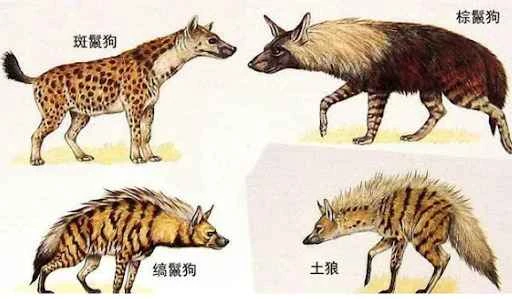
type :
Spotted hyena ( Crocuta crocuta )
Striped hyena ( Hyaena hyaena )
Brown hyena ( Parahyaena brunnea )
Coyote ( Proteles cristata )
Physical characteristics
Physical characteristics :
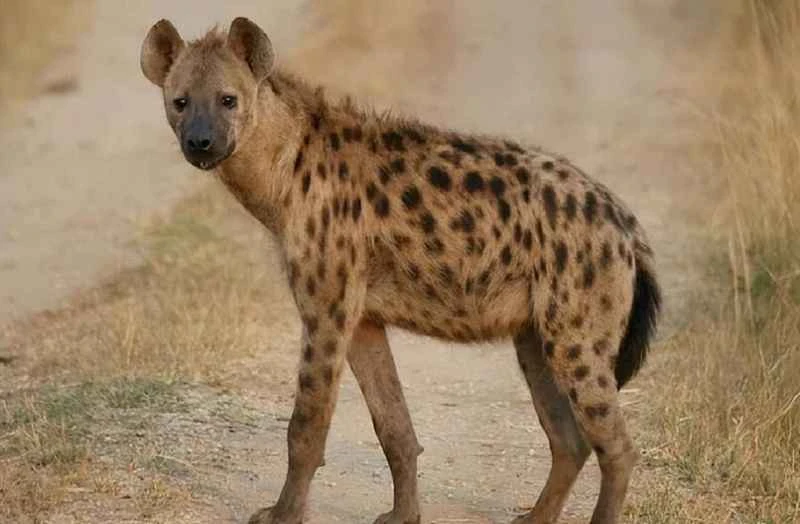
Hyenas are medium-sized, ranging from 95 to 160 centimeters in length and weighing between 40 and 90 kilograms. Males and females are similar in size.
The spotted hyena is the strongest, with a large head and an extremely powerful bite.
The hair is sparse and coarse, and the color and markings vary depending on the species.
Limb structure :
The hyena's forelimbs are longer than its hind limbs, giving it a sloping back that helps it run for long periods of time.
Special Anatomy :
Hyenas possess powerful chewing muscles and a unique tooth structure that allows them to crush bones and digest bone marrow.
Behavioral characteristics
Hyenas are social animals, especially spotted hyenas, which are usually matriarchal and dominated by females.
They are known for their highly social behavior and cooperative hunting.
Habitat and distribution of hyenas
main habitat
Hyenas are widely distributed and adapted to a variety of ecological environments:
Grasslands and savannas : Spotted hyenas mainly inhabit the grasslands south of the Sahara in Africa.
Desert edges : Striped hyenas and brown hyenas are common in arid regions of southern Africa and West Asia.
Mountainous and forested areas : Striped hyenas are also found in the mountainous regions of the Middle East and India.
Geographical distribution
Spotted hyena : Distributed throughout most of Africa, it is the most common hyena species.
Striped hyena : Found in North Africa, the Middle East and South Asia.
Brown hyenas : mainly live on the edge of the desert in southern Africa.
Coyotes : Found in eastern and southern Africa, they primarily feed on termites.
Habitat characteristics
Hyenas tend to choose open areas with good visibility to quickly spot prey or scavenging opportunities. They also utilize caves and rock crevices as habitats.
Hyena hunting and diet
Hunting skills
Although hyenas are often mistaken for "poachers," they are actually highly efficient hunters:
Group hunting :
Spotted hyenas are known for their teamwork, typically forming hunting teams of several hyenas to launch attacks on large prey such as zebras and wildebeests.
Speed and endurance :
Hyenas can run at speeds of up to 60 kilometers per hour and have exceptional endurance, enabling them to chase prey for extended periods.
flexibility :
When hunting alone, hyenas also prey on small animals such as rabbits and birds.
Dietary habits
Diverse food sources :
Hyenas are omnivorous, primarily feeding on meat, especially bones and marrow.
Carrion-eating behavior :
Hyenas are known for their scavenging ability, capable of digesting most animal remains, including fur and bones.
Special feeding ability :
Hyenas have extremely strong stomach acid, enough to break down calcium and nutrients in bones.
Hyena social structure and reproduction
social behavior
Matriarchal Society :
Especially in spotted hyena groups, females have a higher rank and power, while males usually have a lower status.
Clear division of labor :
Hyena groups work together, including hunting, nursing cubs, and defending their territory.
Communication methods :
Hyenas communicate in a variety of ways, including howling, laughing, and tail movements.
Reproduction and the growth of offspring
Reproductive habits :
Hyena mating is not limited by a fixed season, and female hyenas can give birth to 1-4 cubs at a time.
Cub Protection :
Hyena pups typically grow up in dens, where their mothers provide care for up to a year or more.
Independent process :
The cubs begin hunting independently around one year old and gradually integrate into the group.
life
Wild hyenas have an average lifespan of 10-15 years, while those in captivity can live for more than 20 years.
Hyena's natural enemies and threats
Main natural enemies
Although hyenas are powerful predators and scavengers, they also face threats from natural enemies:
lion :
Lions and hyenas compete fiercely, especially when prey is scarce.
Leopard :
Leopards will attack young hyenas or steal their prey.
Human activities :
Poaching and habitat loss are the biggest threats to hyenas.
Survival strategies
Teamwork :
Hyenas cooperate to defend against predators.
Speed and alertness :
Hyenas remain highly sensitive to potential threats.
The role of hyenas in the ecosystem
Ecological value
Top-tier cleaner :
Hyenas clean up animal carcasses on the grasslands, helping to prevent the spread of diseases.
The pivot in the food chain :
Through hunting and scavenging, hyenas connect predators and prey on the grasslands.
Population regulation
Hyenas help control the population of medium to large animals and maintain the ecological balance of grasslands.
Relationship with other animals
Hyenas have a complex relationship of competition and cooperation with predators and scavengers such as lions and vultures.
The cultural significance and current state of conservation of hyenas
Cultural symbol
African tradition :
In many African tribal cultures, hyenas are seen as symbols of intelligence and adaptability.
Negative image :
In some folk tales and films, hyenas are often depicted as cunning and untrustworthy animals.
Preserve the status quo
Although hyena populations are stable in some areas, habitat destruction and human conflict threaten their survival.
Protection level :
According to the International Union for Conservation of Nature (IUCN), most hyena species are listed as "Least Concern," but local populations may face pressure.
Protective measures :
Establish nature reserves.
Reduce human-hyena conflict through education and community involvement.
Conclusion: Adaptation and Survival of Hyenas
Hyenas are an integral part of the savanna ecosystem. They thrive across the vast African continent with astonishing adaptability and social behavior. Through scientific research and conservation measures, we are able to better understand and protect this unique animal, allowing hyenas to continue playing an important role in nature.