Leopard Introduction
The leopard (scientific name: *Panthera pardus *) is a medium to large cat species widely distributed in Africa and Asia, known for its agility, stealthy hunting skills, and distinctive spotted markings. As a apex predator in the ecosystem, the leopard not only plays a vital role in maintaining ecological balance but also attracts attention due to its mystique.
Leopard classification and biological characteristics
Leopard classification
Kingdom : Animalia
Phylum : Chordata
Class : Mammalia
Order : Carnivora ( Carnivora )
Family : Felidae
Genus : Panthera
Species : Leopard ( Panthera pardus )
Leopards belong to the same genus Panthera as lions, tigers, and jaguars, but they are smaller and better suited to climbing and hiding.
physical characteristics
Body structure :
Leopards are about 90-160 cm long, with a tail length of 60-110 cm and a weight of 30-90 kg. Males are usually larger than females.
Its strong limbs and muscles give it extremely high explosive power.
Coat color and pattern :
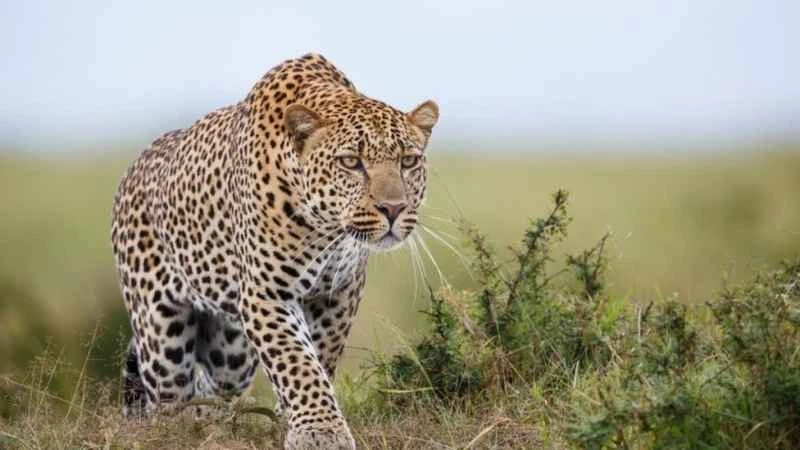
Its fur is yellowish-brown, covered with rose-shaped spots, and its tail has black rings at the end.
Leopard spots not only serve as camouflage, but also vary slightly depending on the region.
Head features :
It has a small head, rounded ears, and dark green or gold eyes with excellent vision, especially at night.
Behavioral characteristics
Leopards are highly solitary animals, typically living alone. They have a strong sense of territory, marking their territory boundaries with urine and scratches.
Leopard Habitat and Distribution
main habitat
Leopards are highly adaptable and can live in a variety of environments, including:
Tropical rainforests : such as the Congo Basin in Africa and Indonesia in Asia.
Savannah : such as the Serengeti in Africa.
Mountainous areas : such as the Caucasus Mountains in Central Asia.
Desert edges : such as the Arabian Desert.
Geographical distribution
African leopard : Widest distribution, from sub-Saharan Africa to South Africa.
Asian leopard : Found in India, China, Sri Lanka, and the Middle East.
Endangered subspecies :
The Arabian leopard ( Panthera pardus nimr ) and the Amur leopard ( Panthera pardus orientalis ) are critically endangered subspecies.
Habitat characteristics
Leopards typically choose environments with dense vegetation and good concealment. They also frequently inhabit areas near human settlements, demonstrating a high degree of adaptability.
Leopard hunting and feeding habits
Hunting skills
Leopards are expert hunters, renowned for their agility and stealth.
Ambush prey : Leopards are good at camouflage and usually attack their prey when they are least prepared.
Climbing ability : Leopards can easily climb tall trees to avoid competitors and store prey.
Explosive speed : Leopards can reach speeds of up to 60 kilometers per hour in short sprints, making them extremely explosive.
Food types
Leopards are extensive carnivores, and their diet includes:
Small to medium-sized mammals : such as antelopes, roe deer, and monkeys.
Birds and reptiles : Leopards hunt birds and lizards when food is scarce.
Opportunistic predation : They occasionally prey on livestock such as goats and sheep.
Food storage
One of the leopard's unique habits is to drag its prey up into trees to store it, preventing other predators, such as hyenas, from stealing it.
Leopard Reproduction and Life Cycle
Reproductive behavior
Leopards do not have a strict seasonality and can breed at any time of year. Their breeding habits include:
Mating period : Mating behavior usually lasts 4-5 days, after which the male and female separate.
Gestation period : The gestation period for female leopards is 90-105 days.
Number of offspring : 1-4 offspring per litter.
cub growth
Birth and Early Life :
The cubs weigh only 500-600 grams at birth and are completely dependent on their mothers.
He opened his eyes two weeks later and began learning to hunt with his mother about three months later.
Independence period :
Between 1 and 1.5 years old, the cubs will leave their mothers and live independently.
Once mature, they will seek out their own territory.
life
Wild leopards have an average lifespan of 12-15 years, while those in zoos can live for more than 20 years.
Leopard's natural enemies and threats
Natural enemies
Large predators :
Lions and spotted hyenas are the leopard's main predators, especially targeting cubs.
Human threats :
Habitat loss and poaching are the biggest challenges facing the survival of leopards.
Survival strategies
Concealment : Leopards rely on their markings to blend into their surroundings and avoid predators and humans.
Tree shelter : Trees are an important sanctuary for leopards, protecting them from threats from ground predators.
The impact of human activities
Habitat destruction : Agricultural expansion and urbanization have led to a sharp decline in forest and grassland areas.
Illegal poaching : Leopards are hunted in large numbers for their fur and bones.
The role of leopards in the ecosystem
apex predator
As apex predators, leopards control the populations of small and medium-sized animals, thus maintaining the balance of the ecosystem.
Seed Spreaders
Leopards prey on a variety of herbivores, spreading plant seeds through their feces and indirectly promoting vegetation growth.
Indicator species of biodiversity
The number and distribution of leopards reflect the health of their habitat and are important indicators for assessing ecosystems.
The cultural significance and conservation status of leopards
Cultural symbol
African culture : The leopard is seen as a symbol of strength and wisdom and frequently appears in African tribal art and mythology.
Asian culture : In places like China and India, the leopard symbolizes speed and agility and is imbued with legendary status.
Preserve the status quo
According to the assessment of the International Union for Conservation of Nature (IUCN), the leopard is currently listed as a "vulnerable" species, and some subspecies are even endangered.
Protective measures
Establish nature reserves : such as Kruger National Park in South Africa and Rajasthan in India.
International cooperation : Restrict the trade in leopard fur through the Convention on International Trade in Endangered Species of Wild Fauna and Flora (CITES).
Public education : Raising awareness of the importance of leopards and their habitats.
Distribution and subspecies of leopard
The world's extant leopards are divided into nine subspecies, the most famous of which include:
African leopard ( Panthera pardus pardus )
Indian leopard ( Panthera pardus fusca )
Arabian leopard ( Panthera pardus nimr )
Far Eastern Leopard ( Panthera pardus orientalis )
Each subspecies differs in body size, coat color, and habitat selection.
Conclusion: The Road to Leopard Conservation
The leopard is an unparalleled hunter in nature, its elegant posture and elusive lifestyle making it a symbol of biodiversity. Through scientific research and effective conservation measures, we can create a safer future for the leopard, ensuring that this apex predator continues to leave its mark on the earth.